
Modern manufacturing demands speed, accuracy, repeatability, and operational efficiency. Whether producing automotive components, aerospace parts, medical devices, or precision engineering products, manufacturers rely on secure workholding and tooling systems to maintain consistent machining quality. Even the most advanced CNC machines and automated production lines cannot deliver optimum performance if tools or workpieces are not clamped securely.
This is where tool clamping and pneumatic clamping systems become indispensable. These technologies ensure that cutting tools and workpieces remain firmly positioned throughout machining, assembly, inspection, and automation processes. By providing reliable holding force, faster changeovers, and consistent positioning accuracy, they help manufacturers improve productivity while reducing production errors and machine downtime.
Understanding the Importance of Clamping Systems
Clamping is one of the most critical aspects of any manufacturing process. It ensures that tools and workpieces remain fixed during machining or assembly, preventing unwanted movement that could compromise dimensional accuracy or surface finish.
An efficient clamping system contributes to:
- Higher machining accuracy
- Improved repeatability
- Reduced vibration
- Better surface quality
- Increased tool life
- Shorter production cycles
- Improved operator safety
- Greater machine utilisation
As industries continue to adopt automation and smart manufacturing technologies, precision clamping has become even more important.
What is Tool Clamping?
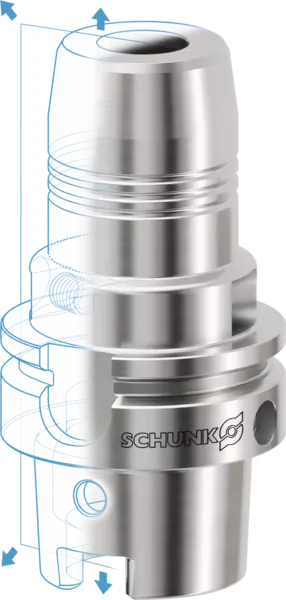
Tool clamping refers to the process of securely holding a cutting tool within a machine spindle or tool holder so that it remains stable throughout machining operations.
The clamping mechanism ensures that the cutting tool can withstand high rotational speeds, cutting forces, and varying machining loads without slipping or losing positional accuracy.
Proper tool clamping directly influences machining quality, spindle performance, and overall production efficiency.
Why Tool Clamping Matters
During machining, cutting tools experience significant mechanical forces.
If a tool is not clamped correctly, manufacturers may encounter:
- Poor dimensional accuracy
- Tool slippage
- Increased vibration
- Premature tool wear
- Surface defects
- Machine damage
- Reduced productivity
- Higher production costs
A reliable tool clamping system eliminates these risks while maintaining stable machining performance.
Key Functions of Tool Clamping
A high-quality tool clamping system performs several important functions.
Secure Tool Retention
The primary role of tool clamping is to hold the cutting tool firmly throughout machining.
Secure retention prevents movement even during heavy-duty cutting applications.
Accurate Tool Positioning
Precision machining depends on consistent tool positioning.
Reliable clamping ensures that every tool remains correctly aligned with the machine spindle, improving repeatability across production batches.
Vibration Reduction
Stable clamping significantly reduces vibration during machining.
Lower vibration helps improve:
- Surface finish
- Cutting accuracy
- Tool life
- Spindle life
- Machine stability
Improved Productivity
Consistent tool positioning minimises machining interruptions and reduces the need for frequent adjustments.
This contributes to higher production efficiency.
Common Applications of Tool Clamping
Tool clamping systems are widely used in various manufacturing operations, including:
- CNC milling
- Turning
- Drilling
- Boring
- Grinding
- Multi-axis machining
- Tool presetting
- Precision finishing
Their versatility makes them essential across numerous industrial sectors.
What is Pneumatic Clamping?
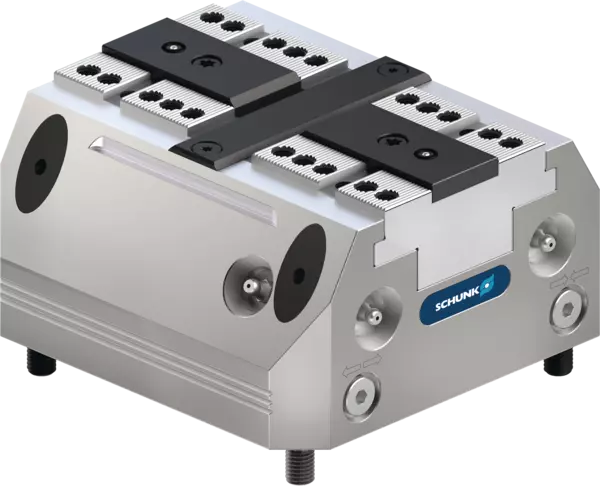
Pneumatic clamping uses compressed air to generate the force required to clamp or release tools and workpieces automatically.
Unlike manual clamping systems, pneumatic clamping enables fast, repeatable, and consistent operation with minimal operator effort.
These systems are commonly integrated into automated manufacturing cells, robotic workstations, assembly lines, inspection stations, and CNC machining centres.
How Pneumatic Clamping Works
Pneumatic clamping systems operate using compressed air supplied through pneumatic cylinders or actuators.
The process generally follows these steps:
- Compressed air enters the actuator.
- Air pressure generates clamping force.
- The workpiece or tool is securely held.
- Machining or assembly begins.
- Air pressure is released.
- The clamp opens automatically for the next cycle.
This automated sequence enables rapid and highly repeatable clamping operations.
Advantages of Pneumatic Clamping
Faster Production Cycles
One of the biggest advantages of pneumatic clamping is speed.
Automatic clamping and unclamping significantly reduce setup times compared with manual systems.
This allows manufacturers to complete more production cycles within the same timeframe.
Consistent Clamping Force
Compressed air delivers repeatable clamping pressure across every production cycle.
Consistent force improves machining quality while reducing variability between components.
Improved Operator Safety
Manual tightening can expose operators to repetitive movements and potential injuries.
Pneumatic systems reduce manual intervention while improving workplace safety.
Easy Integration with Automation
Pneumatic clamping systems integrate seamlessly with:
- CNC machines
- Robotic cells
- Automated assembly systems
- Inspection equipment
- Flexible manufacturing systems
Their compatibility supports Industry 4.0 manufacturing environments.
Lower Maintenance Requirements
Pneumatic systems generally have fewer complex mechanical components than many hydraulic systems.
Routine maintenance is relatively simple when compressed air quality is properly maintained.
Tool Clamping vs Pneumatic Clamping
Although closely related, the two terms describe different aspects of manufacturing.
Tool clamping focuses on securing cutting tools accurately within machine spindles or holders during machining operations.
Pneumatic clamping refers to the method used to generate clamping force through compressed air for either tools or workpieces.
In many modern production facilities, pneumatic clamping systems are used to automate tool clamping processes.
Industries That Use Pneumatic Clamping
Pneumatic clamping supports numerous industrial applications.
Major industries include:
- Automotive manufacturing
- Aerospace
- Medical technology
- Electronics
- Precision engineering
- Machine tool manufacturing
- Packaging machinery
- Robotics
- Metalworking
- General manufacturing
Its speed and reliability make it ideal for high-volume production environments.
Factors to Consider When Selecting a Clamping System
Choosing the right clamping solution requires evaluating several operational requirements.
Manufacturers should consider:
- Clamping force requirements
- Machine compatibility
- Tool dimensions
- Workpiece material
- Production volume
- Cycle time
- Automation requirements
- Positioning accuracy
- Environmental conditions
- Maintenance accessibility
Selecting the correct system improves long-term operational performance while reducing production costs.
Future Trends in Clamping Technology
Manufacturing continues to embrace intelligent automation, creating new opportunities for advanced clamping systems.
Emerging innovations include:
- Smart clamping systems
- Sensor-integrated clamping
- Digital monitoring
- Predictive maintenance
- IoT-enabled manufacturing
- Adaptive clamping technologies
- Energy-efficient pneumatic systems
- AI-assisted process optimisation
These technologies will enable manufacturers to improve machine performance while supporting fully connected smart factories.
Conclusion
Reliable tool clamping is fundamental to achieving high machining accuracy, consistent quality, and efficient manufacturing operations. When combined with pneumatic clamping, manufacturers benefit from faster production cycles, automated operation, improved safety, and highly repeatable performance. As industrial automation continues to evolve, advanced clamping technologies will remain essential for supporting precision engineering and smart manufacturing. SCHUNK continues to develop innovative clamping and automation solutions that help manufacturers improve productivity, optimise machining processes, and meet the growing demands of modern industry.