Main points
-
Don’t overload a power strip; for high-power items, always use a wall outlet.
-
Unplug or turn off the power strip when not in use.
-
Invest in a high-quality power strip with surge protection.
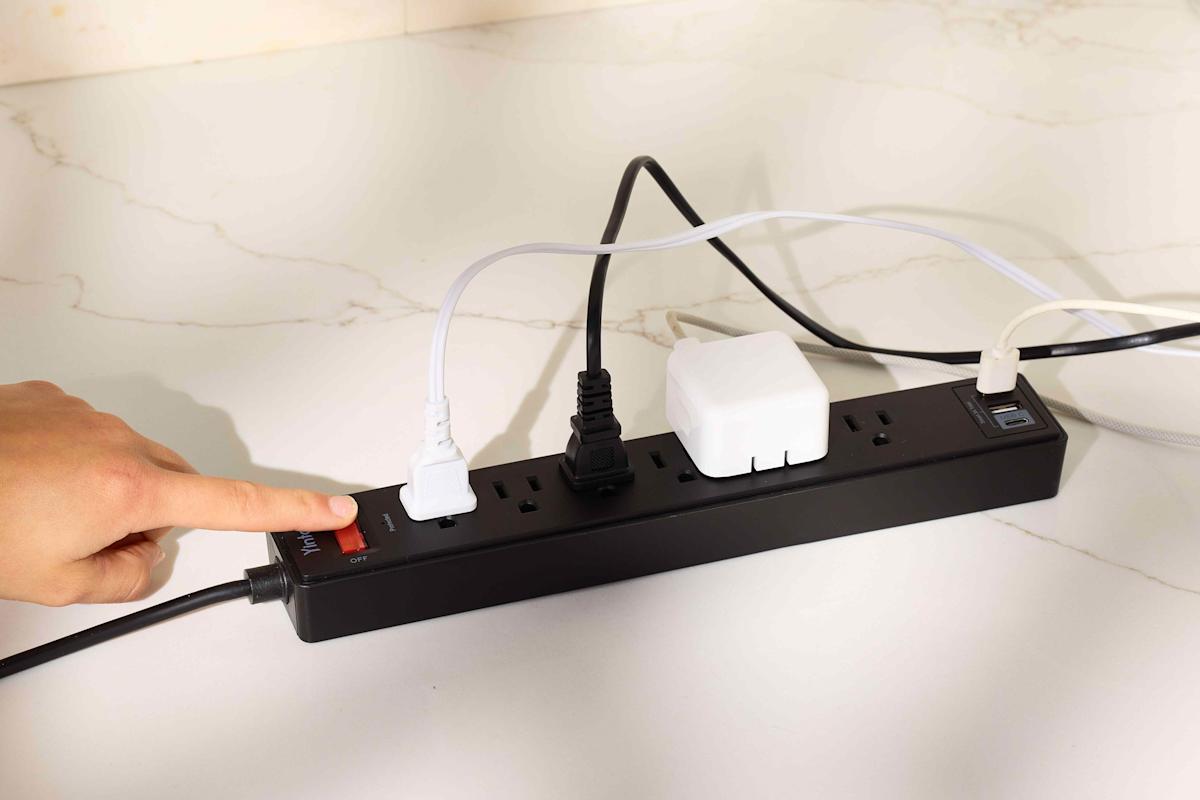
Most household outlets can handle up to two appliances. This low capacity helps users avoid overloading circuits, but may leave connected items vulnerable to power surges. Plugging in a power strip with surge protection is a simple way to protect your electronics from these harmful surges. Additionally, lights and other electronic devices consume energy even when they are turned off. However, if you use a power strip, simply turn it off to reduce energy consumption.
The main purpose of a power strip is to increase the number of available outlets. This allows you to insert more items in one location and organize your space more easily without having to tangle with wires. However, the processing power of a power strip is limited. Read on to learn how to use a power strip safely and avoid any potential dangers in the future, says an electrical expert.
Meet the experts
Ryan Gregor is the owner and chief electrician of RCG Electrical with over 10 years of hands-on experience in home electrical systems and surge protection.

How to use a power strip safely
There are a few things to know about power strip safety, including the obvious. Ryan Gregor, owner and chief electrician at RCG Electrical, says, “Buy a quality product. There are dangers with cheap power strips. Buy a UL-listed power strip with surge protection and unplug it when not in use. Cut off power if not needed. Heavy equipment should use a wall outlet. Power strips are not suitable for high-power equipment.”
Read on to learn more about power strip safety, why they can be dangerous, and what can and can’t be plugged into them.
Related: How to Calculate Your Home’s Electrical Load
Power strip dangers
Power strips are convenient for many reasons, but they are still electrical devices that can become dangerous if used incorrectly. “Overloading—that’s the biggest reason they’re dangerous. A power strip isn’t a magical device with countless outlets; it just distributes power from one source. If you plug in too many high-wattage devices, you run the risk of overheating, melting the strip, or even starting a fire. Cheap, low-quality power strips increase the risk,” explains Gregor.
Likewise, if a power strip is used with damaged electrical equipment or is itself damaged, there may be an increased risk of sparks, accidental electrical shock, and electric shock. Even if you only plug in a few items, the power draw may exceed the power strip’s limits and cause it to overload. Additionally, power strips in enclosed spaces, tucked behind furniture, or buried under a pile of trash can easily overheat.
Items that are safe to plug into your power strip
There are a variety of electronic devices that can be safely plugged into a power strip. Gregor points out that it is safe to plug into low-power devices such as cell phone chargers, lamps, televisions, computers and game consoles.
Generally speaking, low-wattage items will not overload a power strip, but they may continue to draw power from your home if the strip is left on. Therefore, it is recommended to turn off or unplug the power strip when connected electronic devices are not in use. This will help save money on your monthly energy bill and reduce the risk of sudden power surges to your power strip and connected electronics.
Items not safe to plug into a power strip
Just as many devices can be safely plugged into a power strip, a wide variety of devices should not be used with one. First, never plug anything other than a power plug into a power strip outlet. Foreign objects can cause the power strip to spark, overheat, or even melt the item, depending on the material.
There is also a range of electrical equipment that should not be plugged into a power strip. “Never plug high-wattage household appliances (such as space heaters, air conditioners, microwaves, toasters, refrigerators, freezers, or power tools) into a power strip,” says Gregor. Ultimately, if the electronic device is a high-wattage item, you should plug it directly into a household outlet rather than using a power strip to avoid problems.

More tips on using power strips safely
Gregor offers several tips to remember when using power strips to avoid potential dangers:
-
Know the wattage you are plugging into. Don’t use a power strip if it draws a lot of electricity (like a space heater).
-
Use a surge protector. These aren’t just power strips—they’re different. Surge protectors help prevent damage from electrical spikes.
-
Leave the power strip open. Power strips tucked behind furniture or buried under a pile of junk can overheat.
-
Check the condition of the power strip. If the power cord is frayed, cracked, or loose, it will need to be replaced with a new one.
-
Never plug multiple power strips or extension cords into each other.
RELATED: 5 Ways to Properly Test Outlets with a Multimeter
Read the original article on Better Homes and Gardens