A new report from the Democratic chairman of the Senate Foreign Relations Committee says the Trump administration has spent more than $30 million sending immigrants to far-flung non-native countries, including in a few cases more than $1 million per person.
In other cases, governments paid to deport migrants to third countries and then paid to return them to their home countries, the report said.
The report released on Friday said the government had signed high-cost deals to bring back “a relatively small number of third-country nationals”.
The report, led by Sen. Jeanne Shaheen, ranking member of the Senate Foreign Relations Committee, provides the most comprehensive look yet at the administration’s third-country deportation protocols, following criticism that the administration was vague about the details of those agreements.
The Trump administration has pursued these deals as part of its aggressive deportation agenda, arguing that migrants deported to third countries will not be accepted into their home countries. Historically, frosty diplomatic relations have made it difficult for the United States to return certain nationals to their countries of origin.
Under these agreements, countries agree—usually for financial, political gain, or both—to accept immigrants from the United States who are not their own citizens. Many efforts to deport these third-country nationals have encountered legal challenges.
The government reportedly has agreements with or has sent third-country nationals to more than 20 countries and is seeking deals with dozens more.
The Minority Report was also signed by Senators Chris Coons, Tim Kaine, Tammy Duckworth, Jackie Rosen and Chris Van Hollen. The report states, “As of January 2026, the Trump administration’s total cost of deporting third countries is unknown but likely exceeds $40 million.”
The report said deals with five governments, including Equatorial Guinea, Rwanda, El Salvador, Swaziland and Palau, cost more than $32 million, with much of the funding provided “as a one-off payment, often before the arrival of any third-country nationals.”
The five countries that received the million-dollar payments have only taken in about 300 third-country nationals from the United States in total.
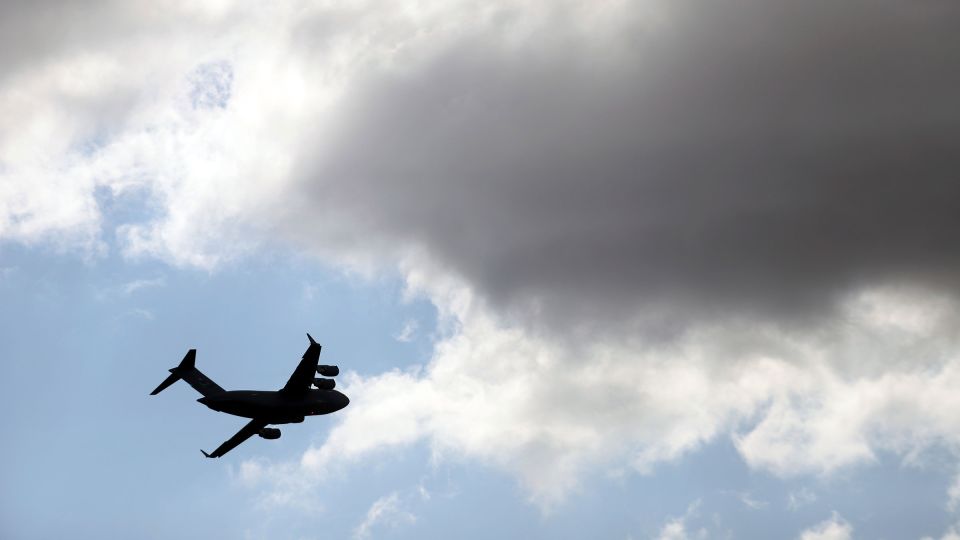
The report noted that the government frequently used expensive military aircraft to deport immigrants, even on flights carrying small numbers of people.
“As of January 2026, the Trump administration estimates it has spent more than $7.2 million on third-country deportation flights to at least 10 countries, with actual costs likely to be much higher,” the report said.
This is based on “a review of the agreement through January 2026, staff travel to relevant countries, and meetings and communications with U.S. officials, foreign government officials, human rights groups, deportees and lawyers,” the report said.
A Democratic committee aide said they had raised some questions with the administration in their limited contact. The aide said that while the administration provided information in some cases, they did not brief the committee on the details of the agreement.
CNN has reached out to the Departments of State and Homeland Security for comment.
‘The point is to scare people’
The report states, “As of January 2026, more than 80% of immigrants sent to third countries paid for by the United States have returned or are in the process of returning to their countries of origin.”
Of the five countries that receive millions of dollars in payments from third-country nationals, El Salvador hosts the largest number of deportees. About 250 people were sent to the country, which received a $4.76 million grant to incarcerate the deportees, who the government claimed had links to the criminal organization Tren de Aragua. The alleged relationship has been refuted by family members and lawsuits. An internal document said the grant was “to provide funding to Salvadoran law enforcement and corrections agencies to meet their enforcement needs, including the cost of detaining 238 TDA members who were recently deported to El Salvador,” CNN reported last April.

In this distributed image obtained on March 16, 2025, El Salvadoran police escort members of the Venezuelan gang Tren de Aragua, who were recently deported by the U.S. government and held at the Terrorist Incarceration Center prison as part of an agreement with the Salvadoran government in Tecoluca, El Salvador. – Press Office of the President of El Salvador/Reuters
A federal judge on Thursday ordered the Trump administration to begin enforcing his demand to give Venezuelans illegally deported to El Salvador last year under the Foreign Enemy Act a chance to challenge their deportations, including bringing at least some of them back to the United States to face court proceedings.
However, as of January 2026, only 51 people had been sent to four other countries, the report said. Rwanda allegedly received $7.5 million from the U.S. government but only took seven third-country nationals, meaning each deported national cost U.S. taxpayers more than $1 million, the report said.
Palau has not yet received any third-country nationals, but reports they have received $7.5 million in payments from the government. Efforts to pressure the Palau government to accept third-country nationals have met with strong resistance from locals.
When it came to the far-flung countries of Palau and Swaziland, a U.S. official reportedly told the committee, “The key is that the government can threaten people that they will actually be dumped in a remote location.”
“The point is to scare people,” the official said.
One U.S. official privately told committee staff that the government “sometimes pays countries to pick people up, fly them there and then pays them to take them back to their home countries,” the report said.
In one such instance, a Mexican national was deported from the United States to South Sudan but flown back to Mexico, the report said.
In another example, a Jamaican was ordered by a court to return to his home country and then flown to Swaziland – at an estimated cost of more than $181,000, the report said – before being flown back to Jamaica weeks later.
The report states that the administration is conducting these expulsions at significant cost to U.S. taxpayers while “consuming political capital in the bilateral relationship that could be used to advance pressing U.S. national security interests.”
Lawmakers and human rights groups have expressed concerns about countries with which the government has deals. Many of these countries have a long history of human rights abuses.
The Democratic report said the government relied on comprehensive assurances that deportees would be treated consistent with international human rights law.
However, the report states, “Trump administration officials acknowledge that countries have not adhered to the assurances they provided to the United States and that the administration has not taken steps to address these violations.”
“The government has provided no evidence of systematic monitoring, follow-up or enforcement, raising serious concerns that these assurances exist only on paper,” the report states.
The report said committee staff learned from U.S. officials in one country hosting third-country nationals that the government had instructed them not to follow up on the deportees’ treatment.
A November report by Human Rights Watch and Central American rights group Cristosal said dozens of Venezuelans deported from the United States to El Salvador prisons earlier this year suffered torture and other severe abuse, including sexual violence.
For more CNN news and newsletters, create an account at CNN.com
