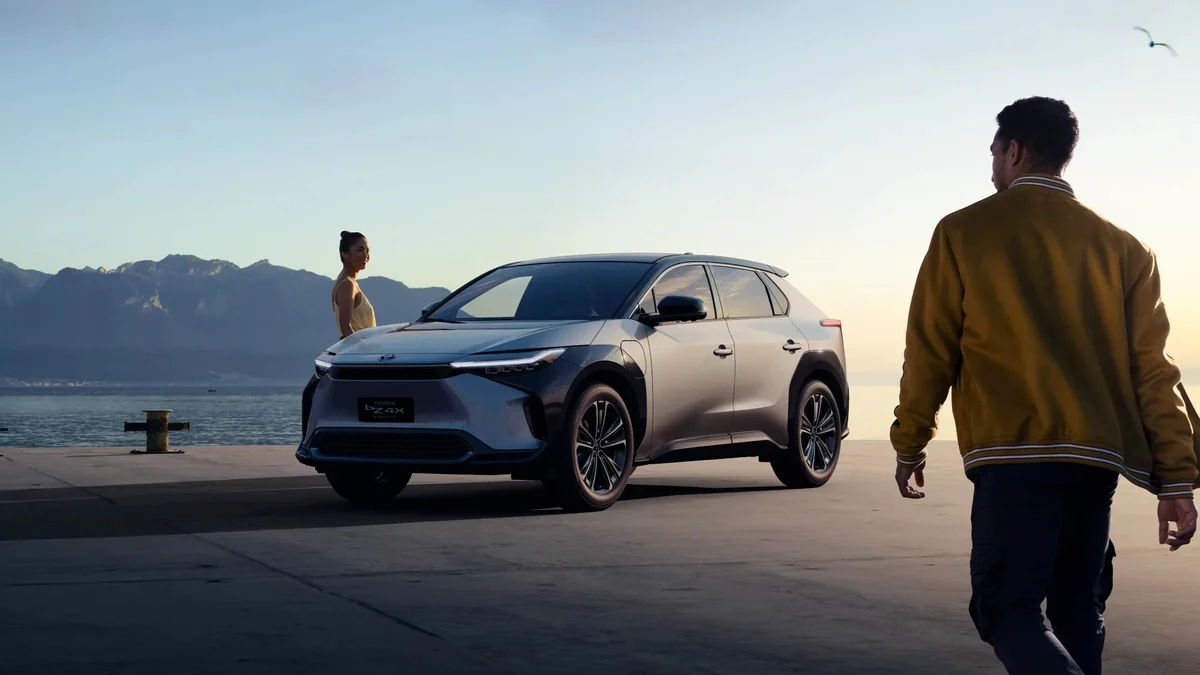
Toyota said it will introduce high-performance solid-state batteries and other technologies to improve the range and performance of electric vehicles and reduce costs.
The Japanese automaker said it aims to launch its next-generation battery in 2026 as it seeks to win over consumers by offering vehicles with longer range and faster charging times.
It also said it is developing a method to mass produce solid-state batteries, with the goal of commercialization in 2027-2028.
The announcement, which comes a day ahead of Toyota’s annual shareholder meeting that will put Toyota’s strategy and governance under scrutiny, amounts to the automaker’s most comprehensive disclosure yet of its strategy to compete in the fast-growing electric vehicle market, where it has lagged behind rivals.
Toyota shares rose 4.45% to 2,161 yen (approximately Rs. 1,276) on Tuesday.
The automaker said it will produce an electric vehicle with a more efficient lithium-ion battery that will have a range of up to 1,000 kilometers (621 miles). By comparison, the long-range version of the Tesla Model Y, the world’s best-selling electric car, can travel about 530 kilometers according to U.S. testing standards.
Toyota did not detail the expected cost or manufacturing location of its new long-range electric vehicle, where the next-generation solid-state batteries it said it is developing will be produced, or the investment required.
“We want to change the future with pure electric vehicles,” Takero Kato, president of Toyota’s new electric vehicle unit BEV Factory, said in a video posted on the automaker’s YouTube channel on Tuesday.
“We will launch the next generation of battery electric vehicles globally from 2026 and put them on the market as a full range of products,” Kato said.
Toyota also detailed other technologies it plans to deploy to reduce the cost of electric vehicles and batteries.
The automaker has pledged to use “autonomous propulsion” assembly lines and gigabit castings to reduce production costs, employing production innovations pioneered by U.S. electric vehicle leader Tesla.
Kato said the pure electric vehicle factory established in May this year aims to produce about 1.7 million vehicles by 2030, accounting for about half of Toyota’s 3.5 million electric vehicles sold that year.
In April, the automaker sold 8,584 electric vehicles globally, including those under the Lexus brand, accounting for more than 1% of its global sales in a single month for the first time.
© Thomson Reuters 2023

