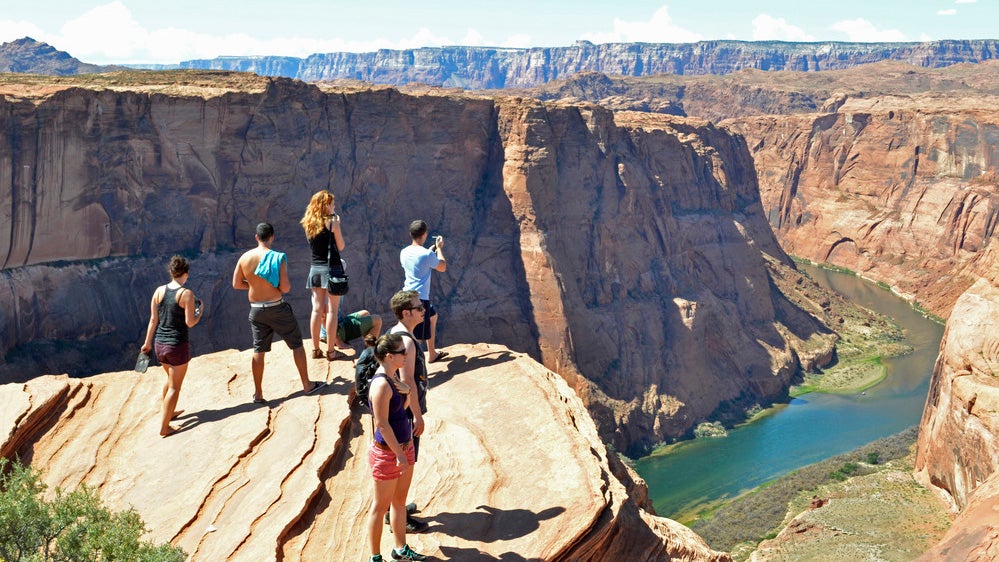
Glen Canyon National Recreation Area issues a quicksand warning to visitors. Yes, you read that right, quicksand.
The National Park Service warned visitors that hazards may exist near the shoreline and in drainage systems throughout the park, which stretches from northern Arizona to southern Utah.
(More: Severe weather in Midwest Plains this week)
The park service alert said quicksand may have a “dry, hard surface but may collapse suddenly.” In a social media post, the service advised hikers to be aware of unstable, shifting or unusually soft ground.
Glen Canyon is a popular desert tourist destination covering more than 1.25 million acres and is home to Lake Powell, the second largest man-made lake in the United States
While getting caught in quicksand may sound like a plot twist from a Gen-X TV show or movie, it actually happens.
Last December, an experienced hiker had to be rescued after getting stuck thigh-deep in sand in Utah’s Arches National Park.
In 2023, a 20-year-old man became trapped while walking on a tidal mudflat in Alaska. Rescuers were unable to reach him before the tide came in and he drowned.
(More: Will you be feeling record-breaking warmth this week?)
The NPS notes that quicksand is “rarely life-threatening, but escaping can be tiring.”
Their experts say the first thing to do is to stay calm, as panicking will only get you in deeper. They then recommend you lean back and spread your weight so you start floating instead of sinking.
They say slow, controlled movements can help you get back to firmer ground.