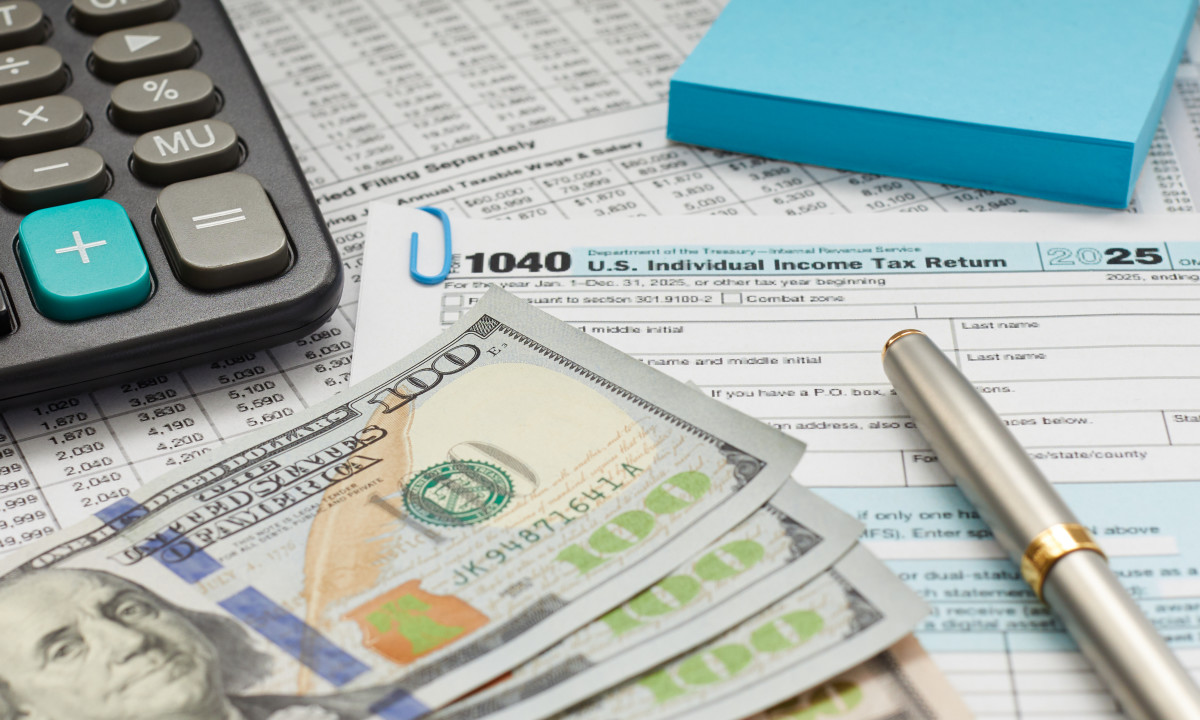
Due to several changes in U.S. tax laws this year, millions of Americans will be eligible for new deductions that did not previously exist, resulting in an average of $775 in additional deductions for millions of qualifying Americans.
However, before you expect a big impact from a significantly larger tax refund, some experts have some important warnings that taxpayers should consider before relying on this extra cash.
Following some recent changes to the tax code under the One, Big, Beautiful Act (OBBB), the Internal Revenue Service (IRS) has been saying that some Americans will receive significantly larger refunds this tax season.
Treasury Secretary Scott Bessent, who is also the acting commissioner of the Internal Revenue Service (IRS), has on separate occasions described the expected refunds as “huge” and “very large.”
While these new tax breaks aren’t available to everyone, data shows that millions of Americans are indeed taking advantage of them, as the IRS says that 4 in 10 of the roughly 55 million tax returns filed so far include at least one of several new tax breaks — about 22 million filers so far.
Those who were able to claim one of the new deductions received an average of $775 in additional tax refunds on their tax returns.
While these new tax breaks will provide some tax relief to millions of Americans, it’s important to note that not everyone will qualify for these new tax breaks. In fact, data shows that most Americans don’t qualify for one of these new deductions.
In a recent interview with Newsweek, Alex Beene, a financial literacy lecturer at the University of Tennessee at Martin, issued an important warning that applies to millions of Americans, urging taxpayers to “maintain realistic expectations” when filing their taxes.
“Some of the new tax breaks and credits won’t benefit every taxpayer, and those who haven’t yet filed need to keep their expectations realistic,” he said. “Ultimately, those who do receive larger refunds will get a much-needed increase to help them cover their expenses.”
Drew Bowles, founder of Illinois-based Bowles Financial Group, warned that even those who do qualify for these deductions are unlikely to see “meaningful relief from their household budgets” due to ongoing inflation.
“While larger refunds are nice, most Americans will find that any additional amounts have been offset by inflation,” Powers told Newsweek. “Inflation has slowed, but prices have not fallen. Seniors, tipped workers and some overtime wages may increase refunds, but that will not provide meaningful relief to household budgets.”

