BEIRUT (AP) — As wounded anti-government protesters flooded an Iranian hospital during last month’s crackdown, a young doctor rushed to the emergency room to help treat a man in his 40s who had been hit in the head at close range.
As doctors and others tried to resuscitate the man, a group of armed plainclothes security officers blocked their way, some with rifles, the doctor told The Associated Press.
“They surrounded him and wouldn’t let us go any further,” said a doctor in the northern city of Rasht.
Minutes later, the man died. Agents placed his body in a black body bag. They then piled the body and other bodies into the back of a van and drove away.
This is not an isolated incident.
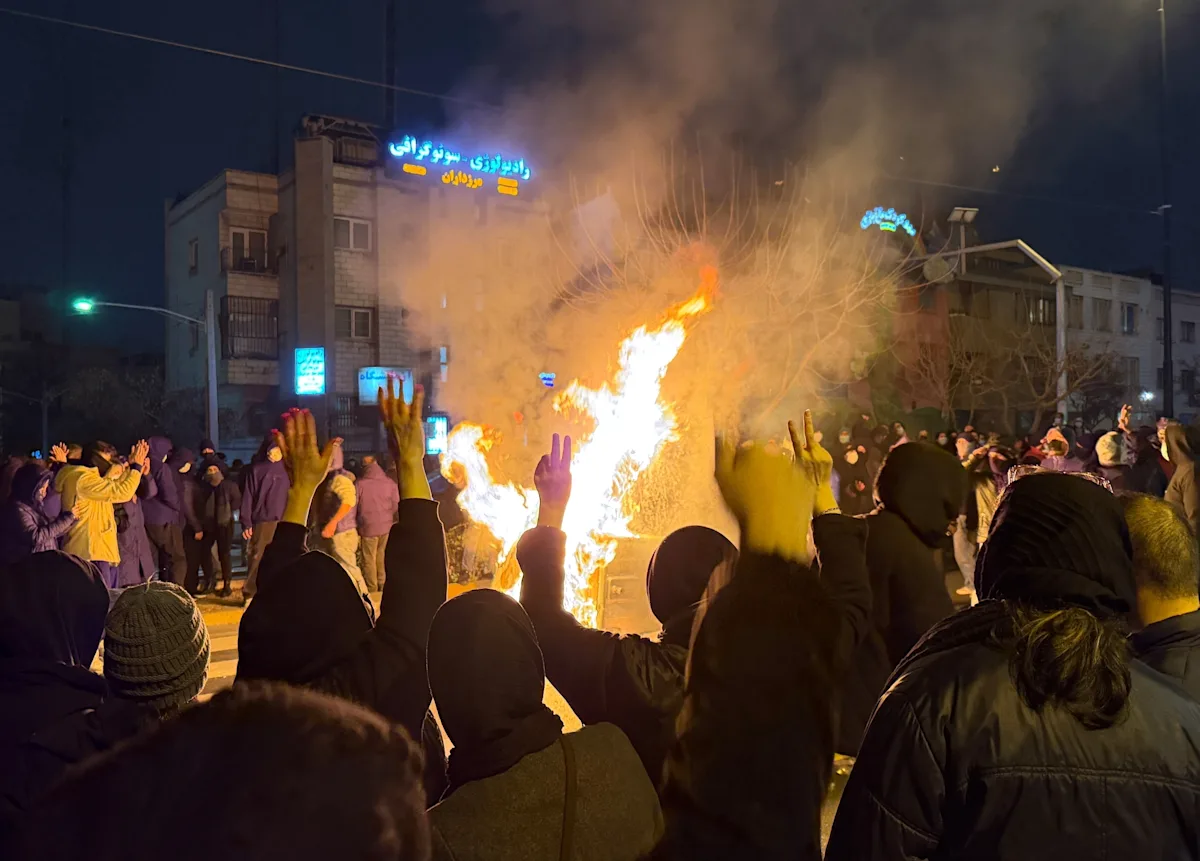
In the days of early January, plainclothes officers swarmed hospitals in several cities to treat thousands of people injured when Iranian security forces opened fire on crowds to quell mass protests against the 47-year-old Islamic republic. The agents monitored and sometimes hindered care for protesters, intimidated staff, arrested protesters and carried away the dead in body bags. Dozens of doctors were arrested.
The report is based on AP interviews with three Iranian doctors and six Iranian medical professionals living abroad with ties to local colleagues; reports by human rights groups; and verification by the AP of more than a dozen videos posted on social media. All doctors in Iran spoke on condition of anonymity for fear of reprisal.
The AP worked with the Berlin-based organization Mnemonic to identify online videos, posts and other material related to hospital violence.
Doctors in Iran and abroad say the level of brutality and militarization of medical facilities is unprecedented in a country that has experienced decades of repression of dissent and surveillance of public institutions. On at least one occasion, snipers on the roof of a hospital in the northern town of Gorgan opened fire on approaching patients, according to eyewitness accounts provided by the U.S.-based Iranian Healthcare Professionals Association IIPHA.
The Oslo-based Center for Human Rights in Iran has documented numerous incidents in which security personnel within hospitals have blocked medical services, taken patients off ventilators, harassed doctors and detained protesters.
“This is systemic,” said the group’s founder, Amory-Moghaddam, an Iranian-Norwegian neuroscientist. “And we’ve never experienced this pattern before.”
The government blames the protests and subsequent violence on foreign-backed armed “terrorists.”
Health Ministry spokesman Hussein Kermanpour denied reports that treatment was being blocked or that protesters were removed from hospitals, calling them “untrue but also fundamentally impossible.” State media quoted him as saying that all the injured were treated “without any interference from discrimination or political views.” Iran’s mission to the United Nations did not immediately respond to a request for comment on the doctor’s account.
Doctors try to protect the injured
The crackdown, which reached its peak on January 8 and 9, was the Islamic Republic’s most serious crackdown since it came to power in 1979. The full toll and other details have been difficult to emerge because of internet restrictions imposed by authorities.
The human rights activist news agency said more than 7,000 deaths had been confirmed and thousands more were being investigated. The government acknowledges more than 3,000 deaths but has underestimated or failed to report deaths from past riots.
After the crackdown began, Rasht’s doctor said he endured 66 hours of hell, going to different facilities every day to help the wounded – first a trauma center, then a hospital and finally a private clinic.
On January 8, “every 15 to 30 minutes, the entire emergency room would be emptied and then filled with new patients,” the doctor said.
On January 9, the situation worsened, with live-fire injuries becoming more common and security personnel becoming more threatening.
Doctors said Secret Service agents took in injured protesters and monitored them as crews worked. Armed with automatic rifles, they stormed into wards, threatening staff, filming patients and checking documents.
When it came time to discharge patients, he said, “They would take away anyone who was confirmed to be a protester.”
At one point, security personnel brought in the body of a deceased man, his hands cuffed in front of the body. He said he was shot in the abdomen and chest and had an apparent gunshot wound to the head.
He recognized the man immediately. Not long ago, his family was displaying his photo around the hospital, asking if he was admitted.
Raha Bahrini, Amnesty International’s Iran researcher, said Amnesty International has received credible reports of targeted close-range shootings of protesters “on a scale far greater than previous crackdowns on protests.” Two videos verified by The Associated Press show close-up shots of protesters with medical equipment attached to their bodies.
The doctor said he and other staff members tried to hide injured protesters by recording incorrect diagnoses in hospital records. A gunshot to the abdomen was determined to be abdominal pain; a fracture was recorded as a fall accident. One patient who was shot in the genitals was identified as a urology patient.
“We know that no matter what we do for our patients, once they walk out of the hospital, they are not safe,” he said.
The Associated Press could not independently confirm the doctor’s account of events at Rasht Hospital. But that’s consistent with other AP reports.
The Associated Press confirmed the videos released by four hospitals were snapshots of Iranian security force activity. Mnemonic collected dozens of videos, posts and other accounts that it said showed troops in and around nine hospitals, in some cases firing guns and tear gas. Mnemonic has been preserving digital evidence of human rights violations in Iran since 2022, working with partners to create an archive of more than 2 million documents.
A video verified by The Associated Press showed security personnel breaking through a glass door to enter the Imam Khomeini Hospital in the western city of Ilam. They then burst into the hall with guns drawn and yelled at people.
The health ministry told state media it was investigating the incident and said it was committed to protecting the medical center, staff and patients.
Other videos verified by The Associated Press showed heavy security forces surrounding three Tehran hospitals, firing tear gas and chasing protesters.
Treat hidden casualties
Other doctors work in clandestine centers, treating the wounded far from authorities.
On the evening of January 8, a 37-year-old general surgeon received a call from a professional friend he had not seen for many years while out for dinner in Tehran. The friend, an ophthalmologist, spoke slurred words, but the fear in her voice suggested she desperately needed his help. She gave him an address.
Just before midnight, he drove to the address, a plastic surgery clinic. Walking in, he found that the hall had turned into a trauma ward. There were more than thirty injured men, women and children on the sofa and on the blood-stained floor, shouting,
By his estimate, surgeons were there for nearly four days and treated more than 90 people, while volunteers brought in more wounded. At first, it was just him, the ophthalmologist, the dentist and two nurses.
He used cardboard boxes and soft metal pieces as splints for broken bones. Since there was no anesthesia or strong painkillers, he was given a weaker suppository painkiller. The clinic had no blood supply or transfusion capabilities, so he rehydrated them and raised their blood pressure through intravenous drips, a process that took several hours.
At some point that night, the phone lines were cut and he was unable to call for further help for 12 hours. They cannot take patients to hospitals for fear they will be arrested.
Surgeons recalled that a woman in her 30s was shot by a bird at close range, destroying the roof of her mouth, around her nose and under her eyes.
A young man in his 20s was hit in the elbow by a live round, shattering it. The surgeon stitched up the wound but knew the arm would have to be amputated.
Surgeons said a family of four – mother, father and their children aged 8 and 10 – were covered in particles. The big boy had dozens of pellets in his face, but surprisingly none of them hit his eye.
On the morning of January 9, the phone lines were back up again and the surgeon contacted his trusted doctors to refer the patient to them. First, he must make sure that all bullets and pellets are removed from their bodies so that they are not detained in the hospital. He wrote the referral letter stating that the patient had been involved in a car accident.
The surgeon summoned three other doctors to help at the hidden clinic. As new casualties were brought in, patients who had been stabilized applauded and gave them victory signs, he said.
“They started to lighten the mood through the pain… I couldn’t believe that moment,” the surgeon said, his voice cracking. “It’s so humane.”
He said none of the injured at the clinic died, but two bodies were brought in with gunshot wounds to the head. The Associated Press could not independently confirm the surgeon’s account of events at the clinic.
Doctors targeted for arrest
Homa Fathi, an Iranian dentist who is studying for a doctorate, said at least 79 health care professionals have been detained since January 9, including a dozen medical students. Canada’s IIPHA member has been monitoring the Iranian government’s actions against health professionals since 2022. Fathi said many of the detainees were accused of resisting orders from security personnel or other charges related to providing medical care to protesters.
Fati said about 30 people had been released, most on bail, but many still faced charges, including one accused of “waging war against God,” a crime punishable by death. She said authorities were also monitoring some doctors at home to ensure they did not receive or visit injured protesters — an unprecedented level of control.
A surgeon who treats protesters at a secret clinic said he was surprised security forces never raided the site to make arrests.
But there have been more arrests since then. The surgeon general said two health workers who were volunteering at the clinic were snatched from their homes.
“I’m waiting too.”