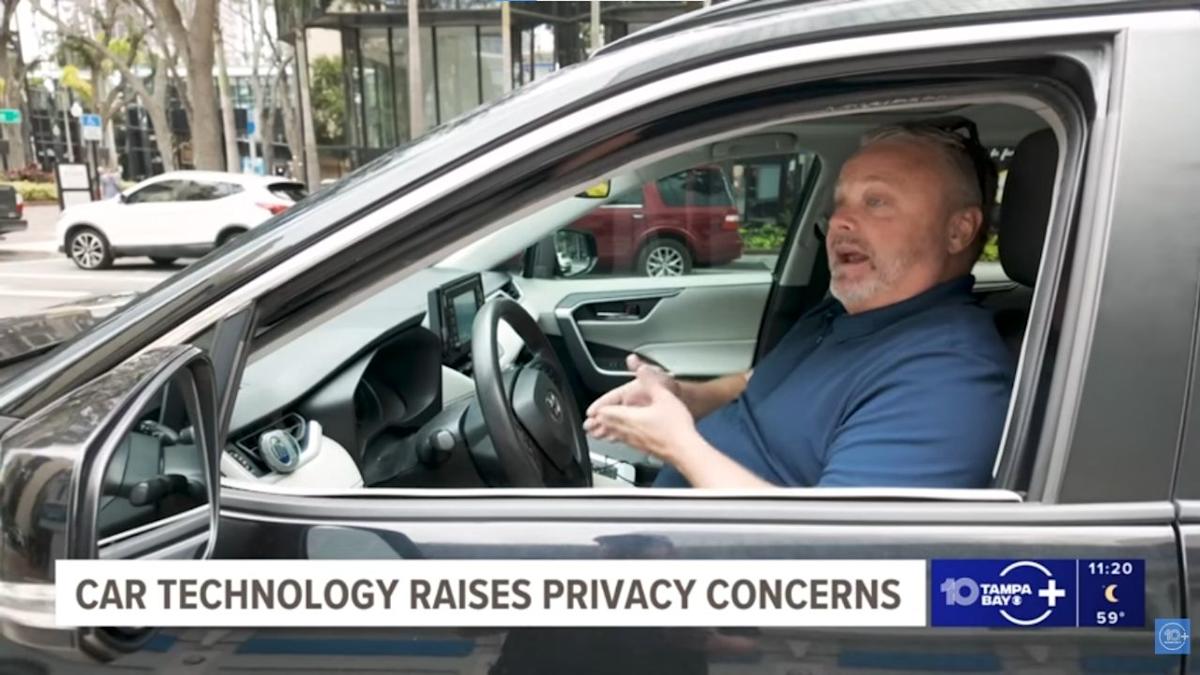
When most people think about what their car knows about them, they probably think of the basics: mileage, fuel usage, maybe if the check engine light is on. Few people imagine that their vehicles might quietly collect details about every time they drive—where they go, how they brake, how often they drive at night—and then share that information with an outside company.
That’s exactly what WTSP-TV in Tampa Bay says a Polk County man is alleging in a lawsuit against Toyota. The story quickly captured the attention of drivers across the country.
Eagle Lake resident Philip Siefke filed a lawsuit in federal court claiming his Toyota does more than just help him get from point A to point B. According to his lawsuit, Toyota’s connected vehicle systems recorded surprisingly rich data about his driving and then provided that information to third parties – all without his express and informed consent.
Siefke was shocked when the news came to light last year, and many other drivers wondered what their cars might be sharing.
Ironclad evidence

Image source: Toyota.
Siefke made the discovery in early 2025 when he was applying for auto insurance from Progressive. During the online process, he opted out of the insurance company’s own usage-based data plan, believing it would prevent the transmission of any driving information.
Instead, a pop-up message informed him that Progressive already had detailed driving data on him from months ago. The data relates to his vehicle, not the insurance company’s procedures. Confused, he called Progressive and was told the information came from Toyota itself.
When Sifke contacted Toyota, shock turned to disbelief. A customer service representative told him that his purchase of the vehicle automatically enrolled him in a trial of Toyota’s data-sharing program. Sifke said he was never informed of the trial’s existence, that data would be shared outside Toyota, or that opting out later might not stop the flow of information.
Connected car data pipeline

Image source: Autorepublika.
The lawsuit paints a picture of Hyundai’s automaker’s deeper push into connected data. Vehicles built in recent years are often equipped with telematics systems that can collect GPS location, speed patterns, braking and cornering behavior, seat belt usage, and even vehicle health information.
Toyota then allegedly provided the data to Connected Analytic Services, which provided the data to insurance companies such as Progressive. Drivers only discover this when they are surprised to find that their insurance application already shows months of driving history that they thought no one but themselves knew about.
Sifke asked the court to certify his complaint as a class action, arguing that thousands of Toyota owners across the country may have been similarly tracked and that they were never clearly and upfront informed about how their information would be collected and shared.
But late last year, a federal judge ruled that the case could not proceed as a class action because of an arbitration clause contained in Toyota’s terms of service and connected services agreement. Instead, Sifke must pursue his claims individually through arbitration. His attorneys at Morgan Stanley are working to explore avenues to still seek relief on behalf of other drivers.
The complaint alleges violations of multiple federal laws, including the Wiretap Act and the Computer Fraud and Abuse Act, and alleges invasion of privacy, breach of contract and unjust enrichment. The case seeks damages in excess of $5 million, and although arbitration is the only way to resolve the issues, individual outcomes remain uncertain.
A wake-up call for drivers everywhere
Drivers across the country are paying attention. On social media automotive forums, owners of Toyota and other Hyundai vehicles have shared their concerns about telemetry data and the data automakers are allowed to collect and share. Some people said they discovered data was being sent even when they thought they were opting out. Others warned readers to double-check privacy settings in vehicle apps if they wanted any control.
The case raises troubling questions about how much personal activity and behavior we freely give up when we buy a “smart” car. It also highlights how agreements in the fine print can guide legal outcomes, moving disputes from public courts to private arbitration. The issue is not just compensation for a driver, but whether consumers should expect to know what modern vehicles do with the digital footprint they create.
Source: WTSP-TV, Lutzker & Lutzker

