00:00 Speaker A
For more on what the SpaceX IPO means for other aerospace companies looking to go public, as well as the overall outlook for next year, I’m joined by Space Capital founder and CEO Chad Anderson. He is also the author of “The Space Economy.” Nice to meet you.
00:15 Chad Anderson
Yes, it’s great to be here.
00:16 Speaker A
So, I’m very curious about SpaceX and wondering if it will suck the air out of the room for other types of space investments or create more of a halo effect for space investments.
00:30 Chad Anderson
I think it’s definitely a ladder. Well, that’s really exciting news. Not sure yet, but we’ll see what happens. But if they did, I mean, I think it would set a new benchmark. It will reprice many assets across the class. I think it will show what we can do. I think this will create a wave of new listings. So that could be really exciting. And then from our perspective as private market investors in early-stage companies, we’re really excited to see what happens when these founders get some liquidity, they have stock options and stock, they now go on, they’re freed from the constraints of working at a big company and they can go, you know, um think about what they want to do and start their own thing. So we expect this to increase the number of SpaceX mafia. I mean, a few years ago, we tracked 45 companies or companies similar to SpaceX alumni that went on to start new companies. Now, I don’t know, approaching 200, we’ll see what happens with this uh liquidity event. But for us, I mean, well, SpaceX is an Apex player. They are 10 years ahead of everyone else. They’ve been setting the benchmark. Uh, moments like this right now, um, we’ll see what happens, but it can really catalyze a lot of activity.
01:46 Speaker A
I mean, on the other hand, if they’re so far ahead of everyone else and then their data is public, does that mean that some of the other players, especially in the open market, their data is also public, they’re going to be at a disadvantage if they’re not in the same position as SpaceX.
02:08 Chad Anderson
Well, well, that’s a very interesting point. So I think SpaceX has stayed private for so long and they have a lot of demand. um uh this is the hottest stock in the private markets. Everyone is vying for a chance to get into SpaceX. Um, I think it’s really kind of difficult, um, to keep quiet when you have so much interest and so many investors. So, you know, you see a lot of information in the news
02:42 Speaker A
Correct.
02:42 Chad Anderson
What do they look like, right? So, um, it’s not um, so that pussy has been leaked.
02:47 Speaker A
So it doesn’t necessarily change the dynamic.
02:49 Chad Anderson
Yes, I think so. So you can see what the numbers are, last year it was 13 and this year it’s 15. You start to think that growth is not parabolic, uh uh, their growth is not parabolic. But they’re cash flow positive and they’ve been buying back stock, right? So I think that’s really going to give them a big cash infusion to do some of the long-duration missions to Mars, build data centers in orbit, fund them, and really get a big cash infusion to basically speed things up and go faster.
03:26 Speaker A
Well, one of them is also one of the projects they’re working on called Starship. Well, how important is that? What’s the timeline for something like that?
03:38 Chad Anderson
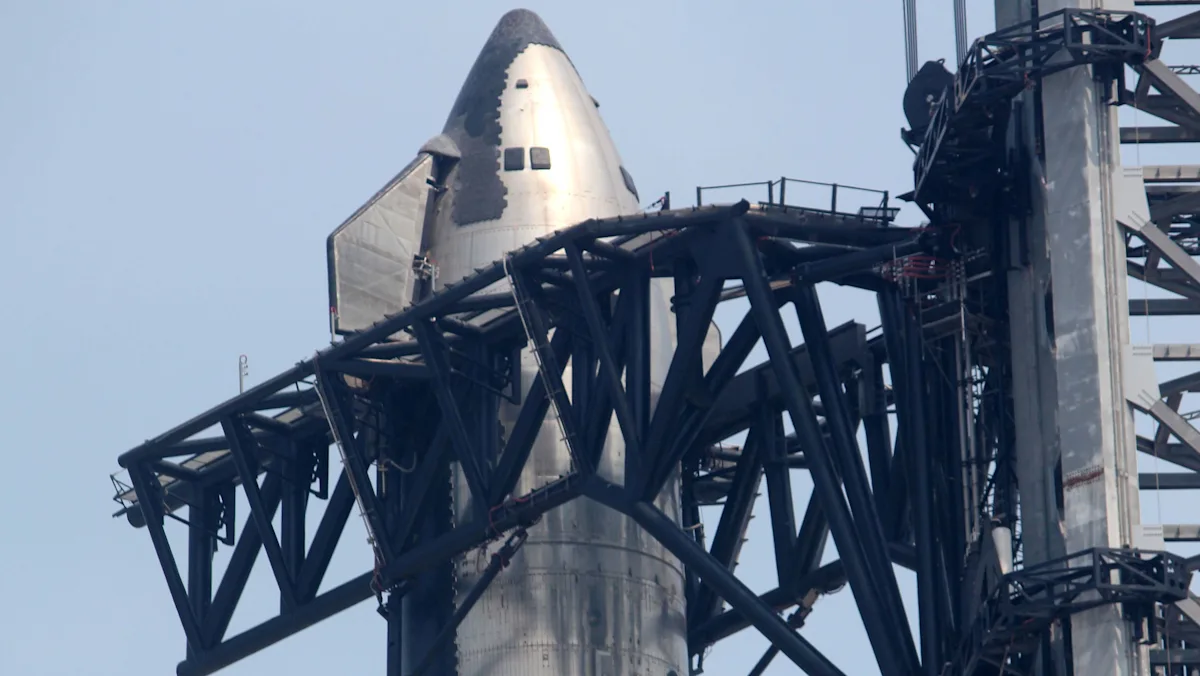
Super important. So Starship is the next generation of large aircraft. Well, we’ve never had anything this big. So if 2025 is the year of launch frequency, we’re basically, we start launching, we launch almost every day, once a day, right? And the pace of releases is accelerating. 2026 will be about the masses. Well, a starship is a huge vehicle. It will be fully reusable, meaning both the first and second stages of the rocket can be landed, refueled, stacked and launched again. More like operating a commercial airline, that’s really exciting because that’s going to be another order of magnitude change that it promises to bring, further lowering launch costs, which is really going to play a big role again, to have a halo effect, you know, comments that really spur growth in this category. Um, but at the same time, that vehicle is necessary to launch the next generation of Starlink satellites, and they’ve designed the V3 satellites and they’re just waiting for a vehicle that can carry them. The orbital data center that they’re talking about right now in connection with a potential IPO, uh requires Starship to be able to launch these things, right? So, this is a key. This is critical to their strategy, but also critical to taking the space economy to the next level.
05:22 Speaker A
What’s another thing you’re keeping an eye on next year? Geointelligence and Defense. These are some themes in space. So what should we pay attention to?
05:33 Chad Anderson
Yeah, I’m just thinking about the overall integration of AI and space, right? We talked a little bit about orbital data centers. Everyone seems to be talking about this now. Well, Starship and Blue Origin’s next generation vehicles will also allow us to launch new infrastructure that, you know, we haven’t been able to do before, like orbital data centers and some other things. So this is very interesting in terms of artificial intelligence. And, um, about geospatial intelligence. So, if GPS is the points on the map, then geospatial intelligence is the map. This is digital information that sits on top of the physical world. A lot of that comes from global intelligence that comes from satellites, um, and different types of sensors that are feeding in this very powerful, rich data set about what’s going on on the surface of the Earth. This data is too much for humans to sort through. So, um, artificial intelligence is coming in at the right time to basically help us parse it and understand it and get useful insights from it. This is a huge growth area. What we see is what we call a model of the world. So, everyone is familiar with LLM and what happens there, but that doesn’t really help us understand and navigate the physical world. So there’s a lot of work going on right now in geospatial embedding, basically embedding data to get the right geospatial information, coordinates, positioning data, rich data layers to basically help you use artificial intelligence now to understand the physical world, right? It’s not just language. So, this is a huge area of opportunity. Well, a lot of the demand is driven by the defense and intelligence communities, but there are also a lot of consumer and enterprise applications.
07:02 Speaker A
Very cool. Okay, Chad, we gotta leave it there. Thank you so much. Appreciate it.