The broker told his client that he had a relative in the “Little Reds” with ties to the “Famous Suns” who, for an upfront fee, would guarantee the safe passage of cocaine-laden containers to ships docked in Venezuelan ports.
The cocaine, which was hidden inside two generators and weighed 32 kilograms, was destined for Libya.
According to wiretap recordings obtained by CBC News, the broker, who goes by the pseudonym Luisto, tried to assure his client, who went by the pseudonym Julio, that Venezuelan military officers would not steal his money or goods.
“Someone has to guarantee it,” Julio said, according to a cellphone recording.
“They are military, there is no guarantee given to them … they are there to work. The day the truck arrives, they receive it and place it [on the ship],” Luisto said.
CBC News has obtained more than a dozen wiretap recordings of a two-year investigation by Colombia’s federal police into a transnational drug-trafficking organization based outside Colombia.
The organization uses human drug mules to transport cocaine by air and in shipping containers to the United States, Europe, Asia and North Africa.

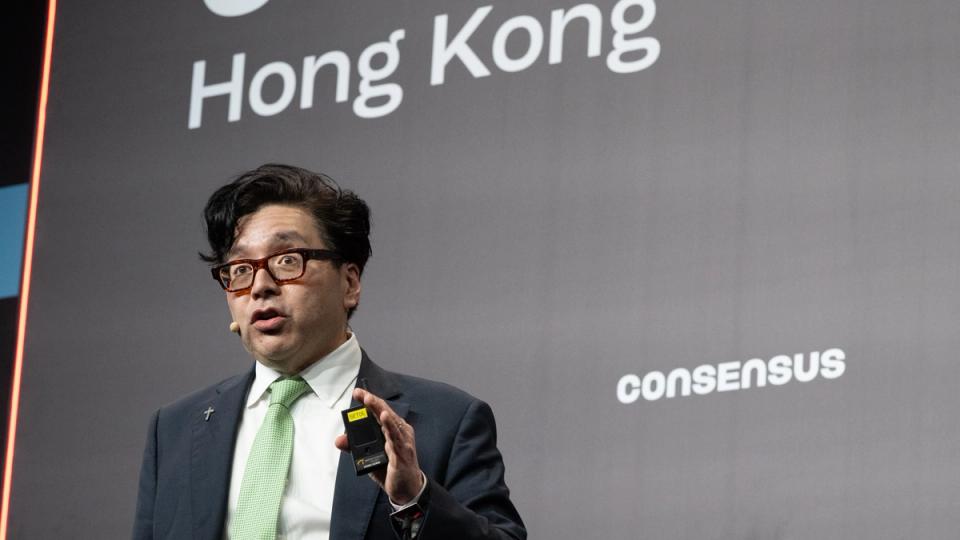
Luis Ernesto Galvez Martínez, also known as Luisto, left, and Luis Fernando Martinez, also known as Julio, were caught by cell phone taps as they planned to deliver cocaine to Libya with the help of the Venezuelan military. (Canadian Broadcasting Corporation)
The two-year investigation was initiated by the U.S. Drug Enforcement Administration (DEA) and concluded in 2016. Cellphone interceptions captured members of the group discussing deals with Venezuelan military officials who oversee the international port of Guarano in Falcon state.
The Venezuelan government denies any links to drug trafficking, and no government party or military officials were captured in the wiretaps obtained by CBC News.
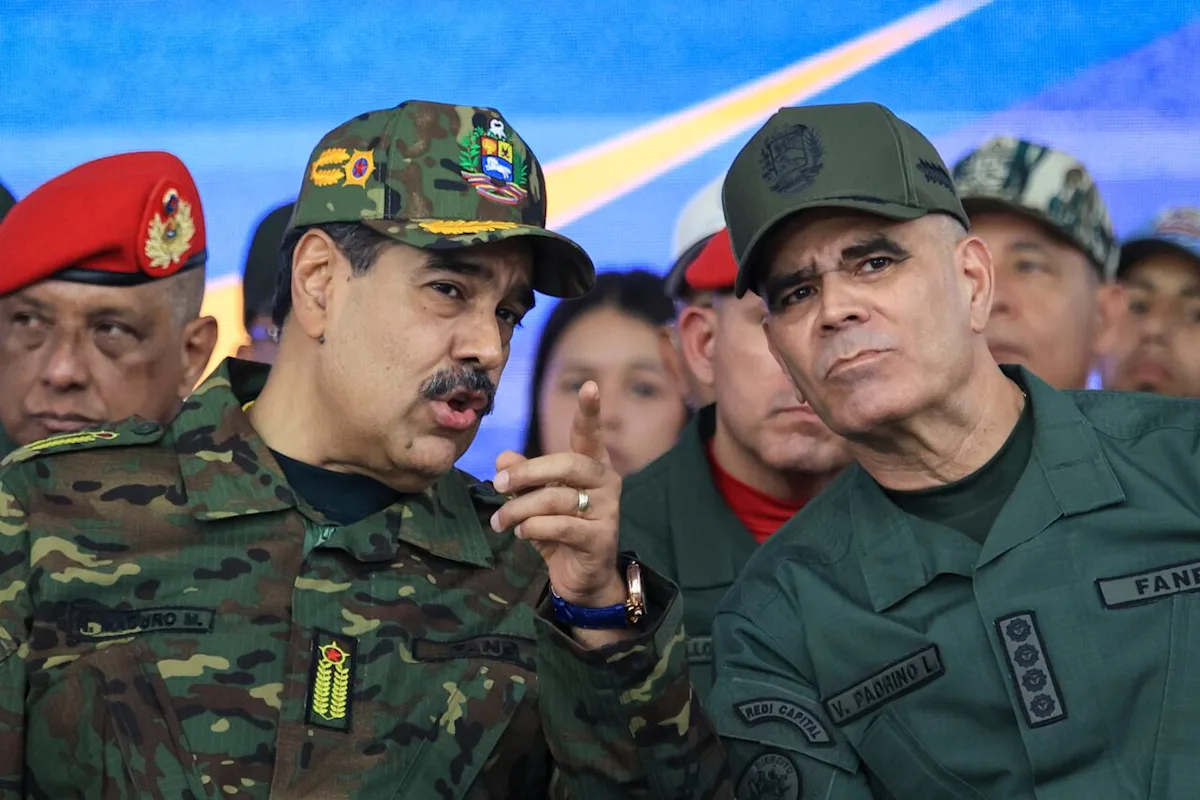
In wiretapped conversations, agent Luisto repeatedly used the nickname “The Sun” whenever he referred to senior Venezuelan military officers. The nickname refers to the insignia worn by senior Venezuelan military officers on their uniforms to indicate their rank.
He also mentions the color red whenever he mentions the ruling United Socialist Party of Venezuela (PSUV).
“These conversations helped us understand that the ‘Sun Cartel’ actually existed … they were high-ranking military officers, generals, with the authority to control all cocaine shipments coming from their country,” said a former Colombian federal drug agent involved in the case.
CBC News is not identifying the former agent because he is not authorized to release internal details of the police investigation.

In 2020, more than 800 kilograms of cocaine were seized from a plane departing from Venezuela in Laguna Bruce, Gracias Dios Department, Honduras. (AFP, Getty Images)
The former agent said he learned of the term “Sun Cartel” through conversations with confidential informants in other investigations. He said the Venezuelan regime has close ties to the drug trade.
“Sources told us they have secret runways where they transport planes loaded with drugs and the authority they have to control everything related to drug trafficking,” the agent said.
He said the U.S. federal criminal case against captured Venezuelan President Nicolás Maduro and his wife, Celia Flores, was likely based on similar cases.
Maduro and Flores were arrested in a U.S. military strike on January 3. They face charges including conspiracy to commit narco-terrorism and conspiracy to import cocaine in U.S. federal court in New York City.
The U.S. indictment against Maduro and Flores describes the Sun Cartel as “a patronage system” in which “Venezuela’s elite enrich themselves by selling drugs and protecting their fellow drug traffickers.”
The wiretaps obtained by CBC News, all recorded in April 2016, show how Julio planned to use a fake Venezuelan ID and a local company to ship the cocaine in a container containing two generators and other similar equipment so it would weigh at least a ton.
Julio wants to ship containers from Venezuela to Brazil and then to Libya. Before he turned to Luisto for help, he was burned by another contact, according to wiretap information. Luisto, a broker, said he recently shipped 50 kilograms of cocaine to Portugal hidden in a shipment of several tons of charcoal.
Luisto said he has a relative who is a member of the United Socialist Party of Venezuela.
“He did some little things there and had a little bit of power in Punto Fijo,” Luisto said, according to a wiretap intercepted at 6:10 p.m. on April 4, 2016.
Punto Fijo is a city close to the Guarano International Port, which is located on a peninsula about 548 kilometers northwest of Caracas, the capital of Venezuela.
“Isn’t it dangerous to work with these people you mentioned?” Julio said in a second phone call intercepted at 6:43 p.m. the same day
“The little red men? No, they’re the ones in charge of the ports… There’s no more DEA [U.S. Drug Enforcement Administration]nothing,” Luisto said.
“I don’t want them to steal [the product],” Julio said.
“They don’t have to do it, they’re the ones who do it with the famous Suns, they have a connection to the Suns’ output,” Luisto said. “They have their own way of sending it.”
Luisto said his relative was dealing with a senior military officer and three subordinates who were working together.
The military has complete control of the port, he said, and each shift has its own sideline, charging a base fee of $8,000 and up based on volume for containers to pass through and be loaded onto ships.
“They’ve been doing this for a long time… when I told [my relative] That’s just 16 kilograms of cocaine [per generator]he said it wasn’t a lot, if you only knew how many there were [cocaine] They’re heading out from here,” Luisto said on the same call.
Julio still worries about being cheated.
“How do I know the police won’t steal money or stuff? [generators]? ” He said when he received the third call at 7pm that night.
“They are sending products every day… taking turns passing through the airport, taking turns taking boats, because they are interested in money, they are not interested in bolivars [the Venezuelan currency]they are interested in [U.S.] dollars because they send it to offshore tax havens,” Luisto said.
Luisto told Julio that he just needed to make sure his documents would pass customs procedures, as the officers were only responsible for “anti-narcotics inspections.”
The former Colombian federal police anti-narcotics agent told CBC News the shipment arrived in Libya, but authorities eventually charged Luisto and Julio, who were later convicted and jailed.