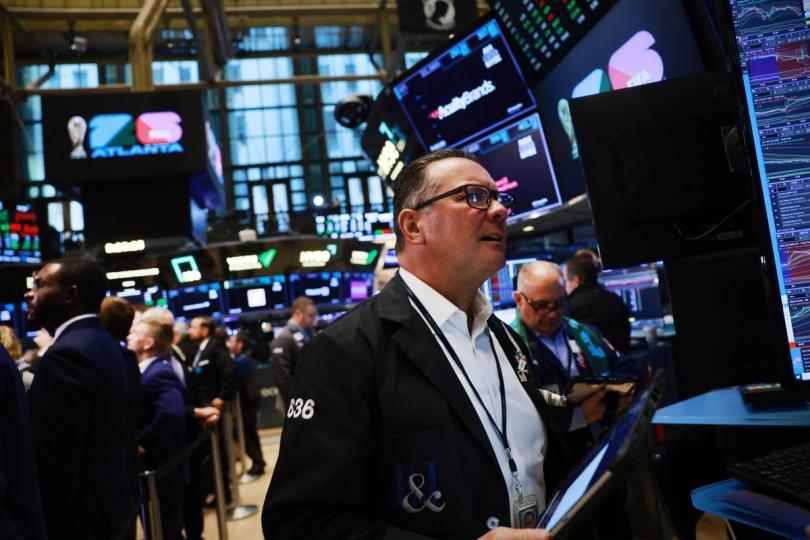
Bitcoin briefly rose to $74,000 this week, driven by a series of bullish developments that brought the crypto industry more closely together with traditional finance.
Some market watchers are starting to call this a bullish rally, with one analyst even saying there is “support” for a new rally.
However, the rally did not last. By the end of the week, the largest cryptocurrency had fallen back below $69,000, losing $110 billion in market capitalization.
The pullback comes despite what might be considered one of the most positive institutional news for the industry in months.
Morgan Stanley has appointed BNY Mellon as the custodian of its spot Bitcoin ETF exposure, adding another layer of Wall Street infrastructure to the asset class. Cryptocurrency exchange Kraken has gained access to the Federal Reserve’s payment system, a milestone in the cryptocurrency company’s integration with the U.S. banking network. Intercontinental Exchange (ICE), owner of the New York Stock Exchange, has invested in cryptocurrency exchange OKX, valuing it at $25 billion, while US President Donald Trump has publicly suggested that traditional banks should develop viable relationships with the cryptocurrency industry.
Individually, any of these developments could have triggered a market rally earlier in the cryptocurrency cycle, when institutional adoption was seen as the catalyst that would launch cryptocurrencies into a massive bull run. Instead, now that it has been adopted, the market has ignored it because macro forces have taken over.
Why sell off
The sell-off was largely triggered by a stronger dollar as the conflict with Iran intensified, after U.S. President Donald Trump appeared to write off any chance of some kind of negotiated settlement with Iran, saying “there will be no deal with Iran.”
That triggered a spike in oil prices, fresh inflation concerns and a shift in interest rate expectations, putting pressure on global risk assets. As the U.S. dollar index rises and stocks fall, so do cryptocurrencies, which increasingly trade alongside technology stocks, a.k.a. risk assets.
If that wasn’t enough, the rift in global private credit markets also extended to Wall Street giant BlackRock, which reportedly began limiting withdrawals from its $26 billion private credit fund amid rising redemption requests. Blue Owl faced similar pressure last month when it sold $1.4 billion in loans to meet withdrawal requirements, and the events are beginning to unnerve investors.
reality check
So what does this week’s episode mean? The growing reality in the crypto market is that macro factors matter more than crypto-native news.
Over the past few years, Bitcoin has become more closely correlated with the Nasdaq and other risk assets as institutional investors entered the market. Hedge funds, asset managers and ETF flows increasingly view Bitcoin as part of a broader portfolio of macro-sensitive assets, reacting to liquidity conditions, interest rates and a stronger U.S. dollar.
Ironically, this dynamic may be facilitated by the same institutional adoption that many in the industry have long sought.
As Bitcoin integrates into traditional financial investment portfolios, its price is increasingly influenced by the volatile forces of stocks, commodities and currencies. When the U.S. dollar rises or interest rate expectations rise, liquidity tightens across the market, and cryptocurrencies are hardly immune.
This does not mean that steady agitation for institutional development is irrelevant. The expansion of custody services, bank access, and exchange investments suggests that a deeper, more mature crypto market structure is taking shape beneath the surface.
Who is selling?
When conflicting price moves like this hit the market, one question investors have is: who’s selling?
Macro risks seemed to scare most short-term Bitcoin holders, who cashed out when Bitcoin hit $74,000.
According to CryptoQuant analyst Darkfost, these short-term holders transferred more than 27,000 BTC ($1.8 billion) in profits to the exchange in the past 24 hours, one of the largest gains in recent months.
Short-term holders are typically the most reactive group in the market, and their selling reflects lingering caution amid the ongoing war with Iran and other macro uncertainties. These holders act more like traders, moving in and out of assets to make quick profits, rather than investors who want to buy and hold for the long term. These moves weaken price action as Bitcoin liquidity is thin
The data shows.
The only short-term investors currently profiting are those who accumulated Bitcoin a week to a month ago, when the actual price was around $68,000, suggesting that some recent buyers above that price chose to lock in gains rather than expand their positions.
In the short term, price is the only thing investors care about as cryptocurrencies are in the midst of a bear market and macro uncertainty since early October.
glimmer of hope
But it’s not all doom and gloom.
A recent report from Binance Research noted that U.S. spot Bitcoin ETFs recorded net inflows of approximately $787 million last week, the first positive weekly inflow since mid-January, suggesting that some institutional investors may begin to re-engage in the market after weeks of sustained outflows.
In fact, at a recent conference, large university endowments, which tend to focus on long-term returns, said that given the extremely high valuations of traditional stocks, they have begun to explore other alternative investment ideas, including ETFs related to digital assets.
The report also noted that there are signs that excessive speculation may have been washed away.
Bitcoin funding rates have fallen to their lowest levels since 2023, indicating that leveraged long positions have largely been unwound — a situation that historically creates a cleaner basis for a more sustained rally driven by spot demand rather than short-term speculation.
Ultimately, it all comes down to belief and market movement.
Some traders are calling the sharp gains earlier this week a “bull trap” – a brief breakout that attracts late-stage buyers before reversing lower. While institutional belief is growing, Bitcoin’s price action (this week at least) appears to have vindicated them due to thin liquidity, market instability, macro headwinds, and a lack of clear catalysts.
Read more: Bitcoin is in trouble, but JPMorgan says new legislation could be the ultimate spark