
What happens when your token announcement gets thousands of views, but almost nobody returns the following week? That is a familiar problem in Web3 social media marketing. Attention arrives quickly, especially around launches and rewards, yet turning it into a community that asks questions, tests products and stays involved requires a different approach. A large follower count cannot tell you whether people trust your project.
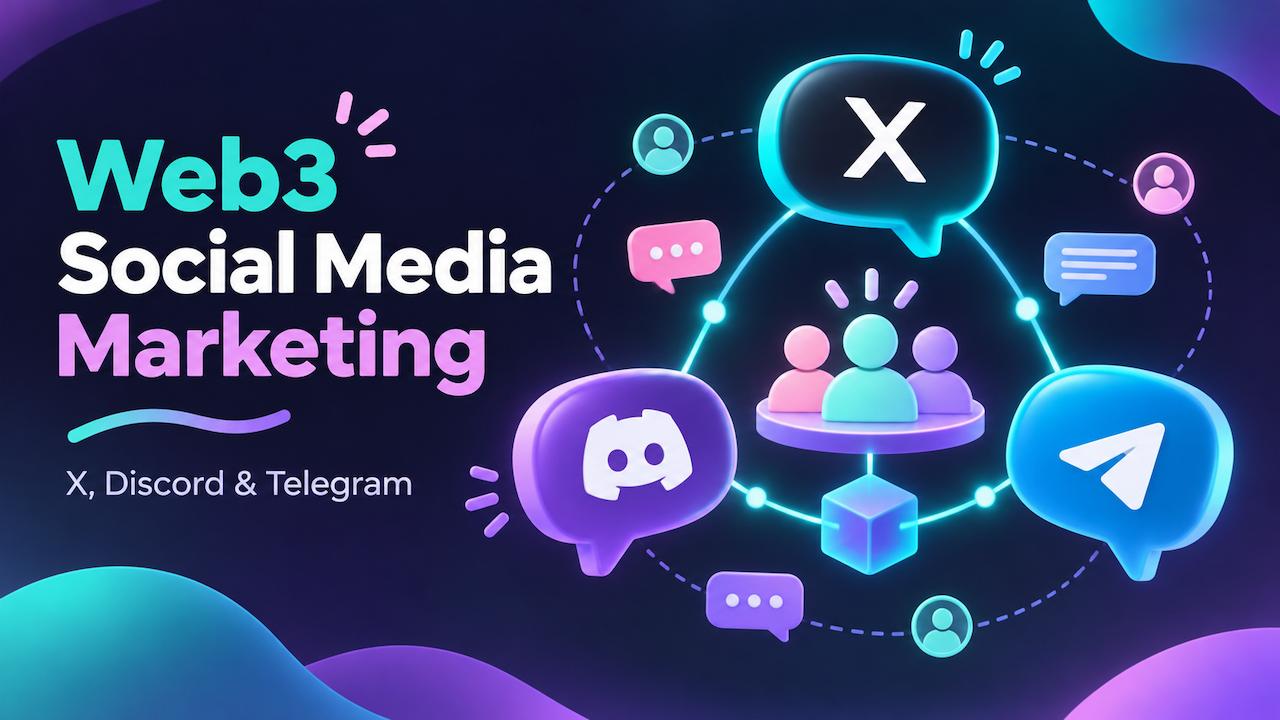
X, Discord and Telegram serve different purposes. X attracts attention, Discord encourages contribution, and Telegram keeps conversations moving. When you connect those experiences, social media becomes more than a distribution channel. It becomes a practical way to understand your audience, improve your product and earn repeat participation.
Why Audience Quality Matters More Than Follower Count
Crypto audiences are growing more varied. Chainalysis reported in its 2026 Global Crypto Adoption Index that transfers under $100 into crypto services increased 78.4% over the previous annual period. While not a social media metric, that shift makes everyday users worth understanding. Someone curious about making a small payment needs different information from someone evaluating smart contracts.
Start by identifying the people you want to reach: developers, traders, creators, potential partners or first-time users. Note their recurring questions and desired next actions. For a DeFi product, that could mean understanding risks, reading documentation or testing a feature. For a blockchain game, it may mean joining a playtest and reporting bugs.
Measure participation, not just attention. A community of 500 people who provide thoughtful feedback may be more valuable than 20,000 accounts that only appear when a giveaway starts.
Build Discovery and Credibility on X
X works well for public conversations, founder visibility and timely industry commentary. Instead of publishing only promotional announcements, explain the decisions behind your product. Share development progress, answer objections and comment on relevant discussions without turning every reply into an advertisement. Explaining a delayed feature can earn more confidence than another countdown graphic.
Make Your Posts Worth Responding To
Mix short observations with product demonstrations, educational threads and occasional live discussions. Ask focused questions such as, “Which wallet connection problem takes you longest to solve?” Then respond to answers with genuine detail. Avoid manufactured engagement, automatic replies and claims about guaranteed token returns. These may generate noise but rarely build a credible audience.
Give interested readers a clear next step, such as a documentation page or community discussion.
Turn Discord Into a Participation Hub
Discord is particularly useful when members need organized conversations rather than a continuous stream of updates. The platform reported more than 90 million daily active users in its Q4 2025 internal data. For Web3 teams, it separates developer support, feedback, governance and events into distinct spaces. A Web3 marketing and community support partner can help coordinate these conversations with public campaigns and product milestones.
Design for the Newcomer
Start with an announcements channel, a readable welcome guide, product help, feedback and one general discussion space. Add channels only when conversations genuinely need them. Discord’s Community Onboarding lets new members select relevant roles and channels, while Server Insights can show how often newcomers return and participate.
The Solana community offers a useful real-world model: its official community directory distinguishes X and Telegram announcements from an engineering-focused Discord. Smaller projects can apply the same principle. Give each room a specific job, run regular developer office hours and publish what changed because of member suggestions.
Use Telegram for Timely Updates and Support
Telegram is useful for quick announcements, regional conversations and immediate questions. The company reported passing one billion monthly active users in 2025, although that is a platform-wide figure, not a measure of crypto participation. Its speed makes it attractive for launches, but constant notifications can make valuable information disappear within minutes.
Separate Broadcast Messages From Discussion
Use a channel for verified updates and a linked group or clearly identified discussion group for questions. Pin the official website, approved administrator accounts and security guidance. Telegram supports topics, slow mode and anti-spam controls, which help moderators keep busy conversations readable. Cover major time zones without promising continuous support you cannot deliver.
During a testnet launch, for instance, post a concise status update in the announcement channel and direct bug reports to a structured form or Discord support thread. That keeps the chat useful without losing issues in hundreds of repeated messages.
Give All Three Platforms Different Jobs
Posting the same announcement everywhere saves time, but it ignores how people use each platform. A stronger approach starts with one important update and adapts its format. An X post explains why it matters. A Discord thread invites detailed feedback. A Telegram message shares the immediate action and verified destination.
| Platform | Primary role | Content that fits | Useful success signal |
|---|---|---|---|
| X | Discovery and reputation | Founder insights, demos, public discussions | Qualified profile visits and relevant replies |
| Discord | Learning and participation | Support, workshops, feedback, governance discussion | Returning contributors and resolved questions |
| Telegram | Fast communication | Confirmed updates, reminders, quick support | Meaningful questions and update reach |
This division also reduces the temptation to chase identical follower targets. A small Discord server can outperform a much larger Telegram group for product feedback. Equally, X may introduce future contributors who would never search for your server directly. Connect them through clear invitations and an official website.
Run a 30-Day Plan and Track Real Outcomes
Weeks One and Two: Listen, Then Publish
Audit existing conversations and list the ten questions people ask most. Set up channel descriptions, rules, moderator responsibilities and an official link directory. Publish three recurring content formats on X, schedule one Discord discussion and establish a predictable Telegram update cadence. Record baseline figures.
Weeks Three and Four: Test Meaningful Participation
Invite people to a product walkthrough or feedback session, then share a short summary of what you learned. Test a small educational campaign against a reward-led campaign and compare how many participants return after seven days. Avoid treating wallet connections or token claims as proof of genuine interest without examining follow-up activity.
Keep Security and Measurement Together
Review weekly returning members, substantive replies, support resolution time, documentation visits and completed product actions. Track referrals with channel-specific links, while respecting privacy. Display impersonation warnings, use Discord AutoMod and Telegram anti-spam controls, and never request seed phrases. Community growth loses its value when members cannot tell legitimate updates from scams.
Conclusion
Effective Web3 social media marketing does not require every channel to become the largest one. It requires a connected journey from first discovery to useful participation. Use X to build public credibility, Discord to deepen involvement and Telegram to deliver timely communication. Give people clear reasons to return, publish what you learn from them and protect the conversations you invite. The strongest sign of progress is not a sudden spike in members, but a growing number of people who keep showing up because your project helps them.
Frequently Asked Questions
1. Which platform is best for Web3 social media marketing?
There is no universal winner. X is useful for discovery, Discord suits technical discussion and ongoing participation, and Telegram works for rapid updates. Choose based on your audience’s habits and your team’s ability to respond consistently.
2. How often should a Web3 project post on X?
Begin with a sustainable schedule, such as several useful posts each week, and adjust based on replies and referral quality. Consistent product insights and thoughtful conversations matter more than filling a daily posting quota.
3. Should a new token project launch both Discord and Telegram?
Only if each serves a clear purpose and you can moderate both. A technical product may prioritize Discord, while an announcement-heavy project may start with Telegram. Add the second platform when demand supports it.
4. Are airdrops effective for growing Web3 communities?
They can attract attention, but incentives also attract people interested only in rewards. Connect campaigns to meaningful actions such as product testing, then measure return visits and participation after the incentive ends.
5. What metrics show whether a Web3 community is healthy?
Look beyond member totals. Track returning contributors, answered questions, event attendance, useful feedback, qualified referrals and actual product use. Review these alongside spam reports and support response times to understand both engagement and trust.
