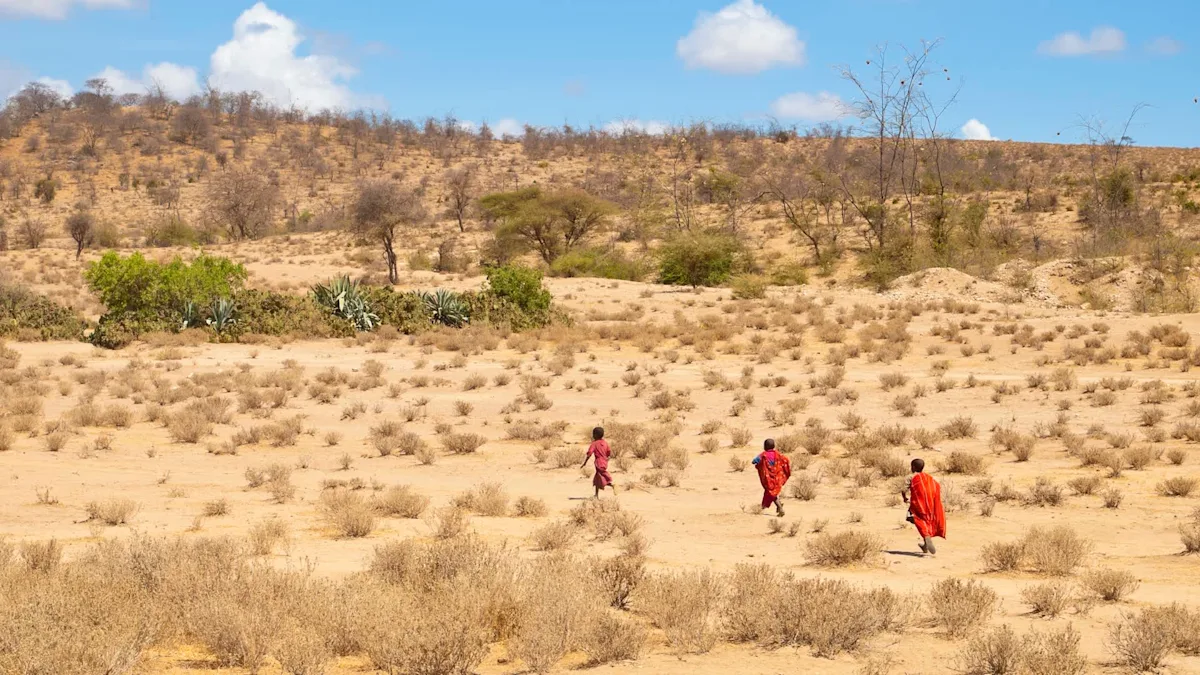
An East African country is preparing for a national emergency after a prolonged drought has devastated local crops and livestock.
What happened?
Kenya is in the midst of a months-long drought, worsened by a lack of rainy season and rapid climate change, Africa News reports. As a result, more than 2 million people face food insecurity and extreme water shortages.
The National Drought Management Authority has placed nine counties in the “alert phase” due to the drought. Mandela County is in the “alert phase” and is just one step away from an emergency.
Bishal Malim Mohammed, a resident of Tawakar village in Mandera district, described the bleak conditions in the area.
“I lost all my cattle and goats and burned them here,” he said.
Why is Kenya’s drought important?
The crisis has hit Kenya’s arid and semi-arid regions hardest. This has resulted in widespread livestock deaths and crop destruction, as seen in Mandera County. The drought has also prompted warnings of malnutrition and even possible outbreaks of infectious diseases.
According to a release from the NDMA, below-average rainfall during the typical rainy season in the region will only exacerbate drought conditions. Rising global temperatures associated with air pollution from the burning of natural gas and other fuels are known to lead to higher evaporation rates from water and soil.
This is putting pressure on the country’s rangelands and water resources, exacerbating tensions between communities and potentially triggering resource conflicts.
“In two weeks, this water will run out. Our situation is very bad,” said Aden Hussain, a resident of the area.
What is being done to help people affected by drought?
In addition to severe water and food shortages and livestock deaths, locals fear the most vulnerable in their communities may soon die from the shortage.
“Our children are the next to die,” Marin Mohammed said, according to Africa News.
In response to the severe situation across the country, the government has promulgated a number of response measures aimed at easing the plight. This includes food delivery and water truck jobs.
“These interventions are part of a wider, coordinated national effort to stabilize the situation and prevent further deterioration,” NDMA chief executive Hared Hassan Adan said, according to the Kenya News Agency. “These measures complement cash transfers under the Hunger Safety Net Programme, as well as nutrition, health and livelihood support implemented in partnership with county governments and partners.”
Get TCD’s free newsletter for simple tips to save more, reduce waste and make smarter choices, and earn up to $5,000 toward clean upgrades in TCD’s exclusive Rewards Club.