If you thought the AI boom was just a result of chatbots and new products, it’s time to think bigger.
Wall Street has quietly become the financial engine behind the expansion of artificial intelligence in the United States, pouring money into giant data centers, power-hungry chip farms and next-generation computing campuses.
They are doing so despite analysts warning of overinvestment, slowing returns and echoes of past bubbles like the early 2000s.
The financial push behind the artificial intelligence boom is shaping not just Silicon Valley but the broader economy. As Wall Street steps up its efforts to finance debt-ridden data centers, the ripple effects could ripple through everything from household borrowing costs to electricity bills. If the AI wave is indeed a bubble, Americans who have never bought tech stocks may still find themselves in the blast zone of a bubble that bursts.
A few years ago, Blue Owl Capital provided loans to companies such as Sara Lee Frozen Bakery. Today, the same companies are financing $10B to $30B AI data center deals for Meta, Oracle, and OpenAI(1). Blue Owl recently secured a $30 billion financing package for Meta’s Louisiana data center, putting in $3 billion from its own customers and borrowing the rest, obtaining “debt-like guarantees” to cushion its equity if the project underperforms(2).
It’s part of a larger trend of private credit giants, big banks and everyday asset managers rushing into artificial intelligence infrastructure, as tech companies need large amounts of cash to boost computing power.
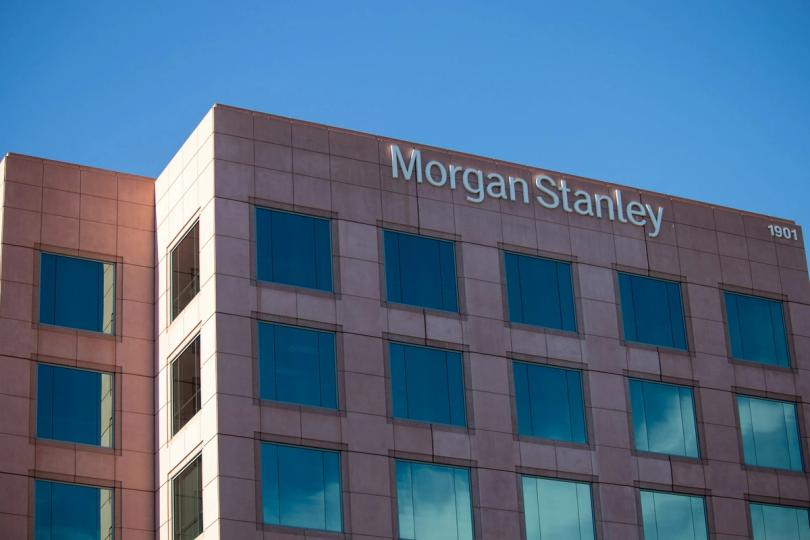
Morgan Stanley analysts estimate that AI infrastructure spending will approach $3 trillion by 2028, but only about half of that can be funded by technology companies’ projected cash flows. In other words: someone has to lend the difference (3).
This financing gap has fueled concerns that we may be entering a bubble, similar to the telecom boom of the late 1990s, when companies laid out massive amounts of fiber in anticipation of demand that never quite arrived (4).
Goldman Sachs CEO David Solomon warned, “Whenever technology accelerates and people get excited about it, you’re going to see a lot of capital being formed by new companies trying to take advantage of that opportunity,” he said. “We’ve seen this before historically,” he added. “It’s not going to be a straight line.”
Solomon said the opportunities presented by artificial intelligence are “enormous,” and “there will be winners and losers, but it’s hard to choose them right now.” He adds that many of the dollars invested may not yield big returns, and some won’t yield any returns at all (5).
But so far on Wall Street, the fear of missing out outweighs the fear of a bubble.
So who’s cutting the big checks?
-
Blue Owl Capital is becoming a large lender in artificial intelligence infrastructure.
-
Meta, Oracle, and OpenAI are leveraging billions of dollars in borrowed capital: Oracle, for example, is working on a $38 billion debt deal to support its data center construction related to OpenAI’s Stargate project (6).
-
BlackRock and PIMCO are snapping up bonds to fund these projects(7).
-
Morgan Stanley played a major role in advising on the Blue Owl deal(8).
Read more: Heading into 2026, here are 5 market moves you can’t ignore, and what savvy investors are preparing for now
Although trillion-dollar deals may seem far away from the average American, these mega-projects can ripple into your daily life. Here’s how:
Credit markets tighten: When trillions of dollars flow into AI, there will be less room for mortgages, auto loans, and small business credit, and interest rates will rise.
Higher electricity bills: Large-scale AI data centers could put pressure on local power grids, forcing utilities to raise prices to fund new generation generation and transmission (10).
Lack of transparency in government budgets: Cities and states are offering tax breaks and infrastructure subsidies to attract these data facilities, but are not always transparent, raising concerns about how public funds are spent (11).
Construction bottleneck: Skilled labor, concrete, steel and transformers are being gobbled up by AI mega-projects, which could mean fewer resources for housing and commercial development (12).
Even if you’ve never bought Nvidia stock or turned to ChatGPT for recipes, your electric bill, mortgage rates, and local taxes may be starting to feel the effects of the massive AI boom. In the meantime, here are a few ways you can prepare if the bubble bursts:
-
Keep consumer debt low. If credit tightens, interest rates could spike quickly.
-
Keep an eye on your mortgage payments, as refinancing can become more expensive.
-
Pay attention to your electrical footprint as energy efficiency is very important.
-
Keep an eye out for bonus offers in your city. If your town starts offering tax breaks to data centers, be aware of what taxpayers are getting in return.
-
Diversify your finances. Don’t let your retirement ride entirely on the artificial intelligence hype train.
Wall Street’s bets on artificial intelligence are bigger than ever, and ordinary people are feeling the impact even if they’ve never been exposed to ChatGPT. You can protect yourself by being prepared and paying close attention to your bills, interest rates, and investments so that the AI gold rush doesn’t leave you and your wallet behind.
We rely only on vetted sources and reliable third-party reports. For more information, see our Editorial Ethics and Guidelines.
Wall Street Journal (1,2,7); Morgan Stanley (3); IEEFA (4); Fortune (5, 9, 10); Bloomberg (6); Business Standard (8); Stateline (11); McKinsey (12)
This article provides information only and should not be considered advice. It is provided without any warranty of any kind.