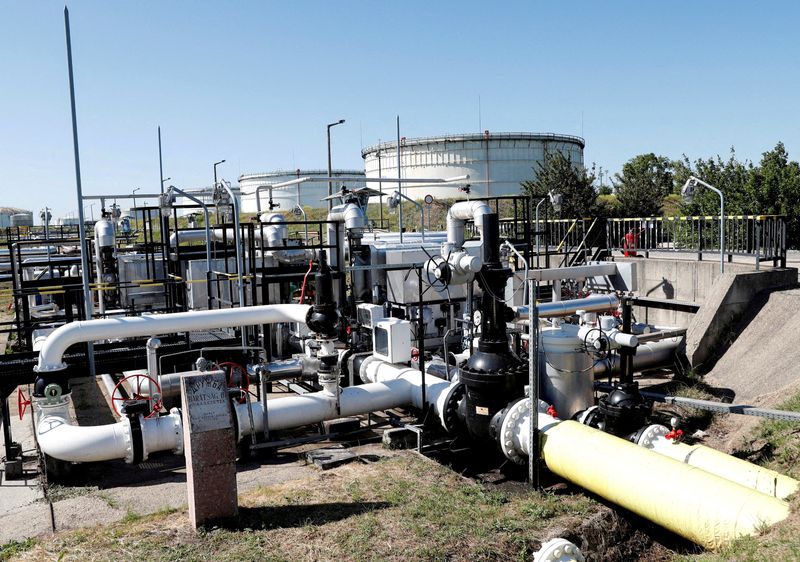
BRUSSELS, March 17 (Reuters) – Ukraine accepted an offer from the European Union for technical and financial support on Tuesday to restore oil flow to the damaged Druzhba pipeline, but said it would still take weeks for Russia to resume crude oil deliveries to Hungary and Slovakia.
Ukrainian President Volodymyr Zelensky said in a letter to the European Union on Tuesday that repair work on the pipeline was nearly complete and pumping stations were expected to be restored within 1-1/2 months “barring further Russian attacks.”
Hungary and Slovakia have been cut off from Russian oil shipments through the Druzhba River since late January, after Kiev said a Russian attack hit pipeline equipment in western Ukraine and needed time for repairs.
Despite Russia’s invasion of Ukraine in 2022, the governments of Hungary and Slovakia have maintained political and energy ties with Russia and have accused Ukraine of delaying the resumption of oil flows. Kyiv denies this.
Ukraine accepted support for renewing the Druzhba deal on Tuesday, but the response was tepid, with Hungary’s foreign minister calling it a “political game”.
“No oil, no money”
The dispute over the blackout has led Hungary to continue blocking a 90 billion euro ($103 billion) EU loan to Ukraine and impose new sanctions on Russia while flows through the Druzhba river remain suspended.
At a summit of EU leaders later this week, Hungarian Prime Minister Viktor Orban, who faces his toughest electoral challenge next month after 16 years in power, said on Facebook that “if there is no oil, there is no money.”
Ukraine denies it is impeding the flow of oil.
Zelensky said in a letter to EU Council President Antonio Costa and European Commission President Ursula von der Leyen that “allegations that Ukraine is deliberately obstructing the transport of oil through the Druzhba pipeline are baseless.”
In a letter to Zelensky, the two EU leaders said resuming the flow of oil through Ukraine was important to maintain market stability and was consistent with Ukraine’s contractual obligations.
They also reiterated their previously announced commitment to phase out all remaining oil imports from Russia by the end of 2027 – something Hungary and Slovakia opposed but were unable to stop.
(Reporting by Bart Meijer in Brussels, Krisztina Than in Budapest and Jason Hovet in Prague; Editing by Kirsten Donovan and Tomasz Janowski)