Feb 22 (Reuters) – U.S. President Donald Trump is curious as to why Iran has not “surrendered” and agreed to curb its nuclear program as Washington builds military capabilities in the Middle East, Trump’s special envoy Steve Witkoff said.
“I don’t want to use the word ‘frustrated,’ because he knew he had options, but he was curious why they didn’t… I don’t want to use the word ‘surrender,’ but why they didn’t surrender,” Witkoff said Saturday in an interview on Fox News’ “What I Think of Lara Trump,” a show hosted by the president’s daughter-in-law.
“Why, under this kind of pressure, with a lot of maritime power and naval power out there, why don’t they come to us and say, ‘We claim we don’t need weapons, so this is what we’re prepared to do’? And yet it’s a little bit difficult to get them to that place.”
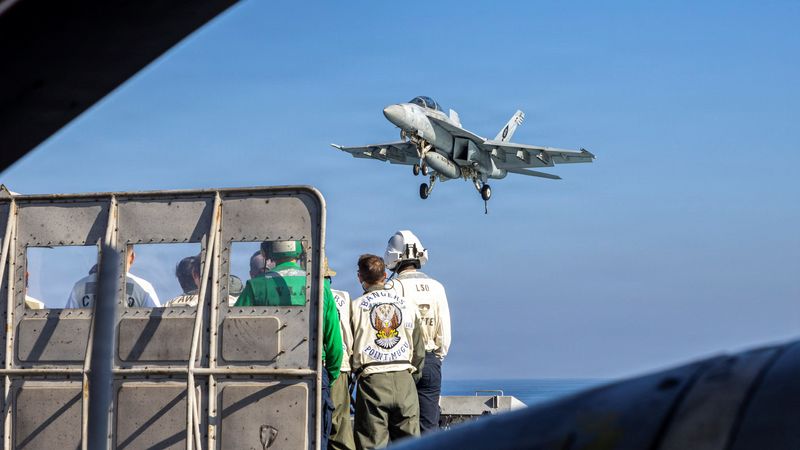
Trump has ordered a massive troop buildup in the Middle East and prepared for weeks of possible airstrikes against Iran. Iran has threatened to attack U.S. bases if they are attacked.
Iran denies seeking nuclear weapons
The United States wants Iran to give up enriching uranium, which Washington says could be used to make bombs, stop supporting militants in the Middle East and accept restrictions on its missile program.
Tehran says its nuclear program is peaceful but it is willing to accept some restrictions in exchange for the lifting of financial sanctions. It declined to link this to other issues such as missiles and support for armed groups.
“They are enriched far beyond what is needed for civilian nuclear power. Up to 60 percent (fission purity),” Witkoff said. “It could be another week before they have industrial-grade bomb-making materials, and that’s really dangerous.”
A senior Iranian official told Reuters on Sunday that Iran and the United States still have different views on lifting sanctions during negotiations.
Witkov also said he met at Trump’s direction with Iranian opposition figure Reza Pahlavi, the son of the shah who was ousted in Iran’s 1979 Islamic revolution. He did not provide further details of the meeting.
Pahlavi, who lives in exile, served as a rallying figure for some of Iran’s opposition during last month’s anti-government demonstrations in which thousands are believed to have been killed, the worst civil unrest since the revolutionary era.
In early February, Pahlavi said U.S. military intervention in Iran could save lives and urged Washington not to take too long negotiating a nuclear deal with Tehran’s clerical rulers.
(Reporting by Gursimran Kaur in Bengaluru; Editing by Peter Graff)

