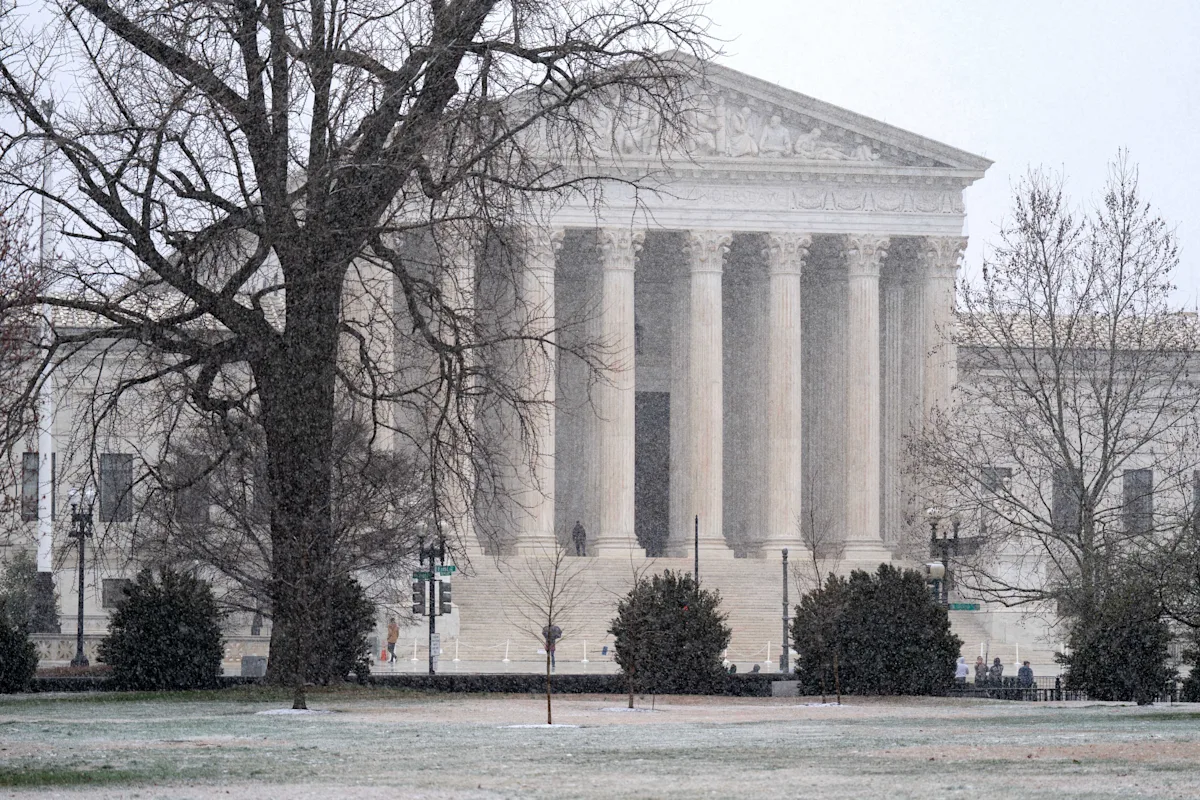
WASHINGTON (AP) — The Supreme Court will hear arguments over the Trump administration’s push to end legal protections for people fleeing war and natural disasters in countries around the world, including Haiti and Syria.
Justices on Monday declined to immediately lift protections for hundreds of thousands of people, allowing them to temporarily live and work legally in the United States.
The court is expected to hear the case next month.
The conservative-majority court had previously sided with the Trump administration on the issue and allowed the temporary legal status of a total of 600,000 Venezuelans to be terminated while the proceedings were ongoing. That puts them at risk of deportation amid the government’s broader crackdown on immigration.
The Trump administration filed an emergency appeal after lower courts blocked plans to immediately end plans for 350,000 Haitians and 6,000 Syrians.
The administration asked the court to reverse those decisions and issue a broad ruling that prevents courts from intervening if the Department of Homeland Security decides to end protections.
The Justice Department argued that the Department of Homeland Security had sole authority over the program and that the program was intended to be temporary.
“Lower courts have once again sought to block key executive branch policy initiatives in a manner that would cause specific harm to national interests and foreign relations,” Deputy Attorney General D. John Sauer wrote in court papers.
But immigration lawyers argue that both countries remain largely in crisis and people cannot safely return.
“Without an effectively functioning government, Haiti descends into chaos. Rape, kidnapping and murder are rampant, while food, housing and medical care are scarce,” the lawyers wrote. They pointed to reports that four Haitian women were recently found dead months after being deported from the United States.
Courts in New York and Washington, D.C., have agreed to delay ending protections, including one finding that “hostility toward non-white immigrants” may have played a role in the decision to end protections for Haitians. During the presidential campaign, Trump amplified false rumors that Haitian immigrants kidnapped and ate dogs and cats.
The Court of Appeal upheld the verdict.
Approximately 1.3 million people fleeing armed conflict, natural disasters and political instability in countries around the world have been granted temporary protection status. Federal authorities say conditions have improved in affected countries and deny racial hostility has played a role.
Court documents show protections for Haitians were first granted after the devastating 2010 earthquake and have been extended multiple times as ongoing gang violence displaced more than 1 million people.
Protection for Syrians was first granted protected status in 2012, amid a civil war that lasted for more than a decade until the collapse of President Bashar al-Assad’s government in late 2024.
Congress enacted TPS in 1990 to prevent deportations to countries experiencing natural disasters, civil unrest, or other dangerous situations. The designation is granted by the Secretary of Homeland Security in 18-month increments.
It allows people to live and work legally in the United States, although it does not provide a path to citizenship. Since Republican Donald Trump returned to the White House, the Department of Homeland Security has moved to end programs targeting people in multiple countries.

