The collector car market has a funny way of making yesterday’s affordable sports car tomorrow’s six-figure auction darling. Remember when you could pick up a clean E30 M3 for under $15,000? Yeah, those days are long gone.
The good news is that right now, sitting in classified ads and enthusiast forums, are the next wave of future classics, cars from the 1980s and 1990s that haven’t quite hit their stratospheric appreciation phase yet. These cars defined an era when turbos got serious, handling became razor-sharp, and manufacturers weren’t afraid to build something purely for the driving experience. Smart buyers are already circling these vehicles like sharks, and if you’re reading this, you should be too.
The window is closing fast on several iconic models that combine the right ingredients: limited production numbers, racing pedigree, bulletproof reputation, or that ineffable cool factor that makes a car transcend its original sticker price.
Mazda RX-7 (FD3S, 1993-1995)

Image Credit: JoshBryan / Shutterstock.
The third-generation RX-7 arrived in America like a curvaceous spaceship from the future, and even three decades later, nothing quite looks like it.
Penned at the peak of Mazda’s design prowess, the FD’s flowing bodywork still stops traffic, while that sequential twin-turbo rotary engine delivers power with a smoothness that piston engines simply can’t match. Mazda only sold the FD RX-7 in the U.S. from 1993 through 1995, and it was always a low-volume import here, making clean examples genuinely rare finds today.
Values have been climbing steadily, nice examples now command $40,000 to $60,000, with pristine low-mileage cars cracking six figures, but there’s still room to run given the car’s cult following and dwindling supply. The aftermarket tuning potential is legendary, though ironically, the stock survivors will be the ones that appreciate most.
Rotary quirks and all, the FD RX-7 is the kind of car that makes you plan routes instead of destinations.
Acura NSX (1991-2005)

Image Credit: Acura.
Honda’s audacious answer to Ferrari remains one of the most undervalued supercars on the planet, though that’s changing rapidly.
When it debuted in 1991, the NSX redefined what a high-performance car could be: reliable enough for daily use, comfortable enough for road trips, and quick enough to humble Ferraris on track, all while being developed with input from Ayrton Senna himself. The all-aluminum construction and mid-mounted VTEC V6 were technological tour de forces that still impress today, delivering a driving experience that’s pure, analog, and utterly engaging.
Early models hover between $70,000 and $100,000 for solid examples, while later NA2 cars with the 3.2-liter engine and six-speed manual are pushing $120,000 and beyond. Fewer than 20,000 first-generation NSXs were built worldwide, and U.S. sales totaled just under 10,000 across the full 1991 to 2005 run.
There’s a reason collectors call it the “everyday supercar”, and there’s a reason they’re not staying affordable much longer.
Toyota Supra Turbo (A80, 1993-1998)

Image Credit: JoshBryan / Shutterstock.
Yes, everyone knows about the Supra, but hear me out: if you haven’t bought one yet, you might still have a narrow window before the market goes completely insane.
The fourth-generation twin-turbo model has already appreciated significantly, with clean examples ranging from $60,000 to well over $200,000 for low-mileage manual hardtops, but the trajectory suggests there’s still upside. That legendary 2JZ-GTE inline-six is famously capable of absurd power figures with relatively simple modifications, and the car’s starring role in pop culture has cemented its icon status for multiple generations.
Toyota only sold about 11,200 Supras in the U.S. during the entire 1993-1998 run, and a huge percentage have been modified, wrecked, or both. Finding a completely stock, well-maintained example is like finding a unicorn that does 0-60 in under five seconds.
The market may seem peaked, but collectors who remember the 1990s will keep pushing values higher as they reach their prime earning years.
Porsche 968 (1992-1995)

Image Credit:MrWalkr – Own work, CC BY-SA 4.0/Wiki Commons.
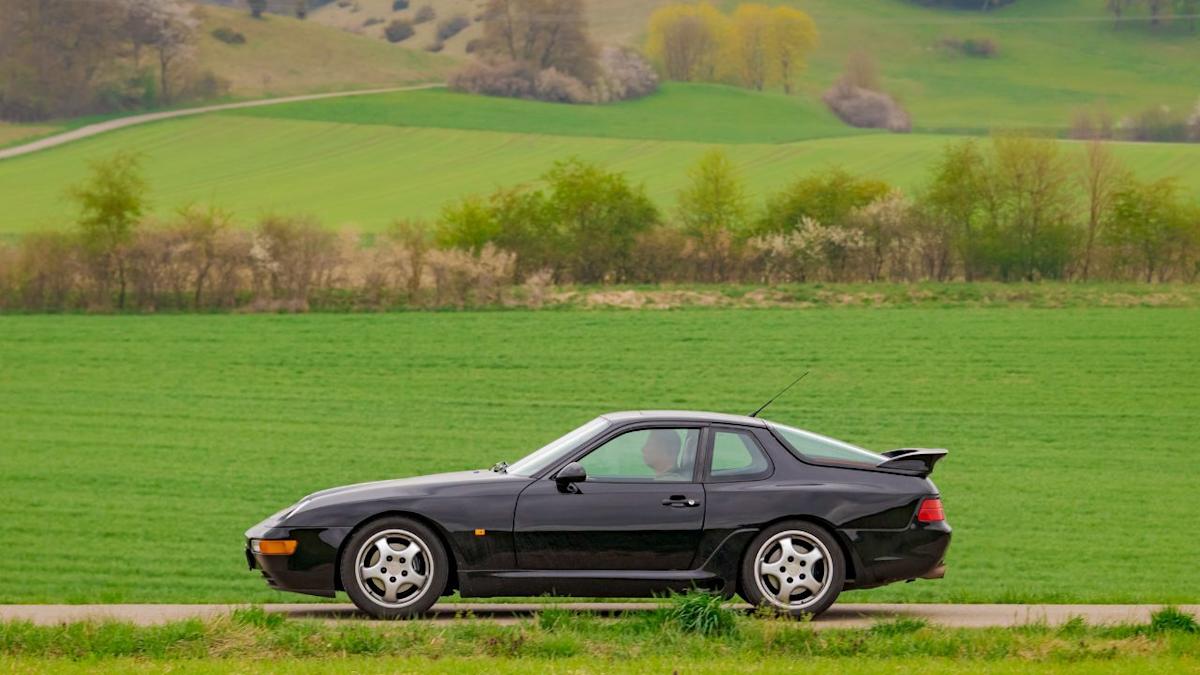
The 968 has long lived in the shadow of its more famous siblings, but savvy Porsche enthusiasts have started recognizing it as the best-driving front-engine car the company built before the Cayman came along.
This was Porsche’s ultimate evolution of the 944 platform, featuring a 3.0-liter four-cylinder that is one of the largest-displacement four-cylinders used in a modern production sports car, producing a sweet-revving 236 horsepower. The handling is sublime, balanced, communicative, and confidence-inspiring in ways that make you understand why Porsche has such devoted followers.
Values currently range from $25,000 for decent examples to $50,000 for exceptional cars, which is remarkably reasonable given the badge and driving dynamics. Only about 12,800 were sold worldwide during its short production run, and manual Coupes are particularly desirable.
As 911 prices continue their moonshot and the 944 Turbo market heats up, the 968 is next in line for serious appreciation.
BMW M3 (E36, 1995-1999)

Image Credit: BMW-M.
The E36 M3 spent years as the “cheap M car,” but those days are rapidly ending as enthusiasts realize this is the last truly analog M3 before electronics started mediating the driving experience.
Sure, the U.S.-spec car was detuned to 240 horsepower (compared to the European version’s 286), but the chassis balance and that glorious inline-six’s willingness to rev made it a back-road hero regardless. This was the M3 that won countless championships, dominated track days, and taught a generation what “Ultimate Driving Machine” actually meant.
Clean examples now range from $20,000 to $45,000 depending on condition and mileage, with collector-grade cars pushing higher. The E36 M3 sold in decent numbers, about 30,000 in the U.S., but finding one that hasn’t been modified, drifted, or neglected is increasingly difficult.
As E30 M3 prices remain stratospheric and E46 M3s continue their climb, the E36 is the smart money play for BMW collectors.
Nissan 300ZX Twin Turbo (Z32, 1990-1996)

Image Credit: Kevauto – Own work, CC BY-SA 4.0/Wiki Commons.
Nissan’s technical showcase for the 1990s was so overengineered that even the company’s own mechanics struggled with maintenance, but that complexity is precisely what makes it fascinating today.
The twin-turbo V6 produced 300 horsepower when that number actually meant something, the four-wheel steering system (HICAS) was legitimately innovative, and the interior featured more buttons and gauges than a 747 cockpit. Modern eyes see a design that’s aged remarkably well, with proportions and presence that still look expensive and purposeful.
Values have been creeping up, with nice twin-turbo models now ranging from $25,000 to $50,000, while exceptional low-mileage examples can break $70,000. Only about 80,000 Z32s total were sold in the U.S. across all variants during the seven-year run, and the twin-turbo manual models represent a fraction of that.
The 300ZX is that rare car that’s both technologically significant and genuinely enjoyable to drive, once you’ve completed all the required maintenance, of course.
Chevrolet Corvette ZR-1 (C4, 1990-1995)

1990 Chevrolet Corvette Stingray ZR-1. Image Credit: RM Sotheby’s
Before the C8 stole headlines and the C7 ZR1 dominated track times, there was the original King of the Hill, a C4 Corvette with a Lotus-designed, Mercury Marine-built aluminum LT5 V8 that screamed to 7,000 rpm and produced 375 horsepower.
This was America’s legitimate supercar challenger, capable of 180 mph and blessed with handling that could humble European exotics costing three times as much. The ZR-1’s wider rear fenders, distinctive convex rear fascia, and 11-inch-wide rear wheels made it instantly recognizable to those in the know.
Current values range from $30,000 for higher-mileage examples to $60,000 for pristine low-mileage specimens, which seems absurdly cheap for something this rare and significant. Total production was only 6,939 units across six years, making it far rarer than any single year of modern Corvette production.
As C4 values rise across the board and collectors rediscover proper analog supercars, the ZR-1 is poised for serious appreciation.
Dodge Viper RT/10 (1992-1995)

Image Credit: Alexander-93 – Own work, CC BY-SA 4.0/Wiki Commons.
The first-generation Viper was gloriously, unapologetically excessive: an 8.0-liter V10 producing 400 horsepower in a roadster with side exhaust, no roof, no windows, and absolutely no apologies.
Dodge essentially asked “what if we built a street-legal race car?” and then actually did it, creating something that felt genuinely dangerous and wildly entertaining in equal measure. The driving experience is raw and unfiltered in ways modern cars simply cannot replicate, from the heavy clutch to the side pipes that’ll brand your leg if you’re not careful.
Early Vipers are now trading between $45,000 and $75,000 depending on condition and mileage, which represents serious value given the car’s importance and theater. Just under 6,000 RT/10 roadsters were built from 1992 through 1995, and many have led hard lives or met unfortunate ends.
As automotive regulations make such extreme machines impossible to recreate, the original Viper’s appeal as a loud rebellion against sensibility only grows stronger.
Mitsubishi 3000GT VR-4 (1991-1999)

Image Credit: Riley – CC BY 2.0/Wiki Commons.
Mitsubishi’s technological tour de force packed all-wheel drive, all-wheel steering, twin turbos, and active aero into a grand touring package that was ridiculously ambitious for its time.
The VR-4 was heavy at 3,800 pounds and complex enough to make owners weep at repair costs, but it could also hit 60 mph in under five seconds and carved through corners with shocking competence thanks to all those electronic systems working in concert. The pop-up headlights, dramatic styling, and cockpit full of ’90s tech create a time capsule experience that’s becoming increasingly appealing.
Values currently sit between $15,000 and $35,000 for good examples, making it one of the more affordable entries on this list despite its impressive specification. VR-4 models were always a minority of U.S. 3000GT sales, and late-year VR-4 imports were especially scarce, while the survival rate isn’t great given the complexity and maintenance requirements.
As ’90s Japanese performance cars continue their appreciation trajectory, the 3000GT VR-4 offers serious bang for the buck before the market wakes up.
Porsche 944 Turbo (1986-1991)

Image Credit: Daniel J. Leivick – I created this image myself., CC BY-SA 3.0/ Wiki Commons.
The 944 Turbo represented Porsche’s front-engine formula at its absolute peak, combining a torquey turbocharged four-cylinder with chassis dynamics that remain impressive by modern standards.
With 247 horsepower in later models, the 944 Turbo was genuinely quick while maintaining the balanced handling that made the naturally aspirated version such a track favorite. The interior feels properly Porsche, with solid construction and a driver-focused layout that’s aged far better than most ’80s interiors.
Current pricing ranges from $20,000 to $45,000 depending on condition, with exceptional examples commanding premiums, still reasonable territory for entry into Porsche ownership. Total production numbers were relatively low at about 25,000 worldwide, which helps explain why clean, unmodified cars are getting harder to find.
As air-cooled 911 prices remain inaccessible to many enthusiasts and the 968 gains recognition, the 944 Turbo sits perfectly positioned for its moment in the collector spotlight.
Toyota MR2 Turbo (SW20, 1991-1995)

Image Credit: Jasonhoward641, CC BY-SA 3.0 / WikiMedia Commons.
Toyota’s mid-engined pocket rocket combined exotic layout, turbocharged performance, and Japanese reliability into a package that punched way above its price point.
The second-generation MR2 looked like a baby Ferrari, handled with the precision you’d expect from a mid-engine platform, and the turbocharged 2.0-liter four-cylinder delivered 200 horsepower with that classic ’90s turbo surge. This was the affordable mid-engine car that proved you didn’t need Italian heritage or a six-figure price tag for proper sports car thrills.
Clean turbo models now trade between $15,000 and $35,000, with exceptional examples pushing higher, a relative bargain given the driving experience and engineering. Toyota sold the SW20 MR2 in the U.S. from 1991 through 1995, but the turbo models represent a much smaller subset, and many have been modified or thrashed.
As mid-engine layouts remain the pinnacle of driving dynamics and ’90s Toyotas continue their collector ascent, the turbo MR2’s combination of rarity, fun, and reliability makes appreciation inevitable.
Mazda Miata (NA, 1990-1997)

Image Credit: Mazda.
Before you roll your eyes, consider this: the first-generation Miata is the most important sports car of the modern era, period. It single-handedly revived the affordable roadster segment, proved that driving enjoyment doesn’t require massive power, and established a formula so perfect that Mazda is still following it 35 years later.
The NA Miata’s charm lies in its purity, lightweight, perfectly balanced, and designed with one purpose: making drivers smile. While clean examples can still be found in the $5,000 to $15,000 range, exceptional low-mileage originals are already pushing $20,000 to $30,000, and the trajectory is clear.
More than 228,000 NA Miatas were sold worldwide during the first generation, but the vast majority have been modified, tracked, or simply worn out through enthusiastic use. As the automotive world goes electric and steering feel becomes algorithmic, the analog purity of an original Miata becomes increasingly precious, and collectors are taking notice.
Conclusion

Image Credit: BMW-M.
The beautiful irony of the collector car market is that today’s overlooked sports car is tomorrow’s unobtainable grail, and right now we’re living in that sweet spot for 1980s and 1990s performance machines. These cars represent the last generation of truly analog sports cars, built before stability control became mandatory and touchscreens replaced tactile buttons. Every car on this list offers something modern vehicles simply cannot: unfiltered feedback, mechanical simplicity, and that direct connection between driver and machine that’s being regulated and refined out of existence.
The smart money isn’t waiting for Barrett-Jackson to validate what enthusiasts already know: these cars matter, they’re genuinely fun to drive, and they’re not making any more of them. Whether you’re building a collection or just want something special for weekend drives, now is the time to act before “affordable classic” becomes an oxymoron for these icons.