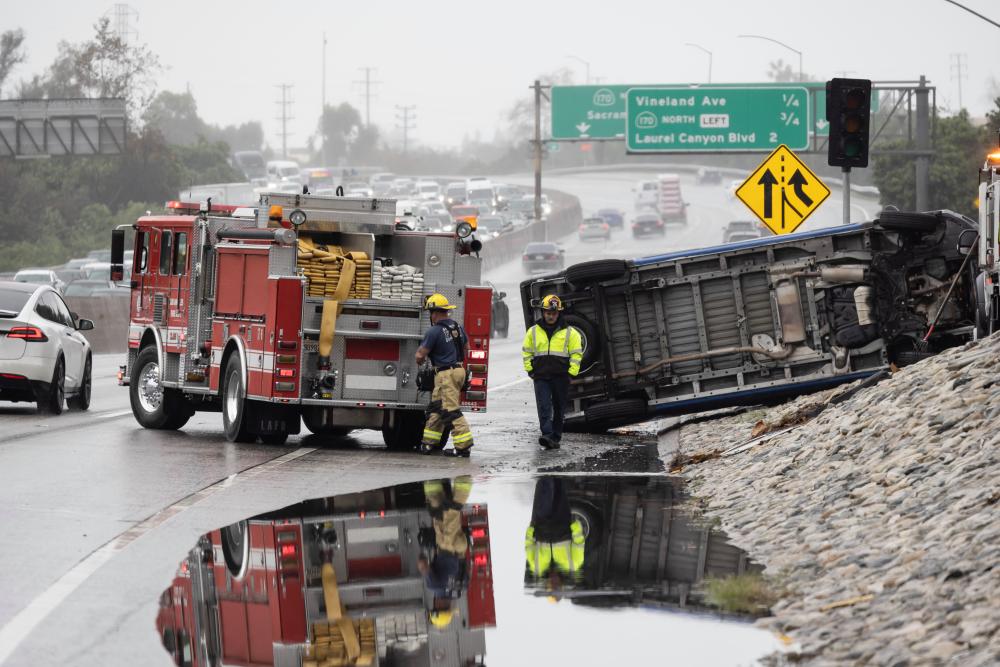
Southern Californians are facing an epic cleanup as the region endures its wettest Christmas holiday in modern history, turning some parts of the state into mud and debris.
A year ago, record wildfires scorched the parched communities of Altadena and Pacific Palisades. But now, in what scientists call a “hydroclimate whiplash,” the situation has reversed, as an atmospheric river along the Pacific coast brings the opposing elements of wind and rain.
Southern California had its wettest Christmas Eve and Christmas Day on record, with 5.91 inches of rain falling at Santa Barbara Airport. One area in the Ventura County mountains received more than 17 inches of rain.
Related: Winter weather disrupts air traffic in New Jersey, New York
Christmas Eve and Christmas Day were the rainiest days in many areas of Southern California, with more than 10 inches of rain falling in parts of the San Gabriel Mountains in Los Angeles County.
The stormy weather downed trees, caused hundreds of crashes and left thousands without power across the state. Hundreds of people found their homes and gardens submerged in mud.
Los Angeles Mayor Karen Bass declared a temporary state of emergency. On Thursday alone, Los Angeles County firefighters rescued more than 100 people, including a helicopter that rescued 21 people from trapped cars. California Governor Gavin Newsom declared a state of emergency in Los Angeles, San Diego, Orange, Riverside, San Bernardino and Shasta counties.
The National Weather Service warned that although the heaviest rainfall has passed, there is still a risk of flash flooding and mudslides.
“We’re not completely out of the woods yet, but for the most part, the worst is over,” said Mike Wofford, a meteorologist with the National Weather Service in Los Angeles. Forecasters expect a dry weekend with more rain around New Year’s Eve.
Sherry Tocco described to the Los Angeles Times how heavy rains battered her mountain town of Wrightwood, 80 miles northeast of Los Angeles, turning roads into rivers and burying cars under rocks, debris and mud.
The river was raging before “it just flowed through and was destroyed, taking everything with it,” she said. Tocco said she slept in her car as firefighters helped her evacuate.
However, it appears as rain in lowland areas and as snow in high altitude areas. Up to 2 inches of snow per hour fell in the Sierra Nevada Mountains.