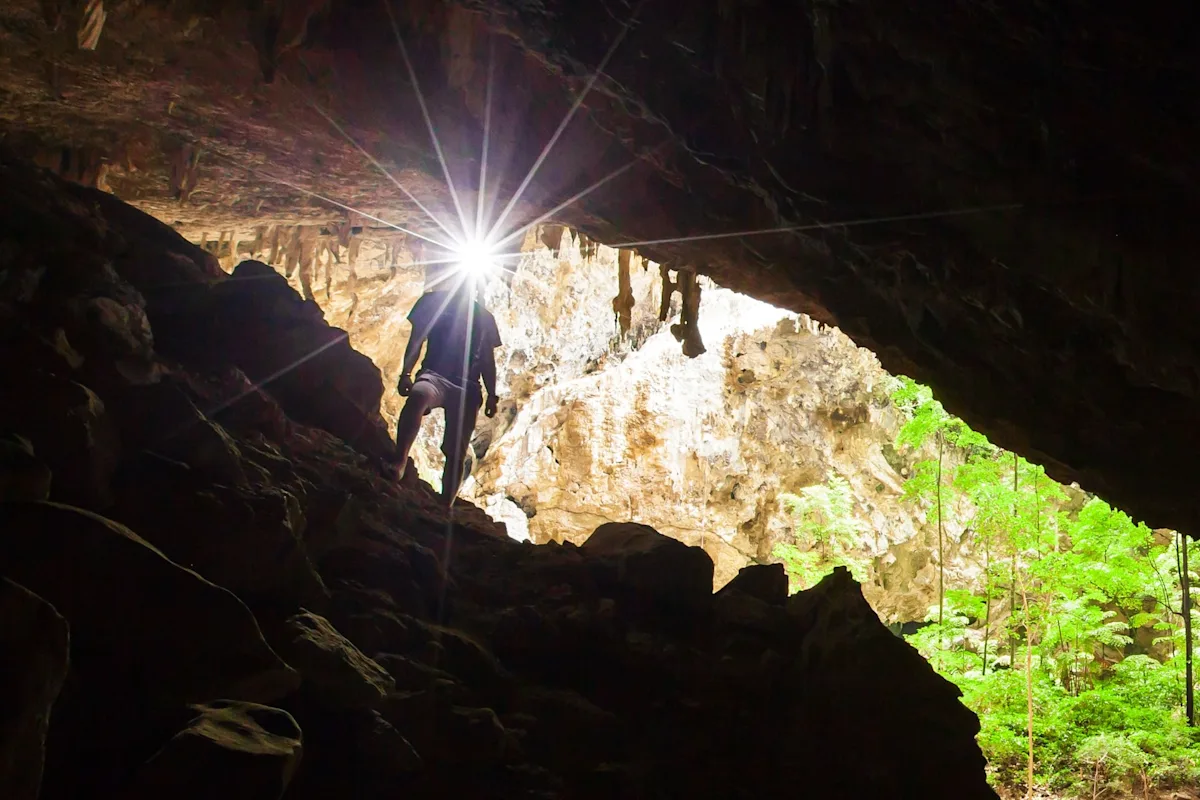
In 2024, a wildlife survey team working inside a cave in Thailand accidentally discovered two previously unrecorded species of dragon millipedes.
These arthropods get their name from their appearance. About an inch long, each creature has a row of spiky protrusions on its body and long appendages, giving it a dragon-like silhouette from Asian mythology, BGR reports.
The researchers decided to name one of the species Princessosaurus millipede. The name pays tribute to Princess Sirindhorn, who dedicated much of her work to supporting scientific research and conservation efforts across Thailand.
Finding these millipedes requires a lot of physical effort. Scientists scaled tall rock formations inside Pha Daeng Cave to reach the moist, calcium-rich surface where these creatures live. This single cave system remains the species’ only confirmed habitat to date.
Confirming the finding involves microscopy and genetic testing. By analyzing DNA extracted from limbs and tissue samples, the team found that the two species differed by 10 to 18 percent from their closest known relatives, enough to earn different positions on the evolutionary map.
Scientists have now cataloged 84 species of dragon millipedes in eight categories. Improvements in laboratory technology have accelerated identification, and many have been added in the past decade.
The discovery of new species can inspire a region to increase conservation efforts to protect the newly discovered organisms. It’s also a sign of healthy biodiversity, which is important for well-functioning ecosystems.
According to a study published in the journal Biodiversity Science, millipedes are important for nutrient cycling and the breakdown of organic matter.
In fact, even the smallest animals can bring huge benefits to humans. According to the Pollinator Partnership, pollinators, such as birds, bees and small mammals, are responsible for one-third of the food we eat.
Discoveries like this show that our planet still holds secrets. Caves, forests, and neglected wilderness can provide shelter for creatures waiting to be discovered. Each new species gives scientists insights into how ecosystems are interconnected and which habitats are worth protecting.
If you want to support biodiversity near home, try leaving natural spaces undisturbed and lending your voice to local conservation efforts. Sheltering the next habitat you discover may be closer to you than you think.
Get TCD’s free newsletter for simple tips to save more, reduce waste and make smarter choices, and earn up to $5,000 toward clean upgrades in TCD’s exclusive Rewards Club.

