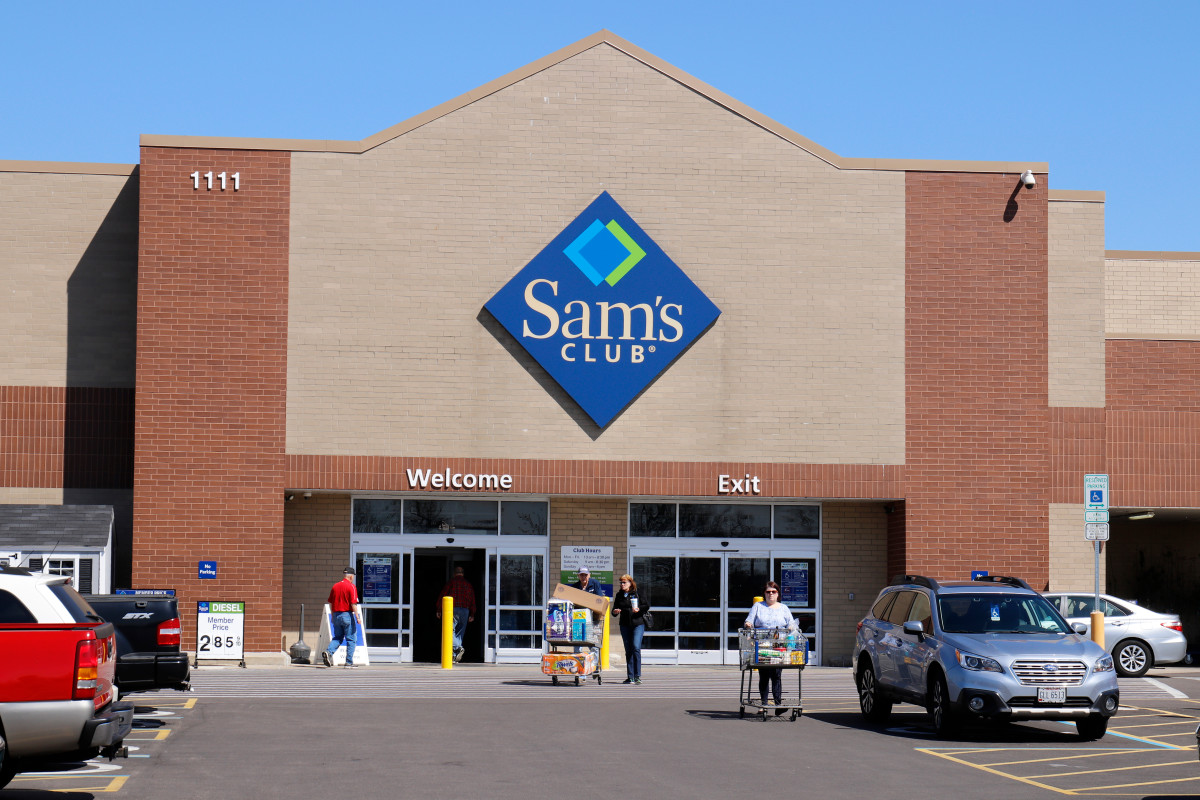
Sam’s Club has been rolling out surprising changes in its stores to attract more customers.
Shutterstock
· Shutterstock
In addition to changes at gas stations and at checkout lines, Sam’s Club is removing certain ingredients that customers consider unhealthy from its Club Logo food and beverage products, a plan first announced in 2022.
Sam’s Club has cut some ingredients from these products, including artificial flavors, high fructose corn syrup, aspartame, phthalates, synthetic colors and more.
“Sam’s Club members are at the center of everything we do, so as we continue to evolve our member signature brand, we intend to develop products that reflect the ingredients, processes and materials they want and don’t want in our products,” Prathibha Rajashekhar, senior vice president of private brands and merchandising at Sam’s Club, said in a 2022 press release.
Sam’s Club aimed to complete this change by the end of 2025, and the retail giant recently announced that it had achieved that goal.
According to a recent press release, Sam’s Club has removed more than 40 unwanted ingredients and synthetic colors from its Club Logo food and beverage products “without compromising taste or damaging value.”
RELATED: Kroger offers customers generous deals as grocery prices rise
While the company successfully implemented the change across hundreds of products, some products could not be changed, resulting in those products being removed from shelves.
“Rethinking hundreds of products required us to look at every detail,” Sam’s Club said in a press release. “This process has taught us that meeting higher standards often requires unique solutions. In many cases, this means innovation. In rare cases, it means deciding that a product cannot bear Membership Mark branding at all.”
Sam’s Club said reformulating its baking frosting was one of its “most significant hurdles” because removing certain ingredients while maintaining “the right consistency and vibrant appeal” required “thorough development.”
The company also noted that it removed the bright blue synthetic coloring from the sports drink and replaced it with a “more natural purple hue.”
Sam’s Club said this year it aims to “further realize that vision” by removing unwanted ingredients from “other areas of the club, including cosmetics, health and wellness, laundry and more.”
Sam’s Club decided to remove unwanted ingredients from its Club Logo food and beverage products after surveying its members and finding that 72% “actively seek minimally processed foods.” By comparison, 90 percent said they were “living or aspired to live a healthier lifestyle,” according to a press release last year.
Dominick Miserandino, CEO of RTMNexus, said in a statement to TheStreet that Sam’s Club’s switch to cleaner ingredients in its products is a significant move that will increase customer loyalty.
“Sam’s Club does more than meets the eye,” Miserandino said. “It recognizes that shoppers care about what’s in their food, not just the price. As consumers resist overly processed ingredients, clean label becomes a real competitive advantage. It doesn’t drive an immediate sales spike, but it does build trust. In grocery stores, trust turns to loyalty over time.”
Increased consumer health awareness is a trend that has become increasingly popular across the country since the COVID-19 pandemic in 2020. This shift toward foods with cleaner, simpler ingredients has dramatically changed the way Americans buy food, according to a 2024 survey from the International Food Information Council.
-
About 79% of Americans say they consider whether food is processed decided to buy it.
-
a huge 63% of Americans say they avoid Processed food.
-
also, 1 minute 3 Americans follow a vegan, vegetarian or plant-based eating pattern healthier.
-
return, 36% of Americans rely on “natural,” “organic” or “healthy” labels on foods to indicate they No artificial ingredients or colors.
Source: International Food Information Council
In recent years, food ingredients such as canola, sunflower and palm oil have even been criticized by consumers on social media for being overly processed and causing inflammation in the body.
Synthetic dyes such as Blue 1, Red 40, and Yellow 6 are commonly used in processed foods and are approved by the U.S. Food and Drug Administration, but their links to health problems, including ADHD and even cancer in children, have also come under scrutiny.
Last April, U.S. Health and Human Services Secretary Robert F. Kennedy Jr. condemned the use of these ingredients in food and even vowed to ban the use of artificial dyes in all U.S. foods by the end of 2025.
“For too long, some food manufacturers have supplied petroleum-based chemicals to Americans without their knowledge or consent,” Kennedy said in a press release. “These toxic compounds have no nutritional value and pose real, measurable dangers to the health and development of our children. That era is coming to an end.”
The move by Sam’s Club comes as it taps into changing consumer attitudes toward processed foods at a time when consumers are spending less at stores in response to economic stress.
During an earnings call in November, Walmart CEO Doug McMillon said Walmart and Sam’s Club are only seeing increased demand from middle- and upper-income consumers.
“When we look at customers and members in the U.S., they’re still spending, and middle- and upper-income households are driving our growth,” McMillan said. “We continue to benefit from higher-income households choosing to shop with us more frequently.”
More retail:
He continued: “Middle-income households have remained stable, and while lower-income households have been under additional pressure recently, we are encouraged by how our teams are providing them with greater value on essential items and doing what we can to help them further stretch their funds.”
The U.S. economy has been facing low consumer confidence due to concerns about tariffs, which has led to higher prices across the country. A recent Wunderkind survey shows that as concerns grow about the economy, many Americans are spending less and looking for greater value.
-
Under the influence of tariffs and inflation, 59% consumer feelings cautious, pessimistic or panicked About the economy.
-
About 71% citing higher prices as their justification Top concernsalthough 47% Mention unpredictable price increases.
-
return, 38% seek deals more frequently while also 34% Overall expenses are lower.
Source: Prodigy
“U.S. shoppers are proving to be more strategic than ever,” Danny O’Reilly, senior content architect at Wunderkind, wrote in a blog post. “The initial short-term caution has now crystallized into a new retail reality: value is the priority, trust is the differentiator, and digital fluency determines how and where consumers spend their money.”
RELATED: Lowe’s launches free offer for customers amid challenge
This article was originally published by TheStreet on January 17, 2026, and first appeared in the Retail section. Click here to add TheStreet as your preferred source.