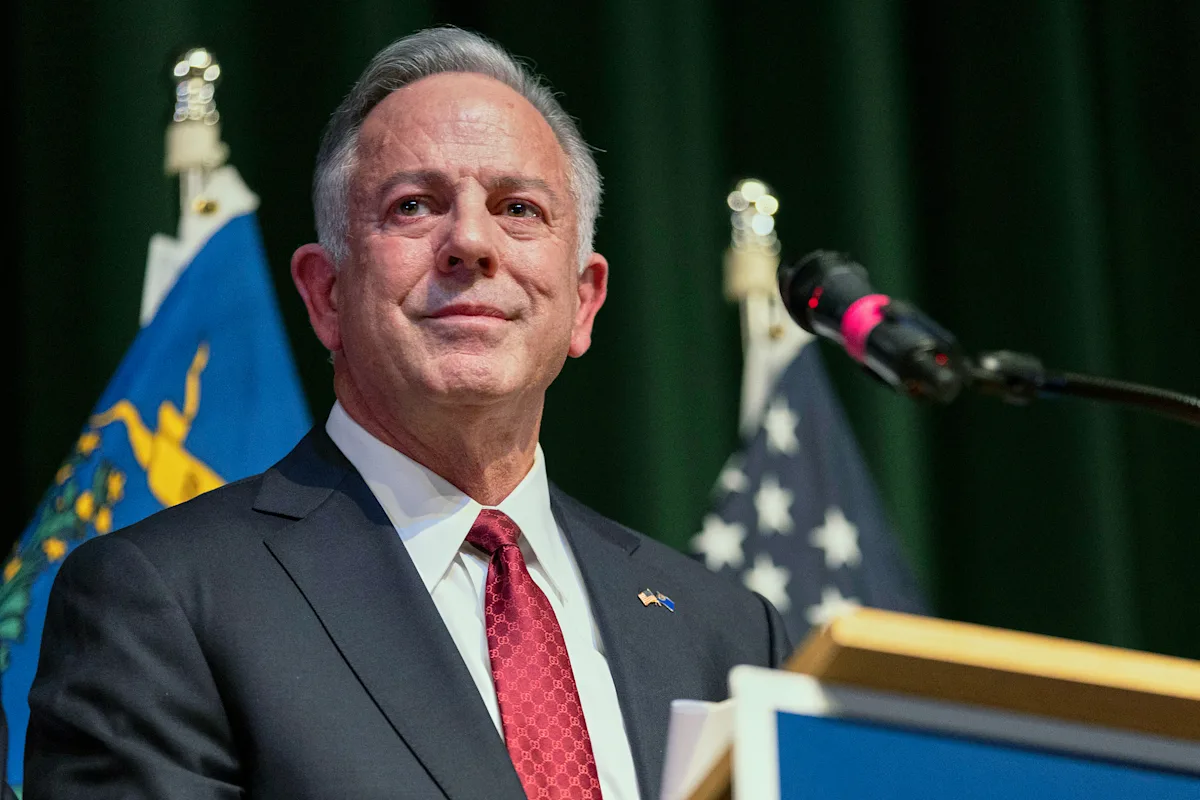
LAS VEGAS (AP) — Nevada Gov. Joe Lombardo signed his sweeping crime package into law over the weekend that will help revive a unique court program that bars criminals from committing certain crimes on the Las Vegas Strip and will increase penalties for smash-and-grabs, drunken driving and assaults on hotel workers.
The law, known as the Safe Streets and Communities Act, paves the way to reintroduce the controversial resort corridor courts to punish crimes such as petty theft, assault, drug offenses and loitering originating on the Las Vegas Strip, while banning people from the tourist area for a year.
The bill’s passage marks a major political victory for the Republican governor as he prepares for a challenging re-election campaign in 2026. His race is one of the most competitive in the country, with recent polls showing a close race between him and his likely opponent, Democratic Attorney General Aaron Ford.
Resort corridor courtyard revitalization still faces hurdles
Resort lobbyists and unions representing hotel workers — both political forces — have joined forces to push for the reopening of resort corridor courts, arguing it would improve safety and protect the visitor-friendly reputation of the state’s major tourist attractions amid a downturn in tourism.
The Las Vegas Convention and Visitors Authority reported an 11% drop in visitors between June 2024 and June 2025.
Opponents question its legality and say the orders unfairly target homeless people.
“We are extremely grateful to Governor Lombardo and the legislative leadership for working together to advance this important travel safety legislation,” Virginia Valentine, president and CEO of the Nevada Resort Association, said in a statement Tuesday, adding that the courts will ensure Las Vegas remains a premier travel destination.
The law authorizes the Clark County Commission to resume court operations, but it’s unclear when or if the commission will take up the issue.
Jennifer Cooper, a spokesperson for the county, said it was too early for the commission to get involved because the discretion to reinstate the court rests with the Justice Court. The court did not respond to a request for comment.
Nevada judges established the court two years ago, but a year and a half later they voted to dissolve it.
Athar Haseebullah, executive director of the ACLU of Nevada, said if the court plan is revived, it expects lawsuits challenging its legality. The group has been a staunch opponent of the court.
“Our organization and many others who do not want to see the continued spread of privatization of our justice system will continue to resist,” he said in a phone interview.
Bill also bans immigration enforcement in schools
The bill also includes amendments that would prohibit immigration enforcement agents from entering school grounds without a search warrant and require detention facilities to keep detailed lists of those they hold.
Nevada joins states such as California and Maryland in enacting laws restricting federal immigration enforcement agents from entering school property without a search warrant.
Nevada Democratic lawmakers introduced a proposal during the last regular session to ban immigration officers from entering school properties without a search warrant, but Lombardo vetoed the proposal, calling it “well-intentioned but fundamentally overbroad.” Lombardo’s office said the amendments Democrats added to their bill adhere to the Constitution and include exceptions that would allow law enforcement officers to keep schools safe.
Those exceptions include school resource officers and law enforcement officers who need to enter schools during emergencies, such as school shootings.
It is the latest effort by states to clarify limits on immigration enforcement after the Trump administration announced earlier this year that it would allow federal immigration agencies to make arrests in schools, churches and hospitals, ending a policy that had been in effect since 2011.
Democratic Rep. Cecilia Gonzalez, the sponsor of the original immigration bill, ultimately voted against the governor’s crime package. She said she’s glad “students are finally starting to take their real fears seriously,” but overall she thinks the bill will do more harm than good.
