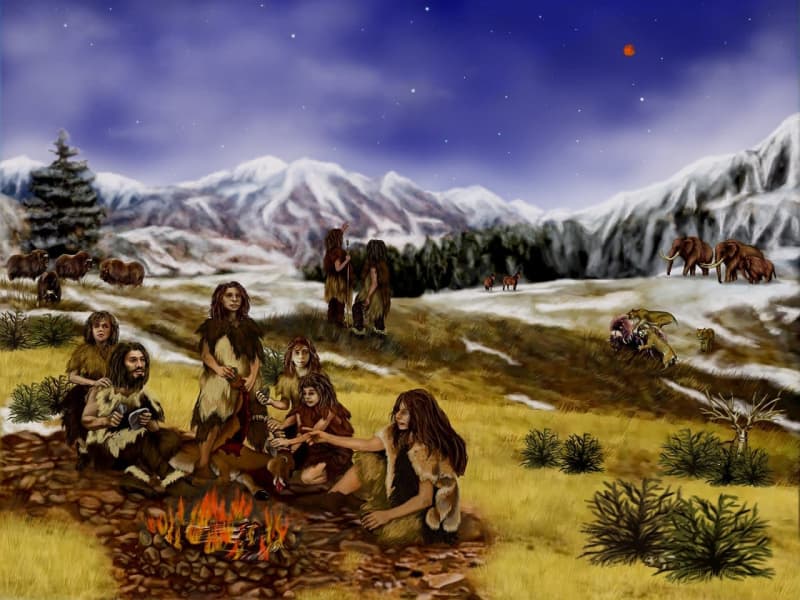
The study focused on human remains found in the Troisième Cave in Goyer, in present-day Belgium, which contains one of the largest known assemblages of Neanderthal skeletons in the northern European Union.
Neanderthals who lived in Northern Europe during the late Pleistocene may have been deliberately targeted, killed and cannibalized by other human groups, according to a new study published in Scientific Reports.
The findings challenge long-held assumptions that Neanderthal cannibalism was primarily ritualistic or driven by extreme survival conditions.
This peer-reviewed study was originally published in an academic journal scientific report.
The study focused on human remains found in Goyer’s Troisième Cave, in present-day Belgium, which contains one of the largest known assemblages of Neanderthal skeletons in Northern Europe.
Previous studies have found cuts and fractures consistent with cannibalism. Still, the new analysis further examines who the victims were and whether their deaths reflected selective targeting.

A child’s skull from Israel’s Skull Cave shows the typical cranial curvature of Homo sapiens. (Source: Tel Aviv University)
Researchers identify six Neanderthal remains
Using a combination of ancient DNA analysis, stable isotope testing and detailed measurements of long bones, the researchers identified the remains of at least six Neanderthals. They include four adult or teenage women and two teenagers. The authors say this distribution is highly unusual.
The study found that “demographics do not reflect natural mortality,” noting that adult males, who are typically overrepresented in accidental deaths or violent encounters, were largely absent. Instead, women and children dominated the sample.
The physical features of the victim were more distinct. Long bone analysis shows that in other known Neanderthal groups, females are generally shorter and more muscular than males.
Although isotopic evidence suggests that these individuals were not native to the Goyer region, structural markers associated with high mobility are also largely absent.
The researchers concluded that a combination of factors such as non-native origin, physical fitness and demographic bias suggested the victims were selected rather than randomly encountered.
Evidence from the bones themselves supports this interpretation. The Neanderthal remains show signs of systematic cut marks, impact fractures and bone marrow extraction, very similar to the processing of animal bones found at the same site.
Some human bones were also repurposed as modifiers, often to shape stone tools.
“The handling of human remains followed the same pattern as that of prey animals,” the authors write, noting that this was nutritional cannibalism rather than a burial ritual or symbolic act.
Taken together, these findings suggest the presence of exocannibalism, the killing and eating of individuals from outside one’s own group. Researchers believe this may reflect violent conflict between groups, possibly driven by territorial competition, population pressure or wider social instability.
The remains date back to about 41,000 to 45,000 years ago, a time of major upheaval in Europe. Neanderthal populations were declining, climate was fluctuating, and early modern humans were expanding across the continent.
While the study does not identify the perpetrator, it raises the possibility that Neanderthals were sometimes preyed upon by other human groups, including Neanderthals and Homo sapiens.
The authors caution against interpreting the findings as evidence of unique violent behavior. Cannibalism has been documented in a variety of contexts throughout human history, including warfare, subsistence situations, and cultural practices. Goyette’s clear selectivity, however, sets the site apart.
“This study changes our view of prehistoric cannibalism,” the researchers write. They emphasize that it was not always an act of desperation, but in some cases it was a deliberate and organized behavior embedded in social conflict.
By demonstrating that Neanderthals themselves could have been prey, this study adds a new dimension to our understanding of their social world, one shaped not only by cooperation and care but also by competition and violence.
As researchers continue to re-examine old collections using new tools, the authors believe similar patterns may emerge at other Ice Age sites in Europe.

