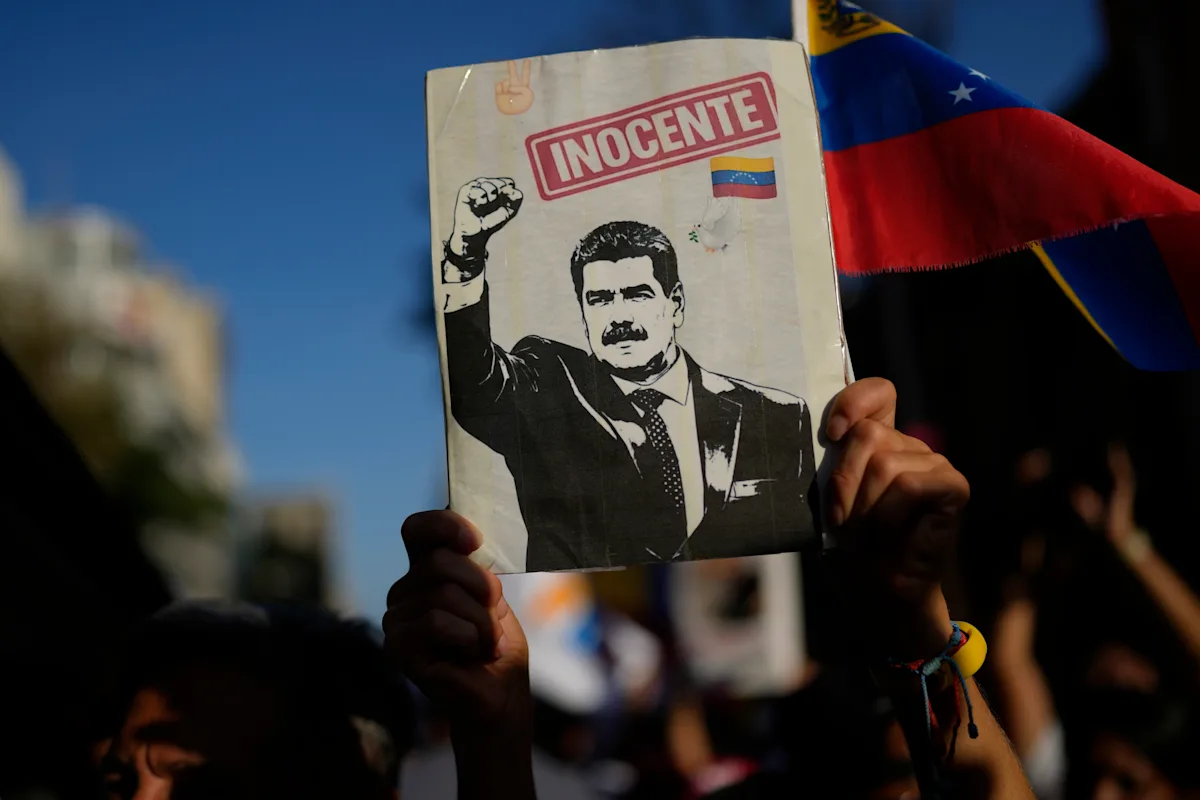
The Trump administration is blocking the Venezuelan government from paying the costs of Venezuelan leader Nicolás Maduro’s defense against drug trafficking charges in New York, a move that Maduro’s lawyers say could interfere with his constitutional rights.
Attorney Barry Pollack told a Manhattan federal judge in an email last week that the U.S. Treasury Department has blocked authorization for the Venezuelan government to pay legal fees for Maduro and first lady Celia Flores in accordance with its laws and practices. The email was entered into public court records Wednesday.
Maduro and his wife were captured from their Venezuelan home on January 3 in a covert nighttime raid by U.S. forces and have been held in New York without bail. They all pleaded not guilty.
The shocking capture, after months of military buildup in the Caribbean, paves the way for the Trump administration to exert outsized influence over Maduro’s successor, his vice president and now acting president, Delcy Rodriguez. Under U.S. pressure, Rodriguez moved quickly to open Venezuela’s oil industry to U.S. investment, free political prisoners and reestablish direct ties with Washington — something not seen since the first Trump administration closed the U.S. embassy in Caracas in 2019.
Pollack said in an email that the U.S. Treasury Department’s Office of Foreign Assets Control, which is responsible for managing sanctions against Venezuela, approved the Venezuelan government to pay legal fees on January 9.
But less than three hours later, the Trump administration withdrew the authorization “without explanation,” Pollack said, but kept the license that allowed payments to Maduro’s wife’s lawyers.
The dispute over Maduro’s legal fees is closely related to U.S. foreign policy. The first Trump administration severed ties with Maduro in 2019, recognizing the then-opposition National Assembly president as Venezuela’s legitimate leader. The Biden administration is strictly following the same policy.
However, allowing Rodriguez’s government to pay for Maduro’s defense could complicate prosecutors’ efforts in court to counter arguments from the deposed leader, who claims his arrest was illegal and that as a foreign head of state he is immune from prosecution under U.S. and international law.
The 25-page indictment against Maduro accuses him and others of working with drug cartels and military personnel to facilitate the shipment of thousands of tons of cocaine into the United States. If convicted, both he and his wife face life in prison.
As part of the alleged conspiracy, Maduro and his wife allegedly ordered the kidnapping, beating and murder of people who owed them drug money, the indictment said. This allegedly included the killing of a local drug lord in Caracas.
Messages seeking comment from the Treasury Department, White House and Justice Department were not immediately returned.
Pollack said he asked OFAC on February 11 to reinstate the original license and clear the way for Venezuela to fulfill its obligation to pay Maduro’s defense costs.
The lawyer added that Maduro “otherwise would not be able to hire a lawyer” and would ask a judge to help pay for his defense.
Pollack said the United States was “interfering with Mr. Maduro’s ability to hire an attorney and thus his Sixth Amendment right to choose an attorney.”
___
Goodman reported from Miami. Associated Press writers Aamer Madhani and Fatima Hussein and Larry Neumeister in New York contributed to this report.