Technological progress is a double-edged sword. Telecommunications and rapid transportation by airplane have made life more convenient, and medical advances have made conditions easier to treat. However, the same science has also been used to create weapons of mass destruction, which may leave an eternal stain on human history. Hypersonic missiles are among the scariest missiles, capable of traveling across the Earth faster than sound.
Hypersonic missiles move five times the speed of sound, which means they can fly faster than Mach 5 (3,836 mph). Most commercial aircraft fly below Mach 1, so such high speeds are incomprehensible. China has a lot of scary technology, like massive aircraft carriers that can house 100 drones or high-powered drone-frying microwaves, but even a simple missile is more than a significant threat. If China were to suddenly target U.S. territory, how fast would a hypersonic missile land and would we have enough time to intercept it?
To answer this question, we need to calculate wind turbulence, projection angle, earth curvature, gravity, and other factors that require a team of engineers. Fortunately, we don’t need all of this to get a good estimate. We can use the formula for speed, distance and time: time = distance/speed. Generally speaking, this can take from about 1 hour to less than 20 minutes, depending on certain factors.
Read more: What actually happens when a submarine implodes?
Hypersonic missiles headed to Hawaii, Seattle and New York

China’s DF-17 hypersonic missile flies in front of the Chinese flag in the background – Mr Changezi/Shutterstock
China has many weapons of varying speeds and ranges. For this calculation, we will use the DF-27A because of its high maneuverability and relatively fast speed – even though China has faster missiles.
We can assume that the missile originated from the Taiyuan Satellite Launch Center in Shanxi, China, which is 5,130 miles from Hawaii, 5,650 miles from Seattle, and 7,080 miles from New York. The DF-27A is said to have an average speed of about Mach 8.6, meaning it can travel 6,598 miles in one hour. Plugging these numbers into the equation, it takes 47 minutes for a missile to reach Hawaii from mainland China, 51 minutes to reach Seattle, and 64 minutes to reach New York.
But keep in mind that these only work in certain scenarios. If China chose to target an island like Guam (just 2,676 miles from Shanxi), the missiles would arrive within 24 minutes. If China launches a missile from a coastal city like Fuzhou—where the distance to Guam is only 1,864 miles—it would take just 17 minutes to hit its target.
Is it possible for China to attack the United States with hypersonic missiles?

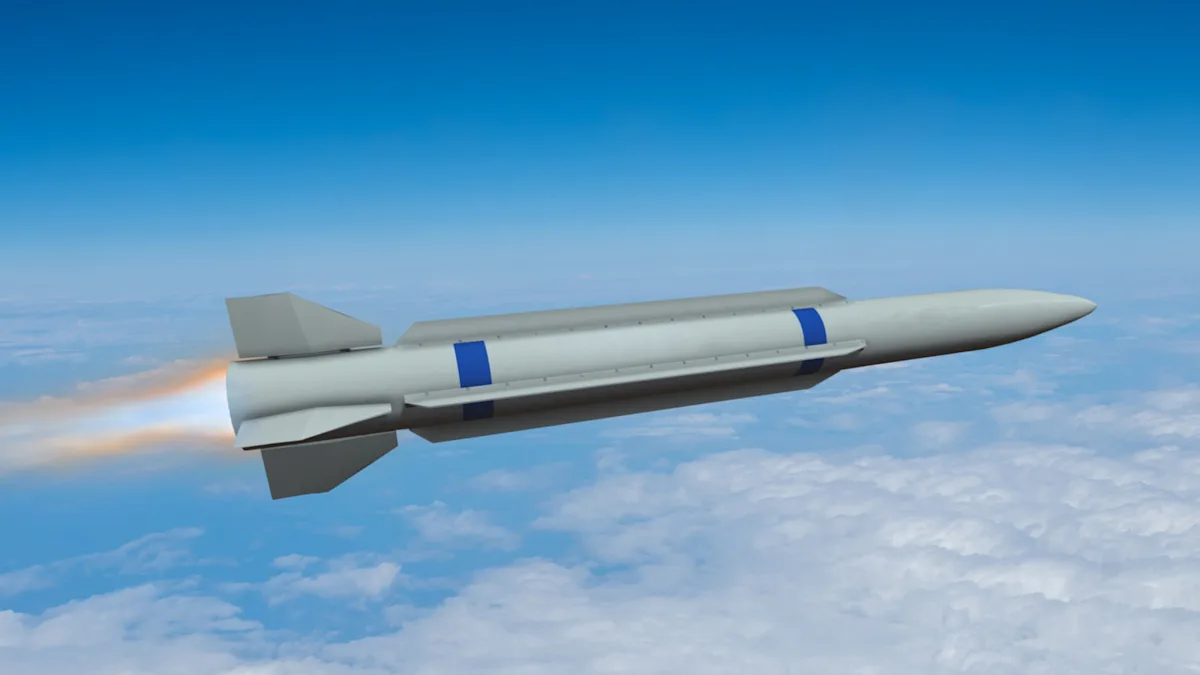
A metallic hypersonic missile with red accents flies above the clouds – Alexyz3d/Getty Images
Even if China could suddenly launch hypersonic missiles at the United States, our theoretical experiment is not as simple as it seems. China is fully capable of attacking certain U.S. cities, but intermediate-range ballistic missiles (IRBMs) like the DF-27 are simply not suited for such long ranges. The missile could still hit Guam or other remote islands, but it would not be able to travel farther into Central America.
But that doesn’t mean China can’t target Central American cities, it’s just that they won’t use hypersonic missiles like the DF-27. Hypersonic intercontinental ballistic missiles (ICBMs) such as the DF-31, DF-41 and DF-5C can all fly longer distances, with the DF-5C being particularly capable of global access. The DF-27 is considered more of a threat because the hypersonic glide vehicle (HGV) it uses takes a very unpredictable path—a situation that may become even scarier as China gets better NVIDIA AI chips.
The DF-5C nuclear warhead takes less than half the time to reach the continental United States as the DF-27. Sources estimate its speed to be in the tens of Mach, with some claiming it can reach Mach 22. At Mach 22, it takes 6 minutes to reach Guam, 19 minutes to Hawaii, 20 minutes to Seattle, and 25 minutes to New York. If you press the launch button in China and order pizza at the same time, the missile will most likely arrive first.
Like this article? Sign up for BGR’s free newsletter and add us as your go-to source for the latest technology and entertainment, as well as tips and advice you’ll actually use.
Read the original article about BGR.

