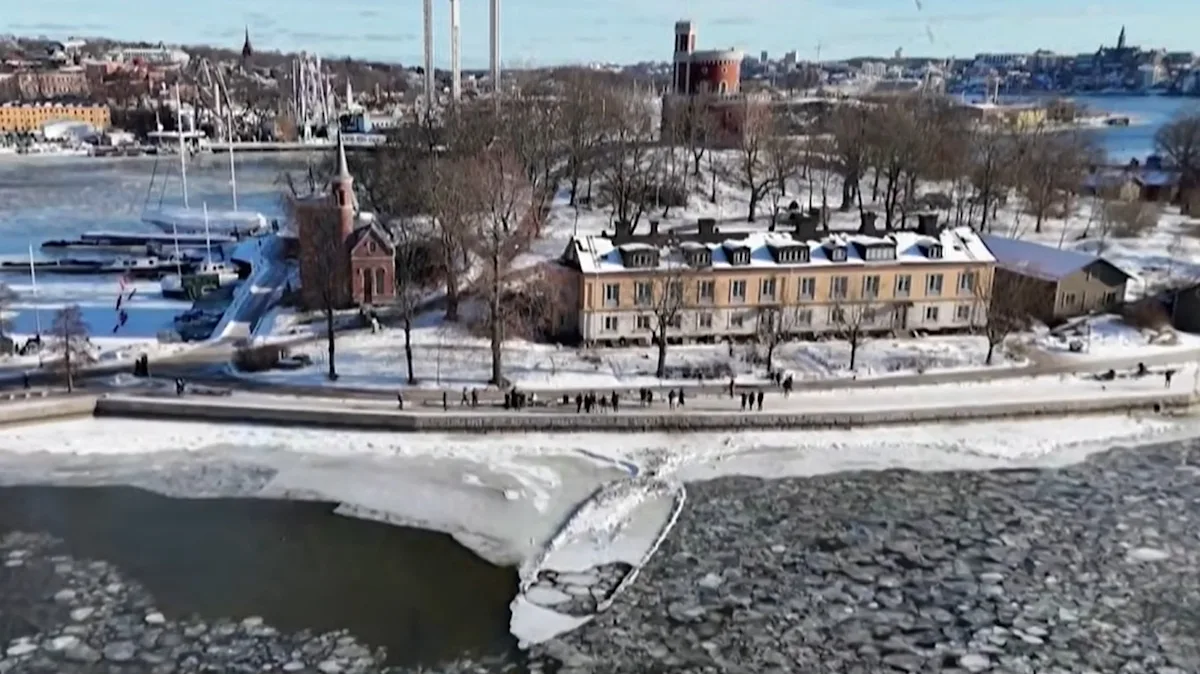
After 400 years under water, a Swedish navy ship has been revealed in the Baltic Sea near Stockholm. The ship was deliberately sunk in the 17th century and resurfaced after waters reached their lowest levels in the past 100 years. Jim Hansen, a marine archaeologist at Stockholm’s Flak Shipwreck Museum, explained to AFP what led to the reappearance of the wreck, CBS reported. “High pressure around our Nordic region has been present for a long time. As a result, water from the Baltic Sea is pushed into the North Sea and the Atlantic Ocean.”
The unidentified ship sank around 1640 so it could be used to build the foundations for a bridge to Castleholman Island. There are currently five shipwrecks in the area. The Swedish Navy is considering reusing oak hulls rather than using new wood. Researchers are currently trying to identify these wrecks as part of the Lost Navy research programme.
Read more: The 10 largest navies in the world, ranked by self-reported total naval assets
How did a sunken ship survive underwater for 400 years?

Swedish Shipwrecks of the 1600s – CBS Texas/YouTube
It may seem puzzling that a wooden ship could survive in the ocean for 400 years, but the Baltic Sea has the right conditions to keep Swedish naval vessels largely intact. According to Hansen, there are no shipworms in this area, which means the wrecks are not being eaten. Shipworms, which can grow up to two meters long, are sea creatures that use bacteria in their guts to break down wood and eat it. They are so skilled that they can sink a ship.
Rather than rotting away the wood, as you might imagine, the water left the boat intact—especially in deep water—creating a time capsule of sorts. In fact, most ships can remain undisturbed deep underwater indefinitely, but bringing a wreck to the surface can cause the wood to break down as it is held together simply by the water between the cells.
This is a big problem in salvaging the Vasa, another Swedish shipwreck that sank in 1628. Its wood, damaged by fragments of iron and metal that had begun to acidify, was now free of water. Scientists have discovered that alkaline earth metal hydroxides can neutralize acids and stop chemical reactions that destroy wood, but preserving undiscovered shipwrecks remains a challenge. This means low water levels in the Baltic Sea could cause problems for newly discovered warships.
Want to stay up to date on the latest tech and automotive trends? Sign up for our free newsletter to get the latest headlines, expert guidance and how-to tips, one email at a time. You can also add us as your preferred search source on Google.
Read the original article on SlashGear.

