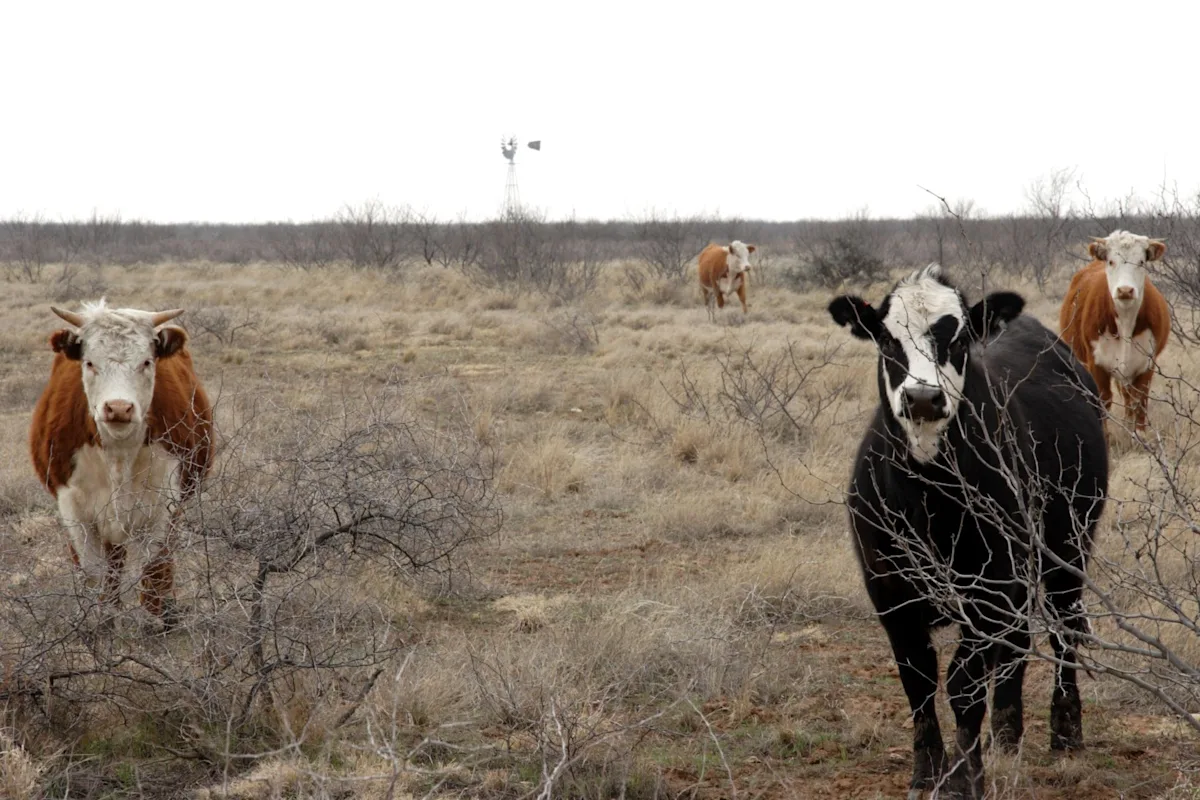
The Southern Plains is entering its sixth consecutive year of drought, and experts say the historic drought could permanently reshape one of America’s most important industries: cattle ranching.
What happened?
Vast swaths of Oklahoma, Texas and elsewhere are already in severe drought.
According to Down to Earth, agricultural losses in Oklahoma, Texas and Kansas are estimated at $23.6 billion from 2020 to 2024.
In 2022 alone, 25% of the corn crop in Texas was not harvested, 45% of the soybeans were abandoned, and 74% of the cotton crop was lost. Ranchers are forced to sell their cattle as dry pastures cannot support grazing.
Experts say the combination of rising global temperatures and recurring La Niña weather patterns tends to lead to warmer and drier winters in the region.
At the same time, water reserves are under tremendous pressure. It was recently reported that major Rio Grande reservoirs are operating at only 11%, 34% and 20% of capacity. Even heavy rainstorms are not enough to fully replenish depleted rivers and aquifers.
Why is this news concerning?
The Southern Plains has always experienced cycles of drought, but today’s drought is longer and hits harder.
A recent study from the University of Reading found that warm air absorbs moisture from the soil faster than rainfall can replace it. This means that even areas with occasional storms could experience severe agricultural drought if temperatures remain high.
For farmers and ranchers, this creates a dangerous cycle: crop failure, reduced herds, rising feed costs and mounting debt. It will take years to rebuild the herd, and if another drought occurs before recovery is complete, the damage will be even more severe.
Beyond agriculture, prolonged drought increases wildfire risks and strains water supplies for millions of people. The Edwards Aquifer, which provides water to about 2.5 million Texans, has reached historically low levels in recent years.
Worsening extreme weather threatens lives and livelihoods. When water shortages occur and crops fail, food prices may rise, jobs may disappear, and rural communities face economic instability.
What is being done about these droughts?
Scientists are racing to help the agriculture industry adapt.
Researchers have discovered how plants naturally grow deeper roots during periods of drought. A research team from the University of Nottingham and Shanghai Jiao Tong University found that two plant hormones help roots grow at a steeper angle, allowing crops to access water deep underground.
Farmers are also experimenting with soil protection measures, drought-resistant seeds and more efficient irrigation systems to reduce water waste.
It is increasingly important for individuals to be prepared for extreme weather. Simple steps, like staying informed about key climate issues affecting our planet, can help communities stay resilient.
Get TCD’s free newsletter for simple tips to save more, reduce waste and make smarter choices, and earn up to $5,000 toward clean upgrades in TCD’s exclusive Rewards Club.