Author: John Ireland and Michelle Rose
PARIS, January 28 (Reuters) – The European Union is preparing to add Iran’s Islamic Revolutionary Guard Corps to its list of terrorist organizations after France expressed support for the move on Wednesday.
EU foreign ministers meet in Brussels on Thursday and will sign new sanctions in response to a crackdown on protests that have left thousands dead and thousands arrested.
French Foreign Minister Jean-Noel Barrot said “France will support the inclusion of the Islamic Revolutionary Guard Corps on the EU list of terrorist organizations.”
With France, Italy and Germany joining, the decision is likely to receive political approval on Thursday, although it does require unanimous consent from the EU’s 27 member states.
Earlier on Wednesday, France had been hesitant to back an EU majority pushing to add the Islamic Revolutionary Guard Corps to the bloc’s list of terrorist groups, joining the United States.
Barot said: “The peaceful uprising of the Iranian people has been met with intolerable suppression and cannot go unanswered. The extraordinary courage they have shown in the face of blind violence cannot be in vain.”
The French president announced the decision earlier.
Established after Iran’s 1979 Islamic Revolution to protect the Shiite clerical ruling system, the Islamic Revolutionary Guard Corps has huge influence in the country, controlling large swaths of the economy and armed forces, and is responsible for Iran’s ballistic missile and nuclear programs.
Cut off ties, fears for Iranian citizens
While some EU member states have previously pushed for the Islamic Revolutionary Guard Corps to be included on the EU’s terrorist list, others, led by France, have been more cautious.
They fear the move could lead to a complete severing of ties with Iran, affect diplomatic missions and undermine negotiations to free European citizens held in Iranian prisons.
Paris is particularly worried about the fate of two citizens who are now living at the embassy in Tehran after being released from prison last year.
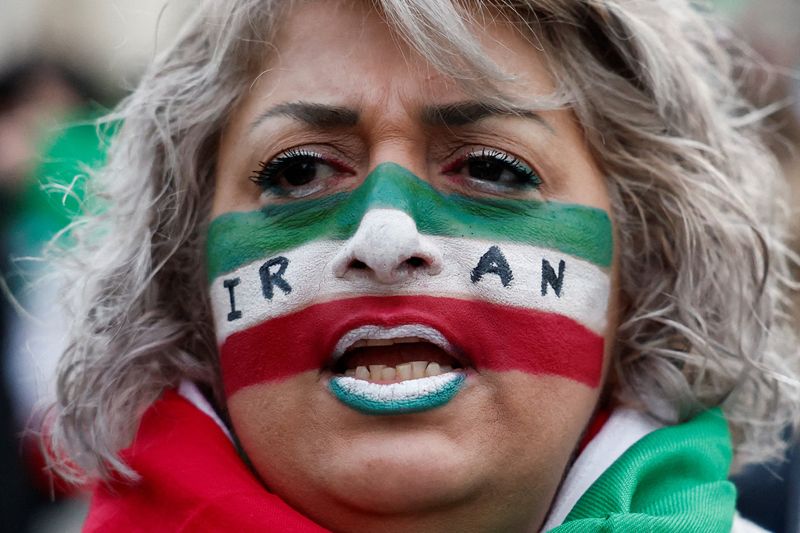
Anti-government protests have swept Iran since December, triggering the authorities’ bloodiest crackdown since the 1979 Islamic Revolution and drawing international condemnation.
Other diplomats supporting the move said the scale of the crackdown meant Europe had to send a very strong political signal, given the Islamic Revolutionary Guard Corps’ role in the crackdown and its overseas activities, which they viewed as tantamount to terrorism.
“If it walks like a duck and quacks like a duck, then it’s probably a duck and it’s better to point that out,” a senior EU diplomat said.
(Editing by Toby Chopra and Bill Berkrot)

