Gary Woodland revealed on Monday that he suffers from post-traumatic stress disorder (PTSD) after undergoing surgery to remove a brain lesion in 2023.
“I can’t waste any more energy hiding this, I’ve been lucky enough to have a lot of support on tour,” said Woodland, who counts the 2019 U.S. Open as one of his four wins. “Everyone has been amazing. Every week I come out and everyone is excited and happy to have me back. I hear it every week – it’s great to see you through this, it’s great to see you 100 percent – and I’m so grateful for your love and support. But deep down, I feel like I’m dying and feel like I’m living a lie.”
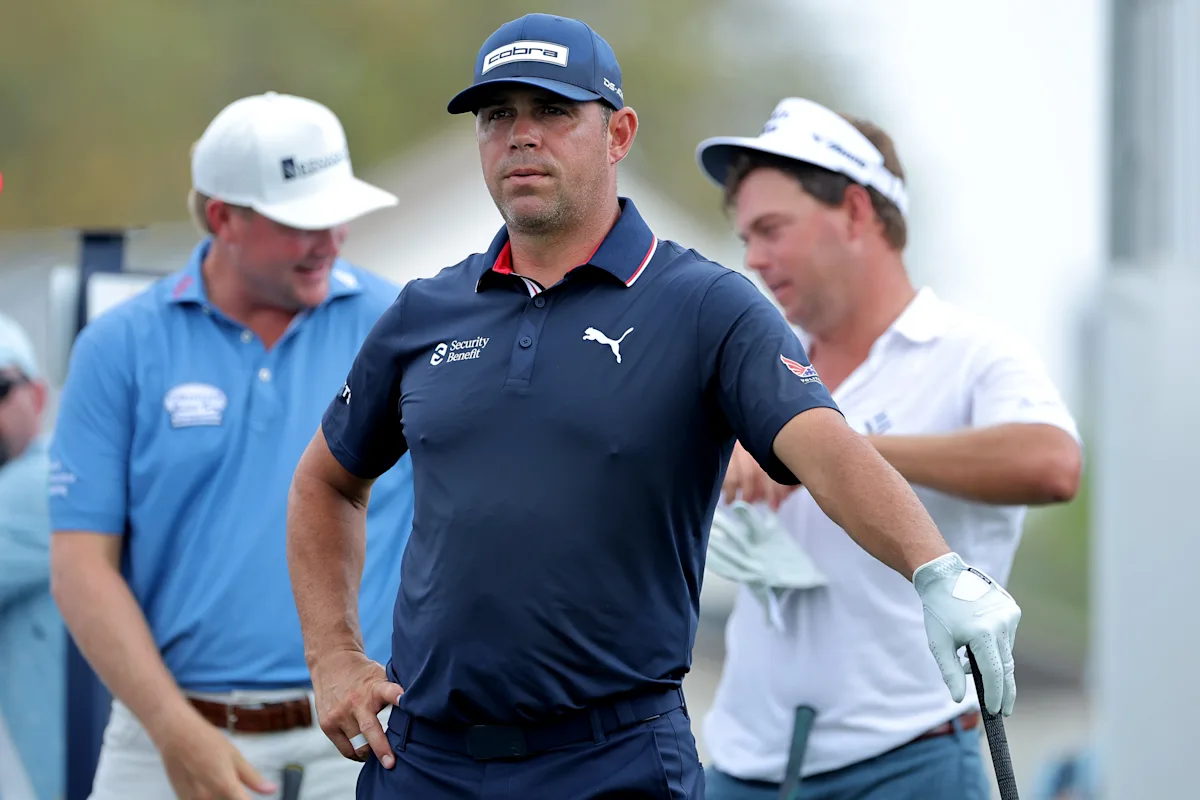
Gary Woodland stands on the first tee during the final round of the Texas Kids Houston Open golf tournament.
Woodland, 41, shared his personal struggles since his triumphant return to the PGA Tour in 2024 in an emotional interview aired on the Golf Channel. Woodland recounted an instance when he felt fear and anxiety while competing in the 2025 Procore Championship in Napa in September.
advertise
“I’m very vigilant,” Woodland said. “A walking scorer approached me from behind and startled me. I grabbed my caddy (Brennan “Butch” Little) and said, ‘You can’t have anyone behind me.’ Next thing you know, I don’t remember what I was doing. My vision started getting blurry.”
Woodland was about to quit, but his caddy helped him out by handing him a pair of sunglasses.
“It was my turn to hit the ball and I couldn’t,” said Woodland, who was an assistant captain on the U.S. Ryder Cup team and played with two of the team’s players. “Butch said, ‘Let’s get in there.’ I said, ‘No, man, I’m here for these people. I want to fight through this. The rest of the day, I walked into every bathroom and cried. When I was done, I got in the car and got out of there.
“There were some days that were hard – crying during the score trailer, running to my car just to hide it. I didn’t want to live like this anymore.”
Woodland praised the PGA Tour for enacting additional safety protocols that helped him feel safer on the course.
advertise
“In an ideal world, I probably wouldn’t be playing,” he said. “But in an ideal world I wouldn’t have this. This is my dream.”
Woodland is not seeking sympathy, but hopes that making his story public will help bring about change for others.
“I want to live my dream and be successful here,” Woodland said. “But I also want to help others. I realize now that I have to help myself first – hopefully this is the first step in making that happen… No matter how strong you think you are, you can’t do it alone.”
This article originally appeared in Golfweek: Emotional Gary Woodland opens up about PTSD after brain surgery