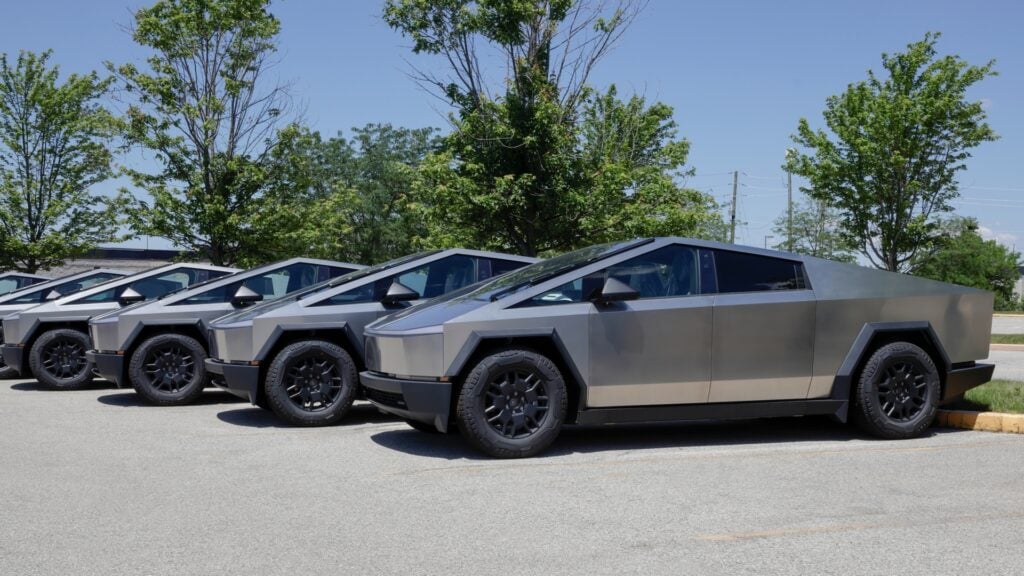
Elon Musk The Cybertruck was not designed to appeal to the masses. He designed it to intimidate.
A future wedge on wheels is a gamble — and Musk knows it. “I’m not sure if no one is going to buy it or if a lot of people are going to buy it,” he said on the “Third Row Tesla” podcast in 2020.
To prevent failure, Musk devised a plan B. “I told the team, ‘Look, if no one wants to buy this, we can always make a truck that looks like other trucks.'” He continued, “Is this a weird failure? OK. Just make a truck that looks like other trucks, and that’s it.”
Don’t miss:
In the podcast, Musk talks about everything from factory logistics to the shipping nightmare in Tierra del Fuego. But it’s worth noting that he bluntly acknowledged the risks of the Cybertruck – that it could completely collapse.
He said the truck’s design was inspired by “Blade Runner,” “Mad Max,” “Back to the Future” and “Alien” – a true “futuristic armored personnel carrier” designed to surpass all other pickups on the market. Musk said Americans buy pickup trucks because “it’s like, which one is the toughest? Which one is the toughest? It’s like, yeah, that one — it’s like a tank.”
He wasn’t exaggerating. The stainless steel panels look more like a tank from the future than something you’d see on a job site. But when Tesla unveiled it in late 2019, even some die-hard fans were confused. Musk himself isn’t sure anyone will actually buy it.
his brother, kimballagreed it was a “bold” design choice, but said Elon was clearly most excited about it. Elon doubled down and said, “I think this is the best product we’ve ever made.”
Trending: It’s no surprise that Jeff Bezos owns more than $250 million worth of art—this alternative asset has outperformed the S&P 500 since 1995, returning an average of 11.4% annually. Here’s how the everyday investor can get started.
Still, the “weird failures” Musk joked about didn’t turn out that well.
Despite initial enthusiasm, with 39,000 Cybertrucks expected to be sold in 2024, sales have almost halved in 2025. Only 20,200 vehicles were sold last year, a decrease of nearly 19,000, the largest decline of any electric vehicle model in the U.S., including some that have been discontinued entirely, according to InsideEV’s analysis of Cox Automotive data.

