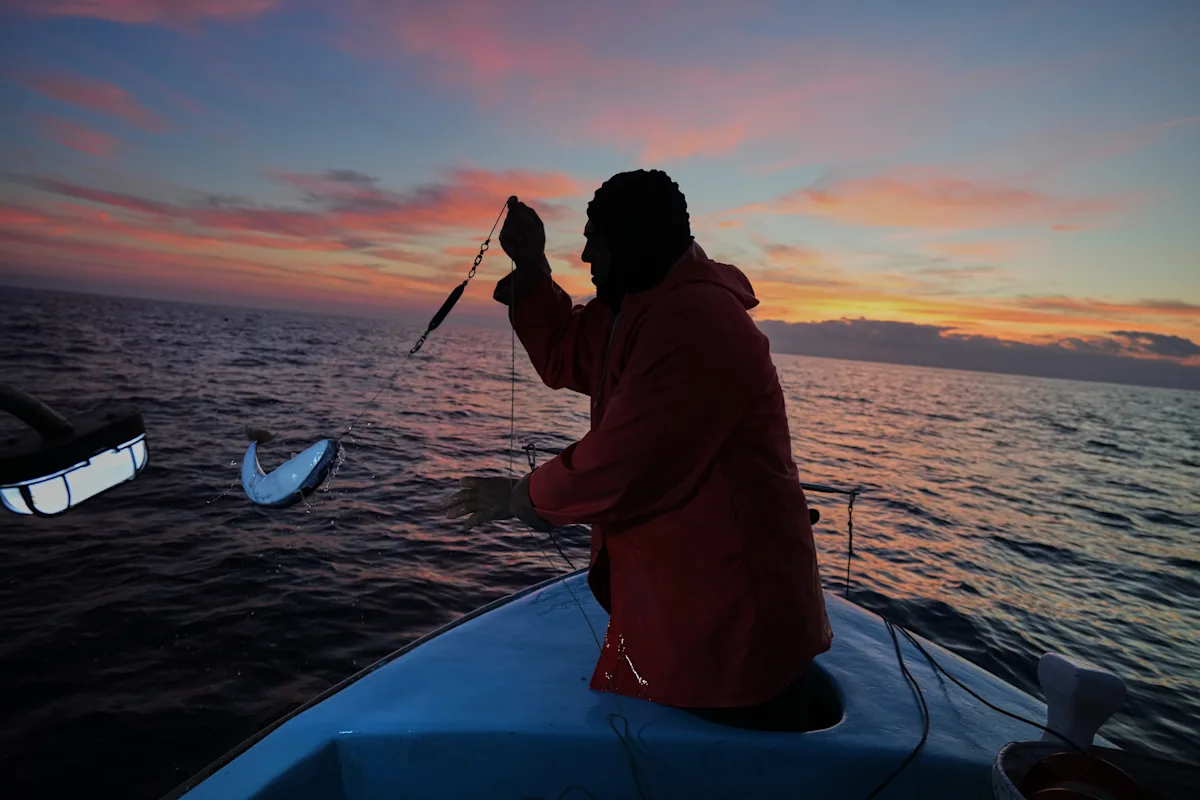
LARNACA, Cyprus (AP) — Fitis Gaitanos’ gnarled fingers deftly untangled the venomous spikes of a lionfish from a net, tossing the exotic-looking creature into a rubber bin filled with ice along with the day’s other catches.
Unlike a few years ago, when he mainly fished for local staples such as snapper, red mullet or sea bass, now the experienced fisherman is on the lookout for invasive species that have made their way from the Red Sea into the warm waters of the Mediterranean,
With their red and orange stripes and tentacle-like barbs that serve as menacing defenses against their enemies, lionfish threaten local fish stocks and wreak havoc on the livelihoods of Cyprus’ approximately 150 professional fishermen.
The spiny fish has even spread as far north as the Ionian Sea, with Italian authorities asking the public to take photos and report sightings.
Another invasive Red Sea fish has emerged in the eastern Mediterranean over the past decade: the silver-cheeked toad. Known as a feeding machine, its powerful jaws can cut through fishing nets, decimating fishermen’s catches. It has no natural predators near Cyprus, so its population has exploded.
The toad also produces a deadly toxin that makes it inedible.
The culprit is warming sea water
Gaitanos, a 60-year-old fisherman, has been fishing for years just a few kilometers from the coastal town of Larnaca, once famous for its rich fishing resources. Now, he said, he hasn’t caught the popular red mullet in more than two years.
“I’ve been in this profession for 40 years. Our income, especially since the arrival of these two alien species, has deteriorated every year. It is now a major issue (affecting) the future of the fishery,” he said. “How to deal with this?”
The European General Fisheries Commission for the Mediterranean said the presence of invasive species is “gradually increasing in the western basin” as seawater warms about 20% faster than the global average.
Models suggest that by the end of the century, lionfish could be sweeping across the Mediterranean as climate change causes oceans to warm. Cyprus’ Fisheries Ministry says warming waters and the expansion of the Suez Canal “have opened the floodgates” for species in the Indo-Pacific.
EU Fisheries Commissioner Kostas Kadis, himself a Cypriot, told The Associated Press that more frequent and intense extreme weather, often linked to climate change, could make the Mediterranean more hospitable to invasive species.
This has dealt a heavy blow to European fisheries, as fishermen are seeing fewer catches and the costs of repairing fishing gear damaged by the powerful invaders are rising sharply.
“In the case of Cyprus, native marine biodiversity in specific areas faces intense competition and pressure, which has an impact on local ecosystems and the industries that rely on them,” Kadis said.
Fishermen shout for help
Gaitanos, who inherited his father’s boat in 1986, is unsure whether the fishermen’s grievances are being addressed properly to prevent the industry’s decline.
“We want to make it clear to the EU that there are big problems with catches and the types of fish caught due to the arrival of these invasive species and the effects of climate change,” he said.
Several EU-funded compensation schemes have been enacted to help fishermen. The latest regulations, implemented last year, pay fishermen about 4.73 euros ($5.50) per kilogram (2.2 pounds) to catch the toads in an effort to control their numbers. The toads are then sent to the incinerator.
Another project, RELIONMED, launched in 2017, recruits about 100 scuba divers to cull lionfish around shipwrecks, coral reefs and marine reserves. The Cyprus Fisheries Ministry said surveys showed that frequent killings could buy time for native species to recover, but it was not a permanent solution.
Some problems trying to eat
Local fishermen hope to launch a new activity in which lionfish will be carefully removed from their stings and served as a delicacy, which will be welcomed by fish lovers.
The social media campaign #TasteTheOcean, launched in 2021, has attracted Europe’s top chefs and influencers to promote invasive species as tasty alternatives to more common fish, EU Fisheries Commissioner Kadis said. The famous Cypriot chef Stavris Georgiou created his own lionfish recipe.
For most Cypriots, local taverns with extensive appetizer menus that include many different fish dishes are the best choice. Although eating lionfish has been slow to catch on, many taverns and fish restaurants have started to include it as part of their menus.
The upside is that lionfish are now priced more competitively than more popular fish like bass. At the Larnaca Port fish market, lionfish costs less than half the price of more popular fish such as seabass.
“By incorporating invasive species such as lionfish into our diets, we can turn this challenge into an opportunity for the fisheries sector while helping to limit the environmental threats posed by these species,” Caddis said.
Stephanos Mentonis, who runs a popular fish tavern in Larnaca, has included lionfish on his appetizer menu as a way to introduce the fish to more customers.
Mentonis, 54, said most of his customers are unfamiliar with lionfish. But its meat is fluffy and tender, and he says it rivals perennial pub favorites like sea bream.
“When they tried it, they found it tasted no worse than any other fish,” he said.
___
Associated Press writer Colleen Barry in Milan contributed to this report.