Joe Cash
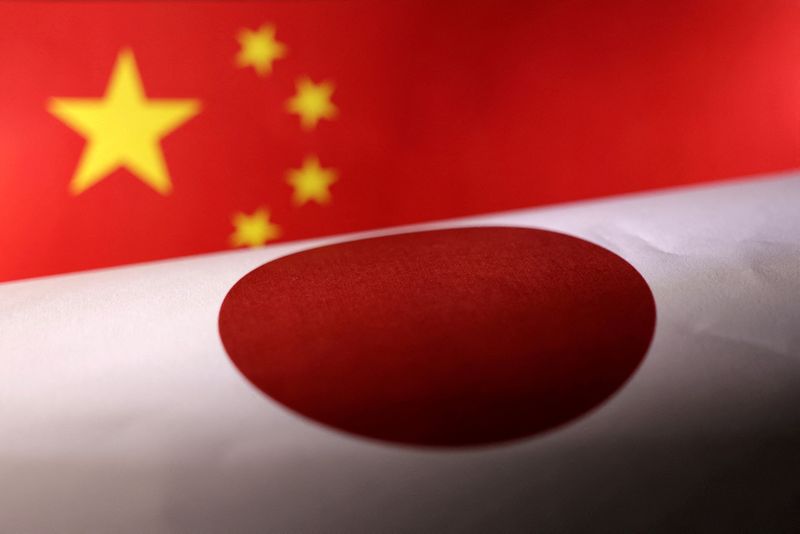
BEIJING, Jan 8 (Reuters) – China’s ban on exports of dual-use items to Japan will only affect its defense industry, China’s Commerce Ministry said on Thursday, helping to calm concerns that Beijing could restrict exports of rare earths vital to Japan’s auto industry over Japan’s comments on Taiwan.
Dual-use items refer to goods, software or technology that have both civilian and military uses. They include certain rare earth magnets that power motors in car parts such as rearview mirrors, speakers and oil pumps. They play a larger role in electric vehicles.
“Civilian users will not be affected,” Ministry of Commerce spokesman He Yadong told reporters. “China has always been committed to the stability and security of global production and supply chains,” he added.
He did not say whether rare earth elements were restricted and did not comment when asked about state media reports that the Commerce Ministry was considering whether to further tighten rare earth export licenses to Japan.
China has an export control list of about 1,100 dual-use items and technologies, and manufacturers need to obtain licenses to ship them overseas, regardless of the location of the end user. The list contains at least seven categories of medium and heavy rare earths. However, it did not specify which goods might be affected by the export ban to Japan.
Taiwan’s remarks lead to deterioration in relations between the two countries
Relations between Beijing and Tokyo have soured since Japanese Prime Minister Sanae Takaichi said in November that a Chinese attack on Taiwan threatened Japan’s survival and could trigger a military response, a comment Beijing described as “provocative.”
“Exports to Japan for military purposes of products that may have military applications, as well as all other end uses that contribute to the enhancement of Japan’s military capabilities, are prohibited,” he said.
“The goal of preventing Japan’s remilitarization and nuclear ambitions is entirely legitimate, reasonable and legal,” he added.
Japanese Vice Foreign Minister Takehiro Funakoshi made a strong protest to Chinese Ambassador to Japan Wu Jianghao on Thursday and asked China to withdraw the measure, Japan’s Foreign Ministry said in a statement.
The Chinese embassy said in a statement that Wu had rejected these representations.
Last month, Japan’s cabinet approved a record spending plan for the fiscal year starting in April, which includes a 3.8% increase in the country’s annual military budget to 9 trillion yen ($58 billion).
(Reporting by Joe Cash; Editing by Edwina Gibbs and Louise Paradise)

