When the Asus ROG Ally debuted last year, it came with a few caveats. Yes, gaming performance is solid, but the same cannot be said for battery life. While the design and build quality are up to par with the competition, thermal management is not. Asus’ handheld PC is certainly a positive entrant in the field, but it has some key limitations that prevent it from truly challenging the heavyweights. ROG Ally can be a replacement for the Steam Deck, but it will never replace it.
Fast forward a year and Asus is back with another gaming handheld. The ASUS ROG Ally X made its debut on June 2 ahead of Computex Taipei. This portable gaming computer attempts to address the ROG Ally’s glaring flaws with a comprehensive overhaul of tweaks and improvements. The upgrades are small but significant—the handheld’s battery capacity is significantly higher (80 watt hours) than the original (40 watt hours), it comes with more RAM and more storage, and it’s said to have better cooling than the ROG Ally. There are other changes that could make the handheld even better.
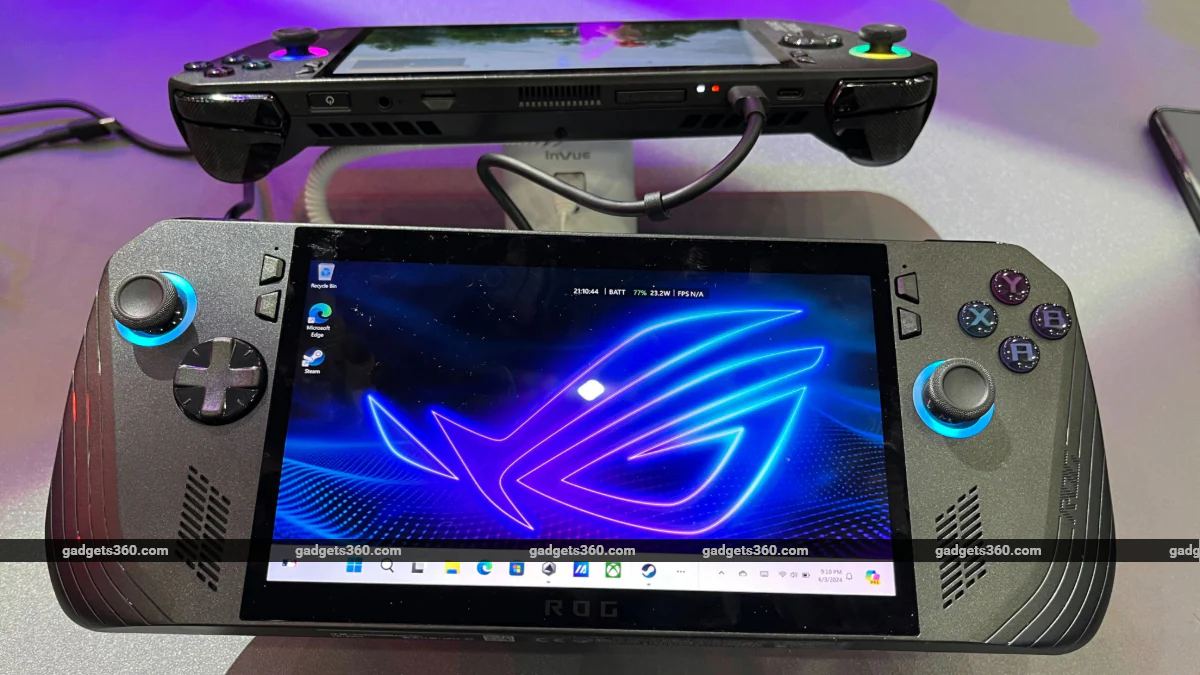
Two days after its launch, the Asus ROG Ally X showed up at the company’s booth on the Computex floor, and technology shout had a chance to try it out for the long haul. From early, brief hands-on experience, it’s difficult to tell how the spec bump will translate into real-world performance improvements, but first impressions can go a long way. The first thing that strikes you is the new colorway, which makes the ROG Ally X less eye-catching — well, ironic. The handheld gaming PC now comes in a deep black color, blending in with the competition (Steam Deck, MSI Claw A1M, Lenovo Legion Go – all in black). The original Ally’s white colorway, while more susceptible to dirt and grime on your hands, did convey a unique aesthetic.
The black color scheme makes ROG Ally X less eye-catching
The ROG Ally X retains the design of its predecessor, with few changes on the front. It offers the same 7-inch Full HD (1920 x 1080 pixels) IPS touchscreen display with a 120Hz refresh rate and up to 500 nits brightness. The D-pad has a more pronounced design and a new matte finish – Asus says it also has a better tactile feel. The front buttons are also the same, but the company claims they’re “more resilient.” The Taiwanese company has fitted the handheld with a new joystick module that it says provides more control when aiming, a smoother feel and improved durability.
The changes are even more apparent when you view the console from its sides and back. Due to the larger battery, the Asus ROG Ally X is slightly thicker than the ROG Ally, increasing to 1.45 inches from its predecessor’s 1.28 inches. The grip of the new handheld device is rounder, fuller and more ergonomic. I picked up and played both the Ally X and the original Ally in my hand at Computex Taipei; the new handheld feels more powerful and sturdy in my hand. It’s also just heavier in color. But impressively, Asus has kept the new handheld’s weight at 678 grams (the standard Ally weighs 608 grams), despite the larger battery and handle. The shoulder buttons have also been updated, with wider, more ergonomic triggers. On the other hand, the back button is now smaller to prevent accidental pressing. These changes definitely improve the feel of the laptop.
ASUS ROG Ally X is more ergonomic in hand
However, bigger changes lurk behind the scenes. The ROG Ally’s 40-watt-hour battery can’t last more than two hours while playing demanding PC games. Its lack of battery power is probably its biggest flaw, holding it back from being a truly portable handheld device. The ROG Ally X addresses this shortcoming with an 80-watt-hour battery, which should result in longer gaming sessions. Gaming time figures are unclear, and Asus hasn’t provided details about battery performance, but that information should be clear once the device is reviewed in detail.
The handheld’s memory has also been upgraded, with the ROG Ally X getting more RAM — 24GB at faster speeds up to 7500MHz, of which 16GB will be allocated to the system and 8GB to the GPU. Overall, this will likely result in better gaming performance, but don’t expect big improvements as the Ally X still runs on AMD’s Ryzen Z1 Extreme Zen 4 platform with RDNA 3 graphics, the same as the 2023 ROG Ally. The new handheld also comes with more storage out of the box – a 1TB SSD that supports the more common M.2 2280 size drive instead of the 2230 standard used in the ROG Ally.
The ports have also been repositioned, with Asus ditching its proprietary XG Mobile port in favor of two USB Type-C ports, one of which supports Thunderbolt 4. Asus also claims that it has redesigned the cooling system on the handheld device. The ROG Ally X uses a smaller fan to make room for the larger battery, but with better airflow, which Asus says is about 24 percent more than the previous model. This is also said to reduce touch screen temperatures by up to 6 degrees Celsius. The 2023 model does struggle with heat management, so this is a welcome change. But actual thermal performance will only become clearer with long-term use.
The ports have been relocated, and the ROG Ally X now has two USB Type-C connectors
One big thing holding back the Asus ROG Ally and working against the new model is the operating system. The ROG Ally X comes with Windows 11, and while it offers flexibility and versatility, it’s still a clunky and unintuitive touch interface for a touchscreen. Sure, it lets the handheld device work like a pocket PC with a controller, but it pales in comparison to Steam Deck’s SteamOS, which brings a smoother, console-like UI. However, Asus has packed in a new version of Armory Crate SE software this time around, which promises a more customizable interface and game library, as well as easier navigation.
At Computex, technology shout tried out games like Armored Core VI: Rubicon Fire, Palworld, and Tekken 8. The games ran smoothly, and we didn’t notice the handheld overheating for a short period of time. This is in stark contrast to the hands-on experience with another new handheld device, the Zotac Zone, seen at Computex Taipei. Zotac Windows-based portable devices crash and show signs of overheating when running Horizon Forbidden West. A detailed review will go into more detail about the new Ally X’s gaming and cooling performance, but considering the improvements it brings to an already great handheld device, the ROG Ally X will probably be the easiest to recommend among its Windows-based counterparts.
ROG Ally X is hampered by Windows OS
However, upgrading comes at a cost. The Asus ROG Ally X is priced at $799 (approximately Rs. 66,700), which is a $100 increase over the Z1 Extreme version of the 2023 model. Pricing in India should be announced closer to launch, which Asus says should happen later this year. While all the upgrades bring meaningful improvements, the OLED screen is also a nice addition. However, considering the price point, Asus seems to have made all the right choices for its mid-gen update of the handheld device. The verdict will have to wait until a detailed review, but the ROG Ally X impressed us during our hands-on experience with the handheld device. It may not be a true successor to the 2023 model, but it looks like a success.
Disclosure: ASUS sponsored flights and hotels for this reporter’s event in Taipei.