Bronze Age pottery unearthed in northwest China has revealed the secrets of making red rice wine, which was drunk during rituals in the region in the second millennium BC.
Previous research has shown that the Mogou people of ancient China used a range of plant resources in their diet and even used an ancient fermentation method to brew alcoholic beverages song.
The starter culture used in this method consists of microorganisms that grow on grains, including Aspergillus Mold, yeast and bacteria. song It originated in eastern China during the Neolithic Age and spread to the northeastern edge of the Tibetan Plateau during the Bronze Age.
It is understood that the Mogou people drank rice wine brewed by this method during ceremonies, but it is rarely found.
“Recent studies have highlighted the widespread presence and use of grain-based fermented beverages in Neolithic China. However, research on early Bronze Age cultures remains limited,” says a new study published in the journal Nature. Journal of Archaeological Science Reports.

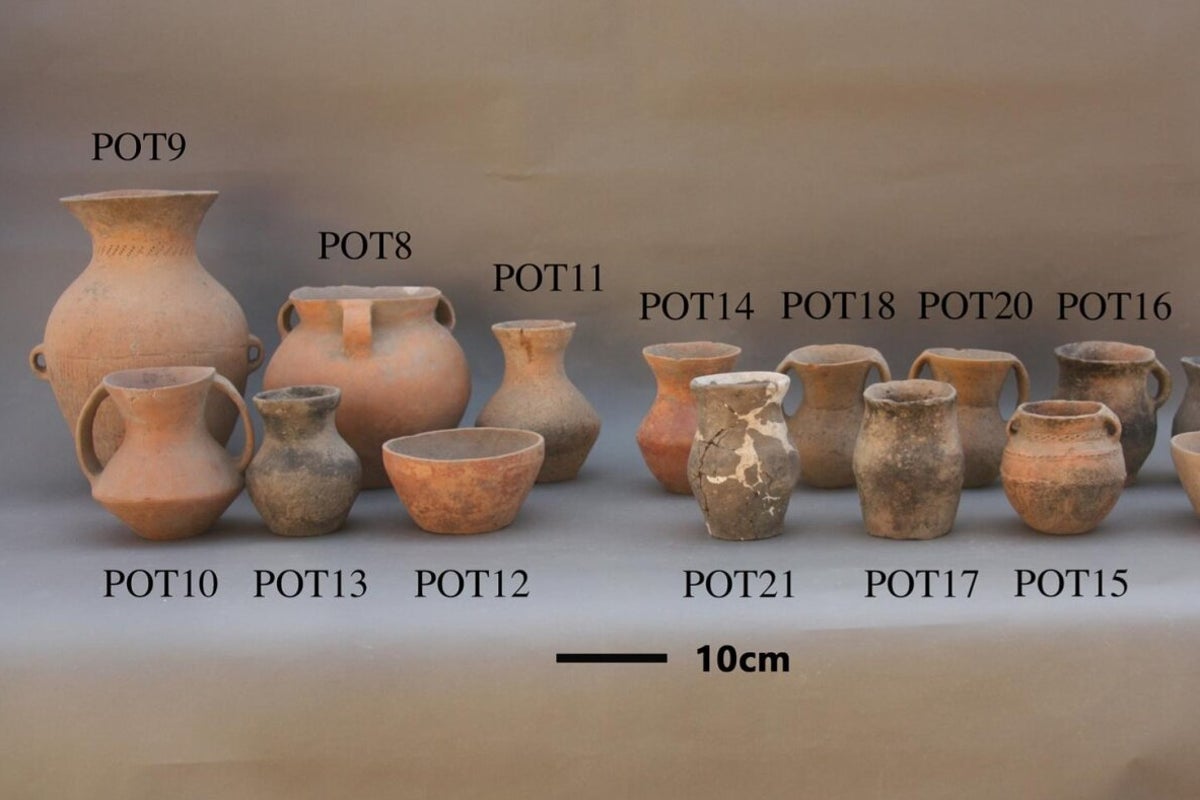
M499 Qijia Culture tomb pottery assemblage; Qijia to Siwa transitional tomb M457; Qijia to Siwa transitional burial M368; and Siwa Culture period tomb M576 (Journal of Archaeological Science Reports 2025)
Researchers find pottery shows evidence of fermentation using alcohol song Ritual consumption was practiced at the Mogou Cemetery in Gansu Province, China, between 1700 and 1100 BC.
These tombs span two ancient cultural periods, the Qijia culture from 2300 to 1500 BC and the Siwa culture from 1400 to 1100 BC. Some of these tombs have side chambers at varying depths within the walls, with ceramic objects placed above the heads of the buried individuals.
Pottery found in a side chamber provides archaeologists with a rare opportunity to determine whether the Mogou people drank fermented beverages and what brewing methods they may have used.
The researchers analyzed the remains of about 42 pottery vessels from different periods at the Mogou site.
They identified the uses of various plants in these residues, such as rice, millet, barley, buckwheat, and plants belonging to the Triticeae family, including barley and wheat.
The study confirms previous findings that the Mogou people consumed a variety of plant foods during the second millennium BC.
Starch residue in the vessel also showed signs of enzymatic action, confirming fermentation, which may have been part of song Alcohol brewing methods.
“Mogou people use wine to make alcoholic beverages song Method, using rice as the main ingredient to prepare starter culture, Monascus mold,” the researchers wrote.
“this song-Beverages made from various grains played an important role in their mortuary practices. “
