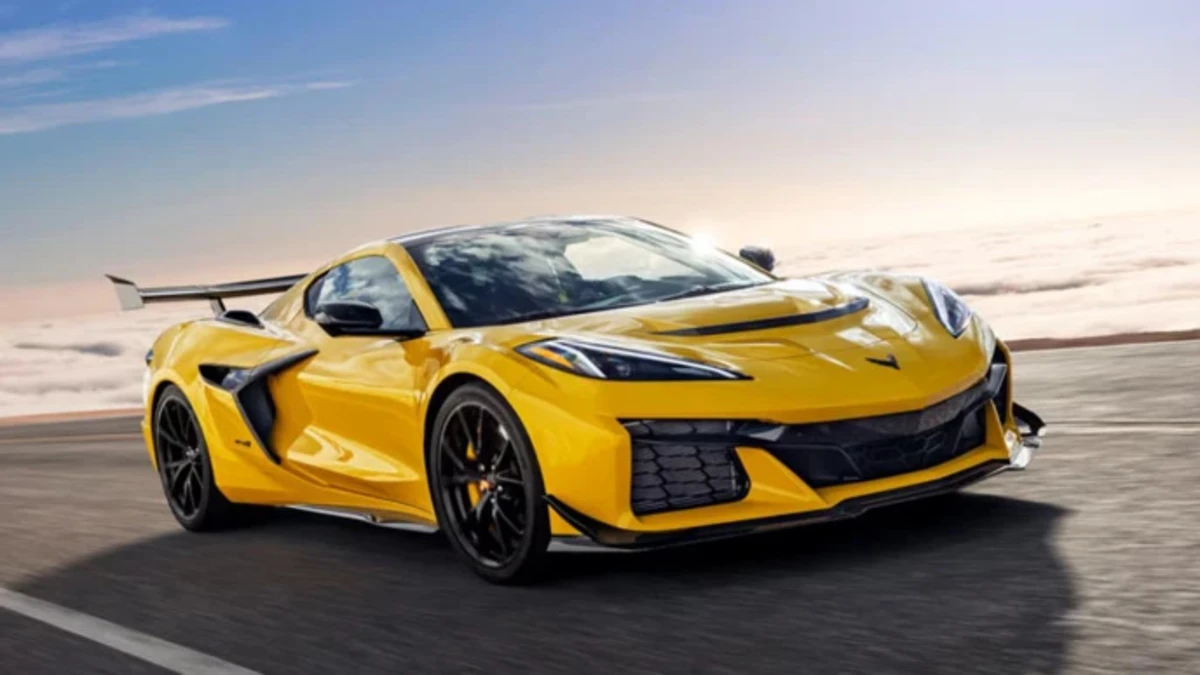
Chevrolet didn’t just build a supercar. It might just turn the whole idea of supercars on its head. The brand has produced more than 1,000 Corvette ZR1s in 2026, something that would have been unthinkable just a few years ago – turning a 1,000-horsepower, record-breaking machine into a nearly usable machine.
The decision sent shockwaves through the performance car community. Because in a segment built on scarcity, Chevrolet simply chose quantity.
From limited halo cars to high-capacity weapons
Production tracking shows Chevrolet has sold more than 1,000 2026 Corvette ZR1s, while the all-wheel-drive ZR1X model has also sold more than 156 units. This number alone exceeded expectations. Production of the 2025 ZR1 will be only 180 units, more in line with the traditional low-volume supercar strategy.
This time around, Chevrolet is taking a completely different approach. Rather than limiting supply to expand exclusivity, it appears to be meeting demand head-on. This marks a shift in philosophy that prioritizes getting cars into buyers’ hands rather than turning them into instant collector’s items.
For enthusiasts, this is a refreshing move. This is a potential problem for exotic brands that rely on scarcity to justify pricing.
A performance that embarrasses the establishment
The numbers behind the ZR1 make production decisions even more game-changing. The car is powered by a 1,064-horsepower twin-turbocharged 5.5-liter V8 engine that accelerates from 0 to 60 mph in just 2.2 seconds and reaches a top speed of 233 mph.
This performance was not just about competing, but dominating. The ZR1 has shattered established benchmarks, finishing 2 seconds ahead of the Porsche 911 GT2 RS at Road Atlanta and 5 seconds ahead of the 911 GT3 RS at Road America. At Virginia International Raceway, it even beat the McLaren Senna.
These are no small victories. These are direct blows to some of the most revered track-focused machines ever built.
Then there’s the price. The ZR1 starts at $184,495 and offers performance typically associated with seven-figure supercars. The gap between cost and features is what makes this car a threat to the traditional hierarchy.
ZR1X goes one step further
If the standard ZR1 wasn’t enough, the Chevrolet ZR1X goes one step further. By adding a front electric motor, the hybrid system increases total output to 1,250 horsepower.
The result is performance that spans areas usually reserved for the absolute elite. The ZR1X hits 60 mph in just 1.68 seconds on prepared pavement and runs the quarter mile in 8.675 seconds.
With a starting price of $210,000, it directly competes with, and in some cases beats, brands like Bugatti, Porsche 918, and Hyundai electric supercars. This is a level of disruption that the industry cannot ignore.
Buyers are surprisingly cautious
Despite the impressive performance, buyer behavior tells a more conservative story. Nearly 27.4% of ZR1 buyers chose black, followed by white and yellow. Riptide Blue Metallic ranks at the bottom, chosen by only 4.8% of customers.
Even with the aggressive styling and track-focused intentions, most buyers stuck with safe, traditional color options. The trend continues inside the car, with more than a quarter of buyers opting for jet black Nappa leather.
Meanwhile, performance-focused options are in strong demand. About 80 percent of buyers opt for the carbon fiber aerodynamic package, with the top-end 3LZ trim dominating the scene. Only a small percentage (1.8%) chose the basic 1LZ configuration.
This combination says a lot. Buyers want the full performance experience—they just don’t necessarily want to stand out while doing so.
Why this strategy is a game changer
Chevrolet’s decision to mass-produce the ZR1 challenges one of the core tenets of the supercar market: exclusivity equals value. Traditionally, limited production quantities have been used to justify extreme pricing and maintain brand reputation.
By producing more than 1,000 cars, Chevrolet is actually asking a different question. What happens when you deliver superior performance without artificial scarcity?
For buyers, this means more opportunities. For the market, this creates pressure. If a car priced under $200,000 can outperform a machine that costs several times more, the value equation starts to change.
This doesn’t just affect Corvette’s competitors. It forces a broader discussion about what customers are actually paying for—performance, branding, or exclusivity.
What this means for enthusiasts
For car enthusiasts, this is exactly the change the industry needs. The ZR1 proves that world-class performance doesn’t have to be limited to ultra-limited production or a seven-figure price tag.
At the same time, it raises questions about where exactly the line between supercar and hypercar is drawn. As the Corvette transcended established icons while producing thousands of units, categories began to blur.
That’s not a bad thing for drivers. This is a challenge to the status quo.
Bigger questions moving forward
Chevrolet has made this move, and it’s a bold one. By combining extreme performance with real-world output, it forces the rest of the industry to react.
The real question now is whether other manufacturers will follow this path, or double down on exclusivity to protect their own profits. Because if performance like this becomes widespread, the entire supercar playbook may need to be rewritten.
Join our newsletter, follow our Instagram page and connect with us on Facebook.