As you read this story, you will learn the following:
-
Staff working at the Sizewell C nuclear power station in Suffolk have discovered a 7th-century “royal” tomb.
-
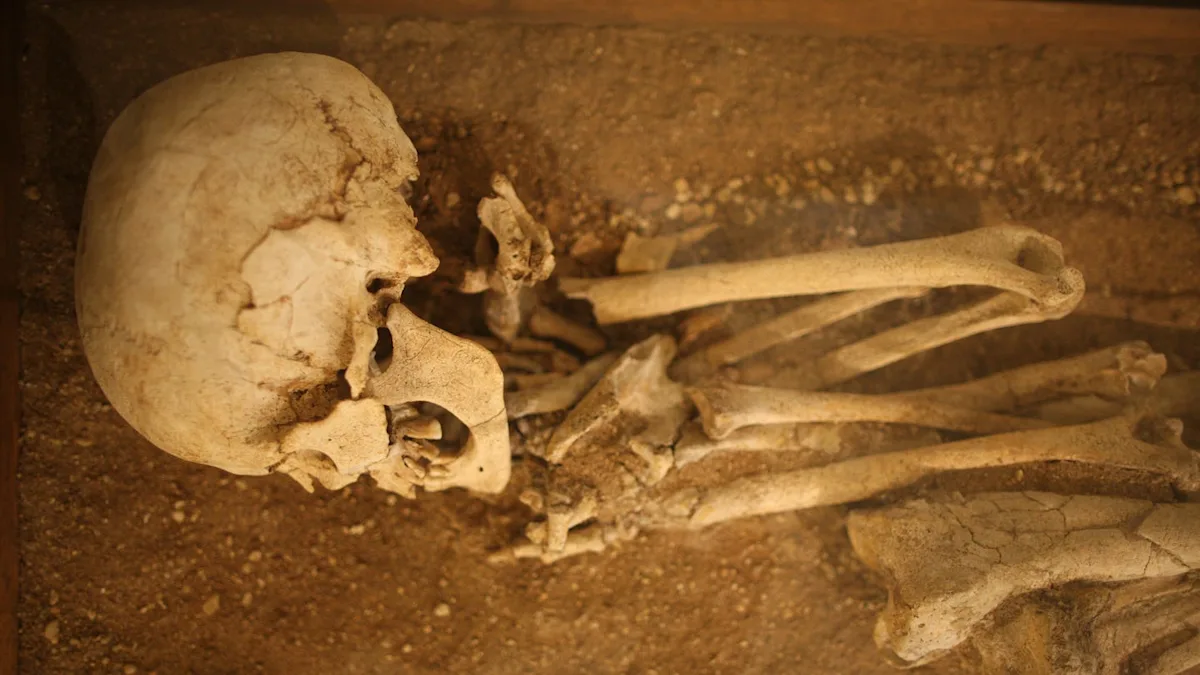
Inside the tomb, experts found the silhouettes of two high-status men in the sand, each equipped with weapons and personal belongings.
-
The tomb contained a heavily armored horse, one of the largest known grave goods.
Of the 11 burials discovered at the Sizewell C nuclear power station in Suffolk, one in particular stands out – the remains of two seventh-century “prince” figures, buried alongside weapons and a heavily armored horse.
Eleven Anglo-Saxon burial mounds (called barrows) are located alongside cremation and inhumation tombs, all of which are carefully placed in prominent positions within the landscape. Len Middleton, project officer for Cotswold Archeology in Oxford, said in a statement that the soil conditions of the find offered little protection, leaving instead “a striking outline of sand that captures the outline of the body in extraordinary detail.”
The artefacts, which date back to the sixth and seventh centuries, were unearthed during preparations for the construction of the new Sizewell Link. Nigel Cann, chief executive of Sizewell C, said the excavation of the cemetery would provide a “fascinating insight into Suffolk’s rich heritage and the life of its early communities”.
Those involved in the excavation said the work revealed more about England’s past. “Discoveries like this are of national importance because they deepen our understanding of power, belief and identity in early medieval England,” Middleton said, “and how these ideas were expressed on the East Anglian coast.”
The new discovery is not the first at Sizewell Area C, which has already yielded well-preserved pottery kilns, a rare Iron Age oak ladder, a Bronze Age cremation urn and even a site featuring stone tools, pottery and the remains of early Neolithic architecture that may date to around 3500 BC.
Another location offers over 300 pieces 11th Century silver coin wrapped in lead and cloth. It is believed that the treasure was a piggy bank buried by locals as a precautionary measure during social or political unrest in the 11th century.th century. It has since been donated to Suffolk County Council’s Archaeological Service.
Cotswold Archeology project manager Rosanna Price said the excavation revealed “an astonishing 36,000 years of human habitation – from the early wanderings of Neanderthals to the grafting of the first farmers 6,000 years ago, from the rich culture of early medieval England to the grueling training grounds of the Second World War.”
Sizewell C currently has approximately 770,000 square miles of excavation sites spread over 70 sites. Debbie Richard, deputy cabinet member for archeology and landscape partnership at Suffolk County Council, said in a statement: “Suffolk continues to reveal its amazing past and the scale of these discoveries should not be underestimated.”
You may also like
