LIVIGNO, Italy (AP) — As the Winter Olympics begin in Milan, Vice President Vance hailed the games as “one of the few events that unites the country.”
This unity did not last long.
The early days of the Milan Cortina Games were disrupted by intense political debate in the United States. U.S. athletes have been facing questions about President Donald Trump’s aggressive immigration enforcement agenda and their comfort while representing a country whose policies have become increasingly controversial on the world stage.
advertise
American freestyle skier Hunter Hess said of “mixed emotions” about representing the United States: “Obviously, I’m not the biggest fan of a lot of what’s going on, and I think a lot of people aren’t either. If it aligns with my moral values, I feel like I represent it. Just because I’m wearing the flag doesn’t mean that I represent everything that’s going on in America.”
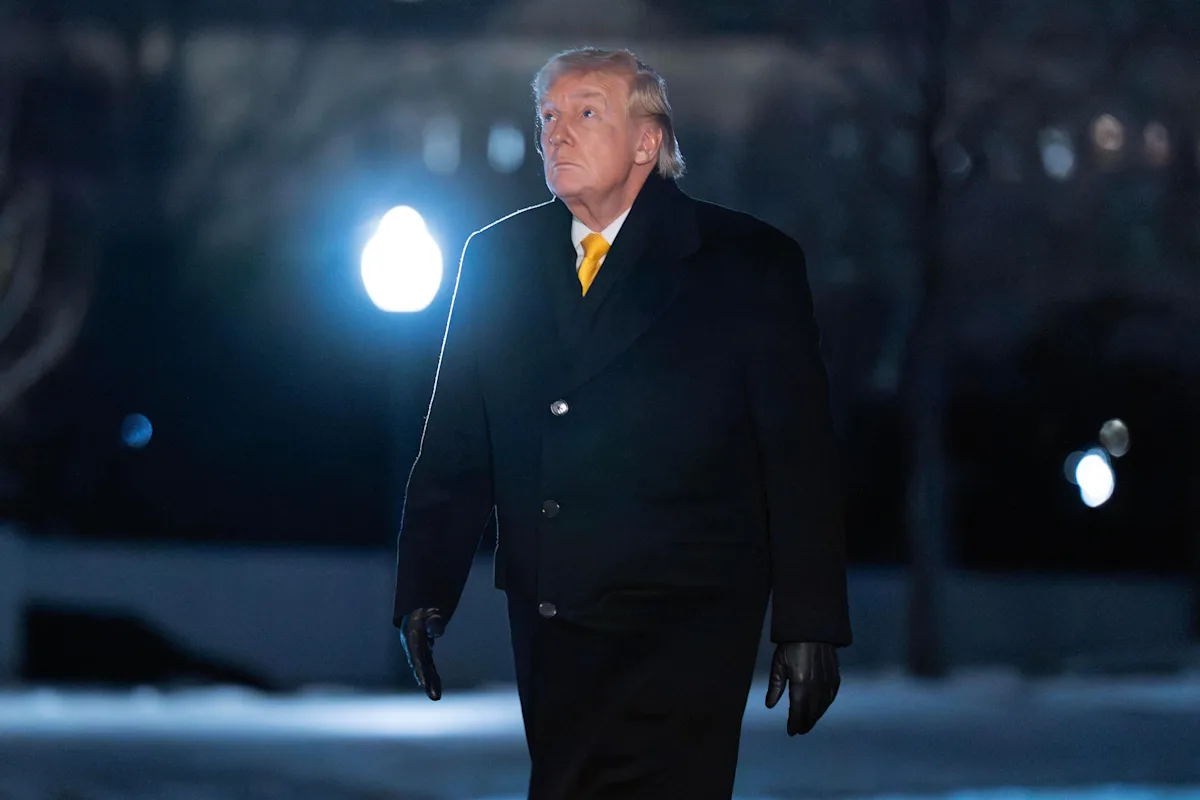
That prompted a quick response from Trump, who said on social media that Hess was a “real loser” who “should not be trying out for the team.”
“It’s hard to support someone like that,” the president added.
The president’s criticism of an American athlete was a sharp departure from the unified, apolitical tone the White House typically takes during the Olympics, highlighting the tensions over Trump’s immigration policies that have now seeped into sports competition. Other leading conservative voices, from podcaster Megyn Kelly to the Republican candidate for Florida governor, have joined in the criticism of Hess, with some calling for him to be removed from Team USA.
advertise
By Monday, other top athletes who had previously been embroiled in political controversies were coming to Hess’ defense.
“It’s really important for us in moments like this that we come together and stand up for each other,” said two-time Olympic gold medalist Chloe Kim, whose parents are Korean immigrants and has faced racism during her career because of her Asian heritage.
Gu Ailin, who was born in San Francisco and competes for China, said after winning the silver medal in slopestyle that she had been in touch with Hess, who told her she was one of the few people who could understand what he was going through.
“As someone who has been caught in the crossfire, I feel sorry for the athletes,” said Gu, whose decision to represent China drew sharp criticism.
advertise
The Olympics have never been isolated from politics
The Olympics have never been divorced from political and cultural debates. The raised fists of Tommie Smith and John Carlos during the 1968 Olympics remain one of the most powerful and enduring images of protest and resistance to racial injustice in the United States. Since then, athletes’ political commentary has become more commonplace, aided by social media platforms that allow contestants to share their real-time thoughts on everything from food and nutrition to the day’s news.
However, the Italian athletes’ comments were noteworthy because they came at the biggest global sporting event since federal agents killed two U.S. citizens in Minneapolis last month, reigniting debate in the U.S. and abroad over Trump’s hard-line immigration measures.
Another American freestyle skier, Chris Lillis, said he was “heartbroken by what is happening in the United States.”
advertise
“As a country, we need to focus on respecting everyone’s rights and ensuring that we treat our citizens, and anyone else, with love and respect,” he said. “I hope when people see the athletes competing in the Olympics, they realize this is the America we want to represent.”
Skiing star Mikaela Shiffrin quoted Nelson Mandela as she acknowledged “there’s a lot of difficulty around the world, there’s a lot of heartbreak, there’s a lot of violence.”
“It’s hard to reconcile that when you’re still competing for medals at the Olympics,” she said. “I really want to be able to demonstrate and represent my own values, the values of inclusivity, the values of diversity, kindness and sharing, tenacity, work ethic and just showing up every day with my team.”
In most cases, when athletes are specifically asked to respond to news events, they engage primarily in political conversations during press conferences. During one such press conference, American figure skater Amber Glenn, an outspoken activist for LGBTQ+ rights, noted that the queer community was going through a “tough time” under Trump. She later said she was quitting social media after receiving threats on the platform.
advertise
Political controversies can leave athletes at an uncomfortable crossroads, as they weigh whether to use their platforms to take a stand or avoid anything that might upset fans or sponsors. At last month’s Australian Open, American Amanda Anisimova said questions about US politics were “irrelevant”. Another American player, Taylor Fritz, said he felt “whatever I say here is going to be put in a headline and taken out of context.”
“So I really didn’t want to do something that would distract me in the middle of the game,” he said.
Back at the Olympics, U.S. speed skater Casey Dawson said “we absolutely understand the whole situation that’s going on in the United States,” while noting that “politics don’t apply to us” at the Olympics.
“We’re here to skate,” said Dawson, who finished eighth in the men’s 5,000 meters on Sunday, with Vance and his family in the stands. “We’re here to skate. We’re here to perform.”
___
Sloan reported from Washington. Associated Press writers Howard Fendrich and Graham Dunbar in Milan contributed to this report.