Cooperation between the United States and Syria must be based on professional operations, without infiltration by extremists, and with the goal of ending reliance on former militia groups.
The attack on U.S. troops in Syria is a deadly reminder of the danger extremist groups continue to pose in Syria and the Middle East. As details continue to emerge about the perpetrators and how the attack occurred, it is important to draw some initial lessons from this attack. The attack demonstrates the need to ensure that Syria’s security forces, especially those recruited and trained by the new government in Damascus, are vetted against extremists and that this force is professionalized.
The new Syrian government faces huge challenges in national security. The United States and partner countries hope that Damascus will remain stable and the security forces will continue to grow. To do this, safeguards, professional training and reviews must be put in place. Another important issue is the integration of the US-backed Syrian Democratic Forces in eastern Syria with the new Damascus-led security forces in western Syria. The attack on U.S. forces illustrates the threats that can occur when integrating forces.
The SDF has been a model partner for the United States in eastern Syria. The obstacle in western Syria is that some extremist deviants may oppose the SDF and try to exploit the incident. It is important to ensure that extremists do not infiltrate the Syrian army or undermine Syria’s development.
To understand these challenges, it is necessary to review some of the details of the attack. “An Islamic State gunman was ambushed in Syria, killing two U.S. service members and a U.S. civilian and wounding three service members,” U.S. Central Command said.
US President Donald Trump has promised revenge after the killings of two US soldiers and a civilian translator in Syria. “We will retaliate…for the loss of three great American patriots,” Trump said. Tom Barak, the U.S. special envoy to Syria and U.S. ambassador to Turkey, wrote: “Today’s cowardly terrorist ambush of American personnel in Syria, which killed two brave American soldiers and a dedicated civilian translator, is a stark reminder that terrorism remains a vicious and persistent threat, capable of striking even as we work to eradicate it.”

A convoy of the U.S.-led international coalition fighting the Islamic State in Iraq and the Levant (ISIL) stops to test-fire an M2 machine gun and MK19 grenade launcher in the Euphrates River Basin in Deir ez-Zor province, Syria, on November 22, 2018 (Photo: Matthew Crane/U.S. Army/Reuters)
Kurdish Media Network Ludo According to reports, a US soldier was killed in an ambush in Homs Province in western Syria. A U.S. military source in Syria said “the American civilian killed in the ambush was a Christian from the Kurdistan region.” Ludo We requested anonymity due to the sensitivity of this matter. “
this Ludo The report also stated that the US military team that was attacked was stationed at the Tanf base in southern Syria near the border between Jordan and Iraq. For a decade, the base has served as a garrison for training Syrians. The Free Syrian Army is the United States’ main partner force there. It is made up of local Syrian Arabs. It later became part of the 70th Division of Syria’s new security forces, engaged in security work.
CNN pointed out that “a spokesman for the Syrian Interior Ministry said that the Syrian army had issued an intelligence warning to US-led forces and that the authorities knew who the attacker was before the deadly attack.” Syrian official media SANA The report stated that “a security source said that a joint Syrian and American military patrol was shot at near the ancient city of Palmyra on Tuesday, injuring several people.” Syrian Interior Ministry spokesman Nour Eddin Baba said that Syria was investigating whether the perpetrators “had direct ties to the Islamic State or simply adopted extremist ideology.”
US wants Syria to join fight against ISIS
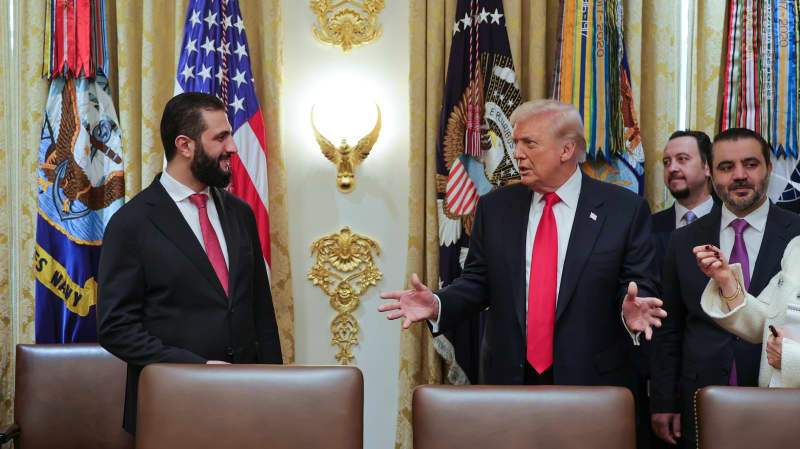
The details are worrying. The U.S.-led coalition fighting Islamic State has been seeking more cooperation with new Syrian security forces over the past few months. This comes as a result of Syria joining the coalition against the Islamic State following a November meeting between Trump and Syrian President Ahmed al-Shara’a.
It is in the interests of the United States and Syria to continue to cooperate. It would also be in U.S. interests to integrate the U.S.-backed Syrian Democratic Forces with Damascus-backed security forces. To do this, we need to protect against ISIS and other extremists.
ISIS or other groups could exploit the power vacuum to try to infiltrate and disrupt various developments in Syria. Another issue is the presence of extremist groups among Turkish-backed forces in northern Syria. Some of these groups are subject to U.S. sanctions for abuses of power.
For example, in October, Kurdistan24 noted, “The Syrian Observatory for Human Rights (SOHR) sounded the alarm over the growing influence of former militia commanders who have reemerged as powerful military and political figures in Syria’s reshaped power structure. These include the controversial figure Mohammed Hussein Jassim, widely known as ‘Abu Amsha,’ who rose from militia leadership in Afrin to become the leader of Syria’s 25th Division commander. Hama has reignited fears of a return to militia dominance and the erosion of civilian governance.
Damascus relies on some of these types of commanders and troops because of its close partnership with Turkey and because of its need for manpower. However, as Damascus builds its military capabilities, it will need to move beyond reliance on former militias. This means that commanders who have previously been involved in abuses either need to reform themselves and de-radicalize, or they need to be better scrutinized.
Attacks on U.S. forces should not undermine U.S.-Syrian security cooperation. It should not undermine the integration of the SDF. But it must be clear that cooperation must be based on professional actions and must not be infiltrated by extremists.