HONG KONG (AP) — Asian stocks mostly extended losses on Wednesday and gold hit a record high as worries about U.S. President Donald Trump’s tariffs on Greenland heightened investor jitters.
U.S. futures rose on Tuesday after sharp losses on Wall Street. The S&P 500 Index is expected to rise 0.3% going forward, and the Dow Jones Industrial Average is expected to rise 0.2% going forward.
Gold prices topped the $4,800 mark for the first time, rising 1.7%, as funds flowed into assets seen as safe havens in uncertain times.
Traders are awaiting Trump’s planned speech at the World Economic Forum in Davos, Switzerland, attended by world leaders, elites and billionaires. Trump told reporters he planned to highlight his administration’s achievements in his speech.
Trump’s Air Force One was returning to Washington on its way to Davos after the crew discovered a “minor electrical issue.” He will board another plane and continue his journey.
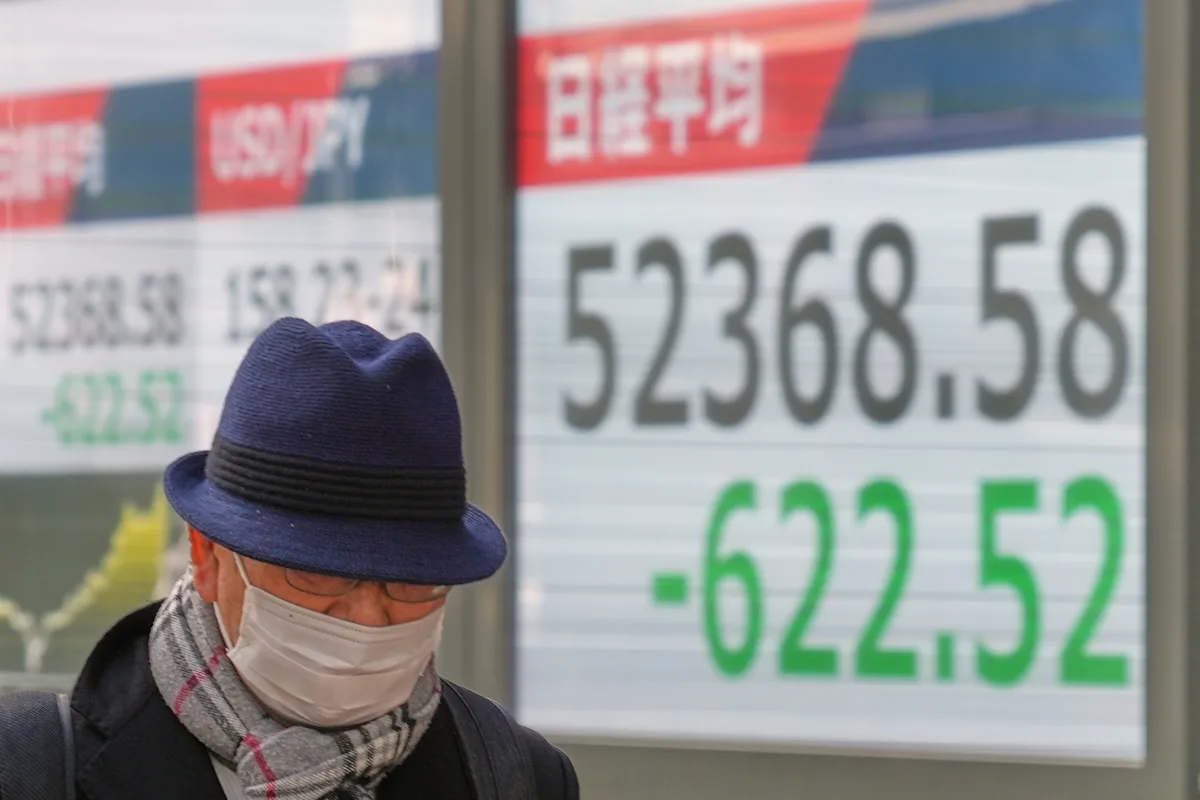
In Asian trading, Tokyo’s Nikkei 225 fell 0.7% to 52,603.44 points. The Japanese market is plagued by geopolitical uncertainty and domestic issues.
Japanese Prime Minister Sanae Takaichi announced a snap election on February 8, causing long-term government bond yields to rise to record highs. The assumption is that Takaichi, who is using strong public support to try to solidify the LDP’s majority, will cut taxes and increase spending, exacerbating Japan’s challenges in dealing with huge government debt.
Earlier Wednesday, the 40-year Japanese government bond yield was 4.095%, down from a record high of 4.22% hit on Tuesday.
South Korea’s Kospi fell 0.5% to 4,862.17 points.
Hong Kong’s Hang Seng Index fell 0.2% to 26,435.20 points. The Shanghai Composite Index edged up 0.2% to 4,120.10 points.
In Australia, the S&P/ASX 200 index fell 0.4% to 8,781.70 points.
Taiwan’s Taiex fell 0.9% and India’s Sensex edged up 0.1%.
Trump said he would impose 10% tariffs on Denmark, Norway, Sweden, Germany, France, the United Kingdom, the Netherlands and Finland starting in February. That’s on top of the 15% tariffs set out in a yet-to-be-ratified trade deal with the EU.
As relations between Washington and its Western allies sour, European leaders have fought back, considering countermeasures including slow ratification of trade deals or ordering retaliatory tariffs, analysts said.
The US president, who linked his stance on Greenland to his failure to win the Nobel Peace Prize last year, told the Norwegian prime minister that he no longer felt “obligated to think purely about peace”.