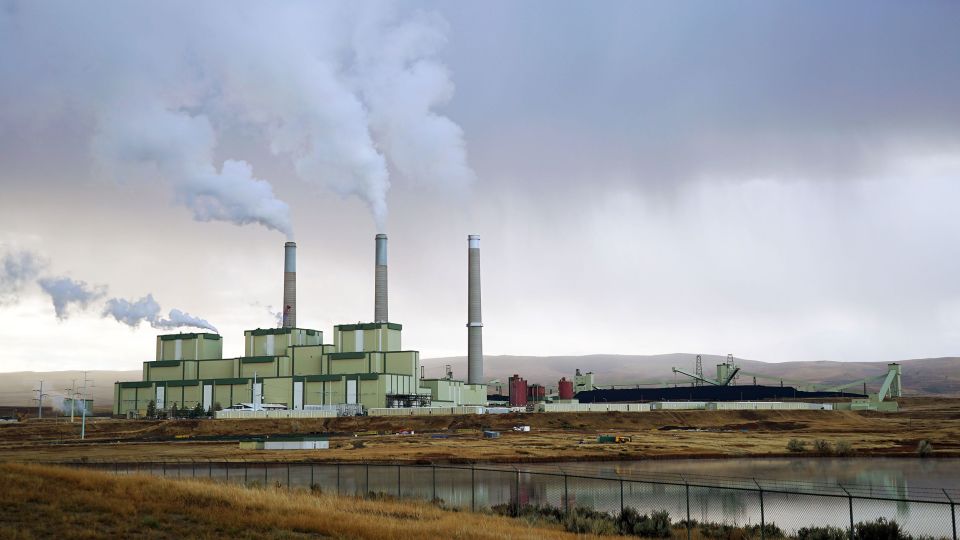
The Trump administration on Tuesday ordered an aging coal-fired power plant in Colorado to continue operating, a day before it was to be decommissioned.
Energy Secretary Chris Wright issued an order that will keep Unit 1 of the nearly 50-year-old Craig Generating Station in northwest Colorado open until the end of March, with the option to extend operations further.
It’s the sixth such move this year by the Energy Department; Wright has also ordered two coal plants in Indiana, one in Michigan and one in Washington state to continue operating beyond their retirement dates, as well as an oil-based power plant in Pennsylvania.
“Keeping this coal-fired plant operating will ensure Americans maintain affordable, reliable and secure power,” Wright said in a statement.
Colorado’s governor and his top energy official pushed back on Wright’s assertion that keeping Craig open would improve affordability, saying it would only raise electricity prices.
Colorado Gov. Jared Polis, a Democrat, said in a statement that the order would “pass tens of millions of dollars in costs onto Colorado taxpayers to keep a damaged coal plant operating that is no longer needed.”
According to Polis’ statement, Craig 1 “is not even operational right now” and will need millions of dollars in repairs to get it up and running before it can generate electricity. The Tri-State Generation and Transmission Association, the electric supply cooperative that owns Craig 1, said the unit has been out of service since a critical component failed on Dec. 19.
“As a nonprofit cooperative, our members will bear the cost of complying with this order unless we can find a way to share the costs with our partners in the region,” said Tri-State CEO Duane Highley.
According to a report prepared for the Sierra Club by power industry consulting firm Grid Strategies, it would cost at least $20 million to operate Craig 1 for 90 days and about $85 million for a year. These costs mainly come from purchasing coal. However, based on how much the U.S. Department of Energy requires the plants to operate, the cost could soar to $150 million per year, the Grid Strategy report said.
Will Tull, executive director of the Colorado Energy Office, said Tri-State has built natural gas and renewable energy projects to replace the electricity produced by the unit. Toole said North American Electric Reliability Corporation is not predicting any reliability risks in the region.
In other words, Toor said, Craig 1 is not needed at all to support the state’s power grid.
“We believe there will be a huge cost to taxpayers for no benefit,” Tol told CNN.
In addition, Tull said the Craig 1 project is being built near a coal seam where all the coal has already been mined. There are additional costs associated with sourcing more coal from elsewhere.
Wright’s order “is an attempt to keep coal in the system for purely ideological reasons while increasing costs for customers,” Tull said. “At the same time, they are actually taking steps to make the grid less reliable, making it more difficult to deploy resources that can be built quickly (wind and solar).”
Keeping other coal plants operating beyond their retirement dates has resulted in tens of millions of dollars in additional costs to ratepayers.
Consumers Energy is a utility that operates a Michigan coal-fired power plant that is about to be retired, and Wright forced it to continue operating in June. The company recently reported $80 million in operating costs for the plant from the end of May through the end of September, primarily from the purchase of additional coal, which will increase residential electricity bills in Michigan and the 10 other states served by the plant.
Environmental groups are challenging Wright’s other orders in court.
For more CNN news and newsletters, create an account at CNN.com
