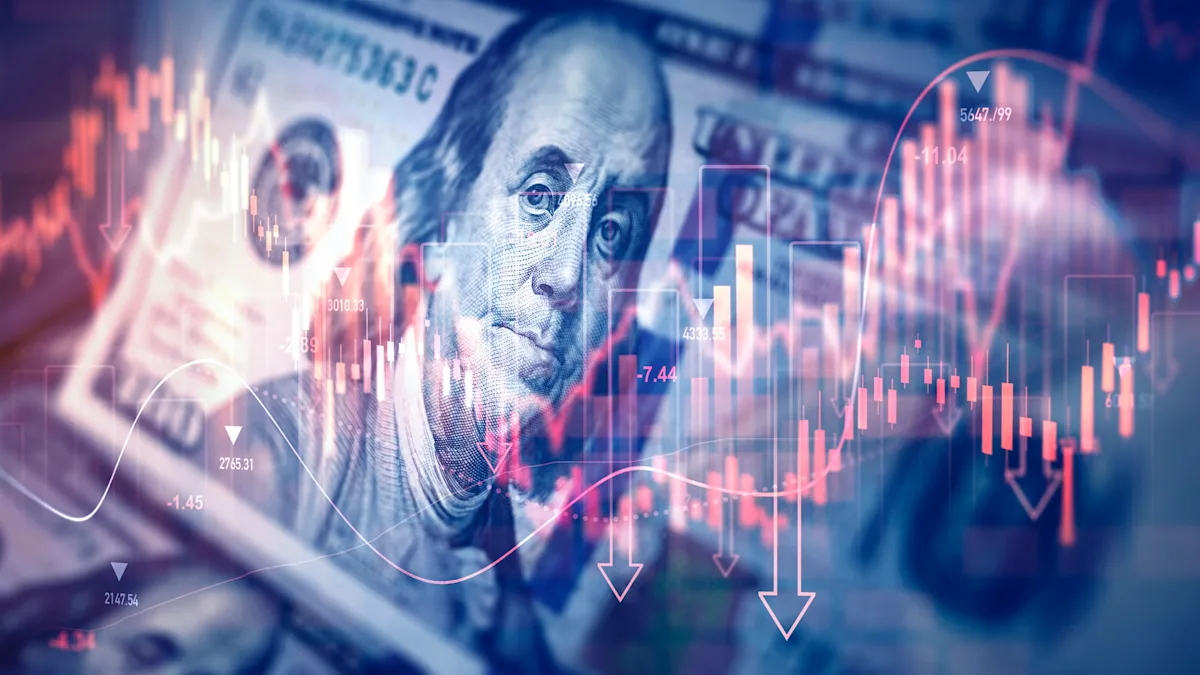

Several blue-chip stocks fell after a post on Substack by a little-known financial research firm went viral, outlining dire scenarios of impending global financial chaos caused by artificial intelligence, The Guardian reported.
On February 22, Citrini Research published what it called a “thought exercise,” but what follows is truly disturbing.
At the outset, a brief description of the analysis states that it is not intended to be considered a “prediction,” adding that it is based on the question “AI is bullish…” [was] It’s actually bearish. “
In finance, the terms “bull” or “call” and “bear” or “put” refer to market and individual positions – a bullish approach anticipates economic growth, while a bearish approach anticipates economic decline.
Citrini outlines a series of perfectly reasonable routine market fluctuations that will eventually lead to chaos in the global economy as agent AI consumes and disrupts it.
What started with unprecedented white-collar layoffs quickly turned into a mortgage collapse as capital continued to be concentrated in technology and artificial intelligence.
“The system was not designed for a crisis like this. The federal government’s revenue base is essentially a tax on human time,” Citrini’s analysis explains. “People work, companies pay them, and the government takes a cut.
“…the government needs to transfer more money to households while charging them less in taxes.”
According to The Guardian, shares in American Express, DoorDash, Mastercard and Uber all fell after Citellini’s “doomsday report” went viral.
As Citrini stresses, the scenario outlined is not a prediction, but it oddly echoes credible, ongoing concerns that artificial intelligence could trigger global economic destabilization.
In November, stock market expert Michael Burry, whose warnings about the 2008 housing crash went unheeded, took a bearish stance and wound down his own company’s operations, warned of an AI bubble.
Despite Bury’s strong track record, he may be viewed as an AI bear, but Google CEO Sundar Pichai acknowledged that concerns about overinvestment in AI are not unfounded, even admitting that the search giant will not be immune.