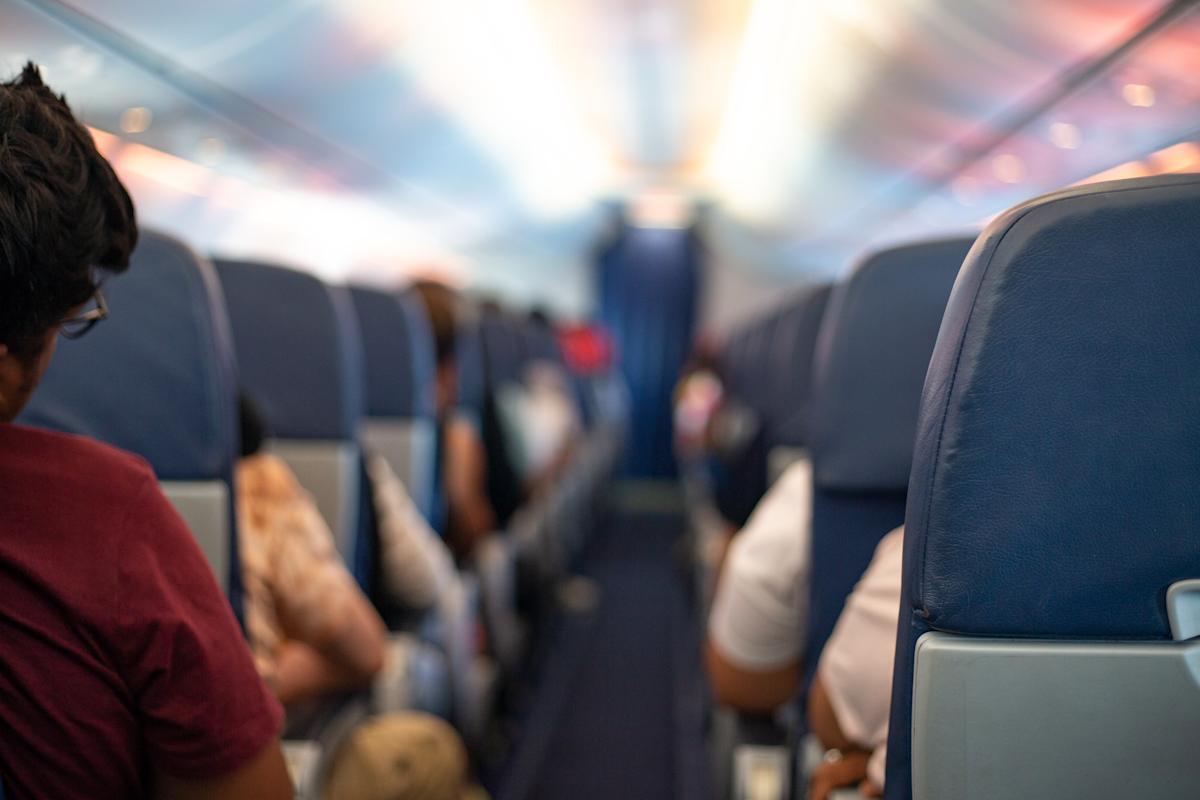
Here’s what every passenger should know before choosing a seat on an airplane. (Vitaya Pashonshin via Getty Images)
Choosing the wrong airline seat can turn an otherwise comfortable flight into hours of frustration. Many travelers don’t think about this mistake until they board the plane and realize their seat leaves a lot to be desired.
When I first started working as a travel writer over a decade ago, I made a lot of rookie mistakes. These included airline seat errors that resulted in me sitting in some of the least ideal spots on the plane.
The worst thing was that I failed to select a seat in advance and ended up sitting in the last row of the plane near the bathroom. Needless to say, I listened to the toilet flush the entire flight. I also learned through trial and error during the booking process that I didn’t like bulkhead row seats, which are the seats immediately behind the wall that separates economy and business or first class. I don’t like having the tray table and TV monitor on the armrest instead of on the back of the seat in front of me.
If this sounds familiar, read on for insider tips on the best and worst seats on the plane, some of the most common airline seating mistakes travelers regret after boarding, and how to avoid them.
Skip seat selection to save money
When you complete the ticket purchase process online, you will often be asked to select your seats in advance for an additional fee. This usually happens when purchasing a basic economy fare. According to NerdWallet, advance seat selection on domestic flights costs about $25 one-way (on the low end), while some airlines charge more than $70 one-way.
Many consumers are (rightfully) irritated by the idea of paying more to an airline on top of the fare just for the privilege of choosing a seat. So, they skip it.
However, this often turns out to be a bad move. Trust me, I’ve made this mistake myself.
“One of the most common regrets we see in our Dollar Flight Club data is that travelers skip seat selection to save a small fee, only to be stuck in a middle seat or separated from their travel companions,” said Jesse Neugarten, CEO of Dollar Flight Club, a subscription service that helps travelers find flight deals. “Travelers think it doesn’t matter, but come boarding time, the best seats are long gone. If you care about where you sit, it’s almost always worth paying a little up front.”
Overlooking the aircraft and seat layout

A row of seats in the emergency exit row of an airplane. (via asiandelight via Getty Images)
Even if you go to the trouble of choosing an aisle or window seat during the booking process, it’s important to understand that not all of these seats are created equal. This is something travelers often learn the hard way once they board a plane.
For example, some aisle or window seats cannot recline at all, while others may have reduced legroom, Neugarten explains. So, how to avoid this trap?
“Checking the seat map before selecting your seat can save a lot of hassle on board,” Newgarten said.
When looking at an airplane’s seat map, it’s important to know what you’re looking for. Here’s a tip: Does being able to tilt matter? For most travelers, the answer is yes.
To ensure this is possible, avoid choosing a seat row directly in front of the exit row of the aircraft. These seats often have limited recline capabilities. This is designed to ensure there is enough space in the exit row behind you in an emergency. Likewise, a row of seats on an airplane near a bulkhead or bulkhead is less likely to recline.
Choose a seat at the back of the plane or near the bathroom
Aisle seats located at the back of the plane may seem to provide quicker access to the bathroom, but many travelers regret this trade-off after boarding.
Ayoub Hissar of Justfly, an online airline and hotel booking platform, said: “These passengers are often the last to receive meal service, which increases the likelihood of missing out on preferred options altogether.”
Even worse: During turbulence, the back aisle also tends to become a staging area for service trucks, limiting your movement and personal space. “Travelers who value smoother service and fewer distractions should consider aisle seats near the middle of the cabin,” Hisar said.
Rachel Lipson, founder of travel advice platform Brooklyn Family Travelers and author of Substack travel newsletter The Point, adds that when you sit in this area of the plane, you’re also likely to be subject to the bathroom lines that inevitably form during the flight. “On long-haul flights, avoiding the bathroom can provide you with peace, quiet and personal space,” says Lipson.
Choose a seat near the kitchen

Inside the plane, there is a row of seats near the cabin bathroom. (Juliana Villas-Boas via Getty Images)
Similar to avoiding seats near the back of the plane or near the bathroom, choosing seats near the aircraft galley, wherever they are on the plane (on larger international flights, there are often several galleys to accommodate the increased number of passengers), is another often regrettable decision.
“When passengers are trying to sleep, they hear galley noises, carts moving and the voices of flight attendants,” said Sherry Martin Peters, an international flight attendant and founder of travel discovery platform and app Atlas+Wild.
This is another example where taking the time to study an aircraft map when booking can help you avoid common pitfalls.
“Seat maps often show the kitchen as a gray area on the plane, or the map will show images of knives and forks. Sometimes pictures of food, such as fish or chicken legs, will also be shown,” explains Martin Peters. “To be sure, first class has the galley mostly in the front and the main cabin in the rear. However, there are many aircraft with twin-aisle aircraft where the cabin is in the middle.”
Ignore the seat in front of you
If space is your priority, booking a seat with extra legroom is a smart move. But Jen Ruiz, author of the travel memoirs “12 Trips in 12 Months” and “All You Need Is a Flight,” says booking an upgrade may not be as advantageous if the person in front of you is leaning over for the entire flight.
If you really want to guarantee adequate legroom, “the only way to do that is to use a bulkhead seat, which allows you to sit directly behind a wall or curtain,” Ruiz says. Better yet, pay extra for an exit row seat, as (as we’ve already mentioned) the seat in front of you doesn’t recline.
Booking an aisle seat regardless of logistics

Passengers sitting in aisle seats in a commercial aircraft cabin. (Maria Bazarova via Getty Images)
Aisle seats are a common choice for travelers looking for more legroom and a slightly more comfortable flying experience. LaDell Carter, founder and chief luxury lifestyle travel designer at Royal Express Travels, said that unfortunately, many of these same travelers will come to regret this decision during the course of their flight.
“If you use an aisle seat, you’ll be constantly interrupted by flight attendants, carts, other passengers climbing on top of you, and multiple standing movements that can interfere with your ability to relax during the flight,” Carter said.
For long-haul flights, window seats often offer greater benefits. Not only can you control your own personal space, but you can also lean against the side walls of the plane to help you fall asleep. “And you don’t get woken up every time someone gets up to go to the bathroom,” Carter said.
Failed to call partner airline to select seats
Depending on how you book your flight, you may not be able to select your seat during the purchase process. This is especially true when your itinerary includes multiple flights operated by multiple partner airlines and you book through a third-party website such as Expedia, Travelocity, etc.
In some cases, you may receive a message during the purchase process stating that you need to call the airline directly to select your seat. Often, travelers skip this step and just wait for the airline to assign them a seat, which can be a huge mistake.
Take the time to call the airline ahead of time and secure a seat. “This will help avoid being stuck on a remaining seat at check-in,” said Jimmy Yoon, customer service director at award travel search tool point.me.
Selecting the wrong seat type based on flight length

A man takes a nap in the window seat of an airplane. (Lu Leren via Getty Images)
One of the most common mistakes travelers make is defaulting to the same seat on every flight they take, regardless of the flight time. Kaleigh Kirkpatrick, CEO of luxury travel planning agency The Shameless Tourism, suggests a better approach is to choose your seat based on flight length.
“On long-haul flights, many travelers regret not choosing a window seat, especially in economy or premium economy, where the ability to lean against the aircraft wall can significantly improve comfort and sleep,” said Kirkpatrick.
Kirkpatrick added that on short-haul flights, conversely, travelers often want to reserve an aisle seat to allow for easier movement and quicker departure. “Thinking strategically about flight distance and how you personally prioritize comfort versus maneuverability can make a meaningful difference,” Kirkpatrick said.
What are the best and worst seats on a plane?
When it comes to the best seats, the answer depends on your needs. Travelers who are still debating window seats versus aisle seats may want to consider the pros and cons of each before booking.
“If you want the safest seat on the plane, you might be surprised to know that it’s at the back of the plane. If you want the roomiest seat in economy class, choose any seat in the exit row because regulations prohibit airlines from reducing legroom to facilitate exit access in the event of an emergency,” Ruiz said.
“If you want the least amount of germs, a window seat is your best bet, and you get the added benefit of controlling the curtains and a few extra inches of space around the curvature of the aircraft,” Ruiz added.
As for the worst seat on the plane, Ruiz said it’s the middle seat in the back because the seat doesn’t recline, you can’t sleep against the wall, and you can’t stretch your legs into the aisle. Plus, as Ruiz reminds us, “You may also get a strong toilet smell every time someone comes in or out of the toilet.”