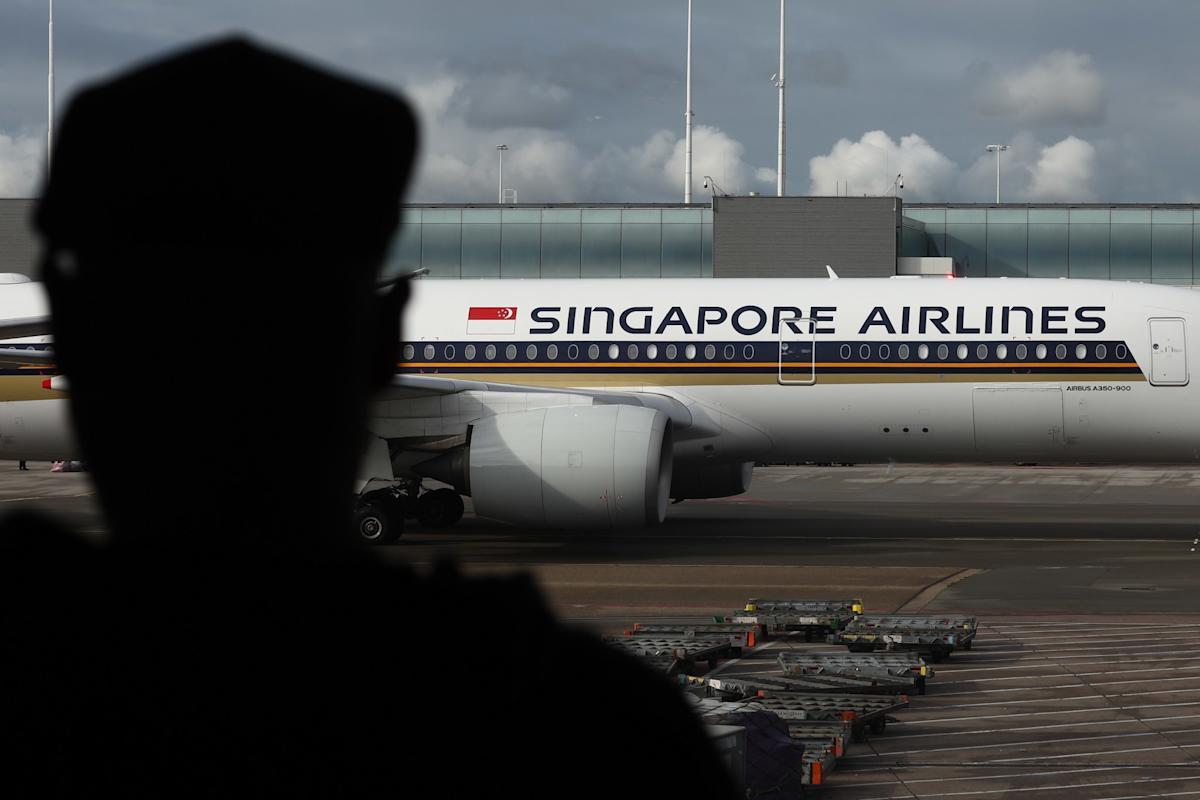
Singapore Airlines defends its decision to invest in loss-making Air India: ‘We know the market and how difficult it feels’

Losses at troubled Air India weighed on Singapore Airlines’ profits last year, even as the city-state’s flag carrier posted record revenue and passenger traffic.

Singapore Airlines reported a 57.4% drop in net profit to S$1.2 billion ($927 million) for the 2025 fiscal year ended in March. Singapore Airlines lost S$945 million ($739 million) on its investment in Air India, eroding some of its profits. The airline still posted record revenue of $20.5 billion, driven by strong demand for global air travel. Singapore Airlines and its low-cost subsidiary Scoot carried 42.4 million passengers.

“We’ve been operating in India for a long time, so we know the market and how difficult it is,” Chief Executive Officer Goh Choon Pong said at a May 15 news conference after the company’s earnings were released the previous day. But he claimed the market still held “huge potential”, citing a growing middle class expected to exceed 800 million by 2047 and new airports emerging.

Singapore Airlines first entered India in 2013 through a joint venture with Tata Sons to form luxury airline Vistara.

Tata later took over troubled state-owned Air India in 2022 and appointed Campbell Wilson, a long-time SIA executive and Scoot CEO, as chief executive. The Indian company then integrated Vistara into the national carrier, converting SIA’s 49% stake in Vistara into a 25.1% stake in the larger Air India Group.

Air India reported a record loss of $2.8 billion in fiscal 2025 despite booming outbound tourism, amid a year-long review of the airline following the crash of flight AI171 in the Indian state of Gujarat, which killed 260 people. The airline also lost its chief executive: Wilson resigned from the post in April, but he will stay on until the Air India board finds a successor.

See also  Bengals listed as ideal landing spot for...Mike Tomlin?

“The airline is significantly reducing flights, especially international flights, but also domestic flights, while re-examining all processes,” Wu said. Singapore Airlines has seconded team members to Air India to help it become “a world-class airline with an Indian heart”.

Air India has also come under pressure after Pakistan decided to ban Indian airlines from its airspace after a brief conflict with India last year. The closure has forced Indian airlines to take longer routes to Europe and the United States, pushing up flight times and jet fuel costs.

The Indian rupee has also plummeted against the dollar, making fuel and other imported goods more expensive. “Most of our expenses, especially fuel and aircraft expenses, are in U.S. dollars, so those are definitely headwinds,” Wu said. (High U.S. tariffs and a worsening trade deficit made the rupee Asia’s worst-performing currency last year.)

Low fuel costs

Jet fuel prices have soared since the United States and Israel launched attacks on Iran in late February. Most of the Middle East’s oil exports remain trapped behind the Strait of Hormuz, which is currently blocked by Iran. In response, countries including China and South Korea imposed export bans on refined fuel products, including jet fuel.

In a stock exchange filing on May 14, Singapore Airlines warned that it has not yet felt the full impact of higher jet fuel prices due to the conflict in Iran and the closure of the Strait of Hormuz; the impact may show up in the company’s next set of quarterly results.

See also  Vitalik Buterin’s stark warning on layer-2 roadmap

“Javiation fuel costs more than doubled in March,” Chief Financial Officer JoAnn Tan said at the airline’s May 15 press conference. “However, as only one month of the year is affected, pre-hedging jet fuel prices are still lower than last year.” Singapore Airlines did not make a forecast on how rising fuel prices might affect its future performance.

Air New Zealand forecast on May 13 its biggest annual loss in four years due to rising fuel prices. Japan Airlines and All Nippon Airways (ANA) also announced fuel surcharges for international flights booked in May and June. (Not everyone is under pressure: Hong Kong’s Cathay Pacific recently announced it would eliminate emergency fuel surcharges.)

SIA does see one benefit from the Iran crisis. The airline will increase flights between Singapore and four European destinations and will introduce new flights to Madrid. (Airlines in the Middle East and Europe are grappling with widespread airspace closures following the Iran conflict.)

“We were able to use some of the overflow traffic from Middle Eastern airlines to grow some of our long-haul routes, particularly [on flights to and from] Europe, the United States and Australia,” Singapore Airlines chief commercial officer Lee Lik Sun told a news conference.

Other Asia-Pacific airlines are also eager to try to capture market share from struggling rivals. Cathay Pacific has also increased flights to Europe, while Qantas has expanded capacity to New Zealand.

See also  Why The US Air Force Keeps Using This Fighter Jet Decades After 'Retiring' It

Singapore Airlines shares rose 2.4% on May 15, but are still down 6.7% in the past 12 months.

This story originally appeared on Fortune.com

Spread the love

Leave a Reply

Your email address will not be published. Required fields are marked *