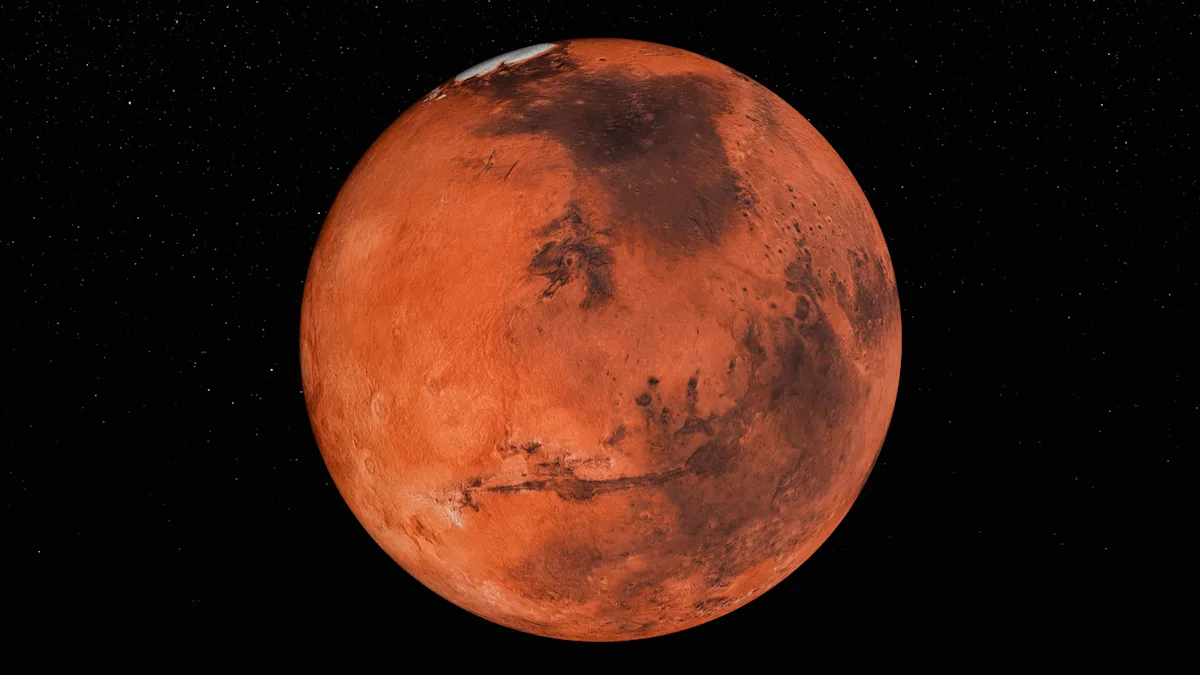
The Perseverance rover has been investigating Jezero Crater and discovered something that doesn’t belong on Mars at all. This is a meteorite that collided with the Red Planet. While meteorites have been found on Mars by various rovers before, this is the first time NASA’s Perseverance rover has found one on its journey to search for signs of life on Mars – although it’s worth noting that the chances of life on Mars may not be as high as we’d like.
Perseverance has been exploring Mars since landing on Mars in February 2021, and during its mission, the rover has collected 30 of the expected 38 samples. The fact that it has yet to find any meteorites within the crater has baffled scientists makes this discovery an exciting one.
It’s still being confirmed that what Perseverance found was a meteorite, but based on preliminary imaging and scans, it fits the bill. This is an important discovery because finding and analyzing meteorites that crashed on Mars helps us better understand our neighboring planet and how meteorites behave on it.
Read more: What happened to NASA’s Voyager 1 probe?
Details about the Perseverance meteorite discovery

NASA Mars Rover – Triff/Shutterstock
Perseverance has been doing great work over the past few years, including taking a stunning panoramic photo of Mars. But when Perseverance was investigating Jezero Crater, it discovered a rock that was unlike any other. Measuring approximately 2.5 feet in diameter, it has a unique appearance compared to the surrounding rocks. This rock is called Phippsaksla. It was decided that further analysis of the rock was needed to determine what it was.
Perseverance uses the supercamera’s laser component to read the rock’s composition. SuperCam showed that Phippsaksla has high nickel and iron content, a hallmark of meteorites from asteroids. This tells scientists that Phippsakla is not a native of Mars at all, but came to Mars from elsewhere in the solar system.
Interestingly, Phippsaksla was actually discovered in September 2025; NASA did not make the discovery public until November 2025 due to the government shutdown that halted many operations. But this isn’t the first time a meteorite has been discovered on the Red Planet. The Curiosity rover discovered a meteorite called Cacao in 2023 and a meteorite called Lebanon in 2014. Other Mars rovers have discovered more meteorites on their missions. Now, the Perseverance rover can proudly claim to have discovered a meteorite.
Why meteorites on Mars are important

Meteorite on display – Chris Jackson/Getty Images
Searching for meteorites on Mars can help scientists learn more about the planet and the solar system itself. It is hypothesized that on Mars, iron-based meteorites could resist erosion, a theory supported by the conditions under which these meteorites are found. More samples will only help determine whether this theory is correct.
NASA scientists also study meteorites to learn more about the solar system and its origins. For example, meteorites may contain dust from before the formation of the solar system. Others contain material from billions of years ago and can help scientists understand the history of the solar system.
However, not everything found on Mars is as easy to identify as meteorites. The Perseverance rover itself stumbled upon a rock that NASA doesn’t fully understand yet. As the rover continues to make interesting discoveries and more meteorites, scientists can use them in their ongoing research efforts to try to answer these strange questions. For now, NASA will investigate Phippsaxela to confirm that it is indeed a meteorite and see what else it can learn from it.
Like this article? Sign up for BGR’s free newsletter and add us as your go-to search source for the latest technology and entertainment, as well as tips and advice you’ll actually use.
Read the original article about BGR.