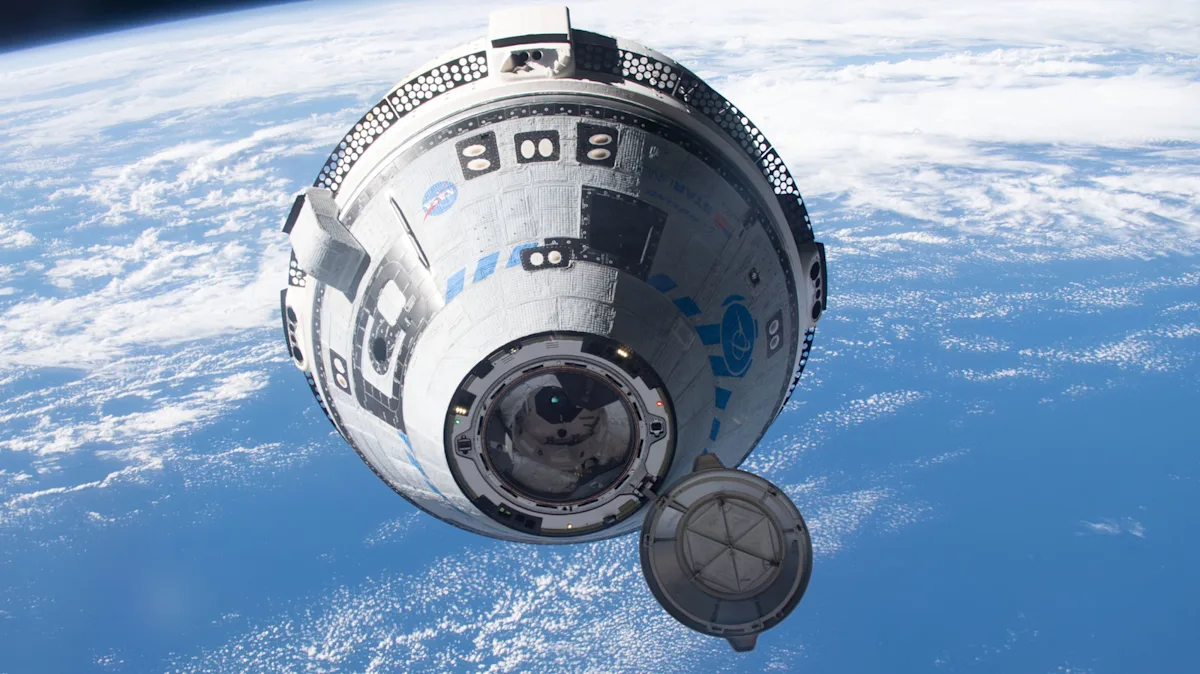
NASA has officially classified the 2024 Boeing Starliner spacecraft failure that stranded astronauts Suni Williams and Butch Wilmore on the International Space Station (ISS) for nine months as a Type A accident. According to the BBC, this is NASA’s statement for the maximum level of failure that a mission can achieve, defined as an incident that causes more than $2 million in damage, results in the loss of the vehicle or at least the loss of control of the vehicle, or the death of any personnel. The designation means the space agency now views the mission as a disaster, even though the astronauts regained enough control at the last minute to prevent the worst-case scenario.
To be clear: that scenario would be very, very bad. Essentially, the thrusters controlling the Starliner failed as it approached the International Space Station. While NASA hasn’t said so directly, it’s at least conceivable that this could end with a crash into the space station itself. NASA Administrator Jared Isaacman said at a news conference that the failure’s “cost threshold exceeds that of a Type A accident by more than a hundred times.” In other words, hundreds of millions of dollars are at risk; it’s hard to imagine what that means beyond potential losses to the International Space Station. oops.
Read more: These are the fastest jets civilians can own
What went wrong on Starliner’s first manned mission

Investigators inspect the crashed Boeing Starliner after returning to White Sands Spaceport, New Mexico – Nasa/Getty Images
Who is to blame? Isaacman cited the full 312-page report and found a lot. Basically, NASA wants a second option besides SpaceX for sending humans into space, and it wants it so bad that it just sweeps the problem under the rug. “As development progressed, design compromises and hardware underqualification were beyond NASA’s full understanding,” Isaacman said, very politely. Multiple test flights failed in various ways, but until these technical glitches were understood, NASA gave the green light for subsequent flights. oops.
There were also organizational issues: NASA more or less trusted Boeing to solve its engineering problems, and the company once had a stellar reputation. Isaacman said the agency doesn’t want to damage that reputation. It’s safe to say that photography is pretty good these days, and this Category A classification won’t help. At the same time, Boeing did not conduct adequate vetting of its own subcontractors. So there’s not enough oversight of anyone. Who could have imagined that things would go so badly?
But don’t worry: It gets worse. CNN quoted a NASA insider as saying that “there was yelling in the meeting,” while another said, “Some people just don’t like each other.” Isaacman himself admitted that “disagreements over astronaut return options degenerated into unprofessional behavior while the astronauts remained in orbit.” Welcome to the world’s premier space exploration agency.
Starliner limps forward

Artist’s rendering of the Boeing Starliner in orbit with the sun behind it – Dima_zel/Getty Images
Still, NASA doesn’t want to give up on Boeing, and the Starliner program is moving forward at reduced production capacity. But Isaacman made it clear that stricter regulations will be in place in the future, and no launches will be approved until technical fixes are verified and implemented. The desire to diversify solely on SpaceX remains.
If you’ve ever wondered what exactly went wrong with the Starliner’s thrusters from a technical standpoint, you’ll be pleased to know that no one knows. The investigation is ongoing. To be fair, they never figured out what went wrong with the thrusters during testing either, so at least they’re consistent! Apparently “we don’t know what’s wrong with the stuff controlling the spacecraft” will no longer be a sufficient non-answer. NASA’s new policy is, well, stuff has to work. What a great idea.
Want more like this? Join the Jalopnik newsletter to get the latest automotive news delivered straight to your inbox and add us as your preferred search source on Google.
Read the original article on Jalopnik.