We all know that buying a luxury car is supposed to be about the driving experience, the prestige, the butter-soft leather that makes you feel like royalty during your commute. But let’s be real for a second: there’s nothing luxurious about watching your beautiful German sedan get loaded onto a flatbed for the third time this year.
The sweet spot in the luxury market isn’t just about performance or pedigree anymore; it’s about finding that unicorn vehicle that delivers the premium experience without turning your mechanic into your second-best friend. Some brands have cracked the code, building cars that manage to be both aspirational and, dare we say it, dependable. These are the luxury vehicles that let you enjoy the finer things without the anxiety of wondering what’s going to break next. In major dependability studies, Lexus has ranked at the top overall, while Porsche has consistently placed among the highest-rated premium brands.
Whether you’re trying to justify the purchase to your pragmatic spouse or just want to sleep soundly at night, these cars prove that reliability and luxury aren’t mutually exclusive.
Lexus ES

Image Credit: Lexus.
The Lexus ES is basically the automotive equivalent of that friend who is always the designated driver: maybe not the most exciting person at the party, but the one you’d trust with your life.
Toyota’s luxury division has built its entire reputation on making cars that refuse to break, and the ES is their poster child for this philosophy, regularly topping reliability surveys with the kind of consistency that would make a Swiss watchmaker jealous. Yes, your uncle might grumble that it’s “just a fancy Camry,” but that’s exactly the point, it’s built on one of the most bulletproof platforms in the automotive world, wrapped in genuinely premium materials and tech.
On the current Lexus ES, powertrain options include a smooth V6 or an incredibly efficient hybrid, are engineered to last well into six-figure mileage without drama. For $43,435 to start (2025 ES), you’re getting a car that’ll still be running when the maintenance-intensive European alternatives are already on their third owners.
The ES proves that sometimes the smartest luxury is the kind that doesn’t keep you up at night worrying about repair bills.
Lexus RX

Image Credit: Lexus.
You’re gonna start to notice a trend in this article…
If the suburban luxury crossover had a Hall of Fame, the Lexus RX would have been inducted on the first ballot, and its reliability record is the reason why. This is the vehicle that convinced a generation of luxury buyers that you didn’t have to sacrifice dependability to get the premium experience, racking up reliability scores that make other luxury SUVs look genuinely questionable by comparison.
The RX blends genuinely upscale cabin materials, advanced safety tech, and Toyota’s legendary build quality into a package that comfortably seats five while sipping fuel like it’s expensive (because it is). Sure, the driving dynamics won’t make your heart race like a Porsche Cayenne, but when you’re cruising past the dealership service department for the fifth consecutive month without needing to stop, you’ll appreciate the tradeoff. Starting around $51,175 (2026 RX), the RX delivers the reliability of a Toyota with the refinement expected from a luxury badge.
Before you dismiss it as a “boring choice,” remember that boring is actually pretty great when the alternative is explaining to your family why the car’s in the shop again.
Genesis G90

Image Credit: Genesis.
The Genesis G90 is sorta like that kid who transferred to your school senior year and immediately made the honor roll, relatively new to the scene but already showing up the established players where it counts. Genesis, Hyundai’s luxury arm, has been quietly building a reputation for vehicles that combine genuine luxury with Korean engineering reliability, and the G90 flagship is proof that new players can absolutely nail the assignment.
This full-size sedan goes toe-to-toe with the Mercedes S-Class and BMW 7 Series in terms of features and comfort, offering massively comfortable seats, whisper-quiet cabins, and tech that actually works without requiring a engineering degree to operate. The reliability ratings are genuinely impressive for a luxury sedan, and Genesis backs it up, according to the company, with a 10-year/100,000-mile powertrain limited warranty that suggests they’re pretty confident these things won’t fall apart. Starting around $92,700, it’s substantially less expensive than the German competition while being demonstrably more reliable.
Old-school luxury buyers might scoff at the badge, but Genesis owners are too busy enjoying their cars (and lower repair bills) to care much about gatekeeping.
Lexus GX

Image Credit: Ovu0ng/Shutterstock.
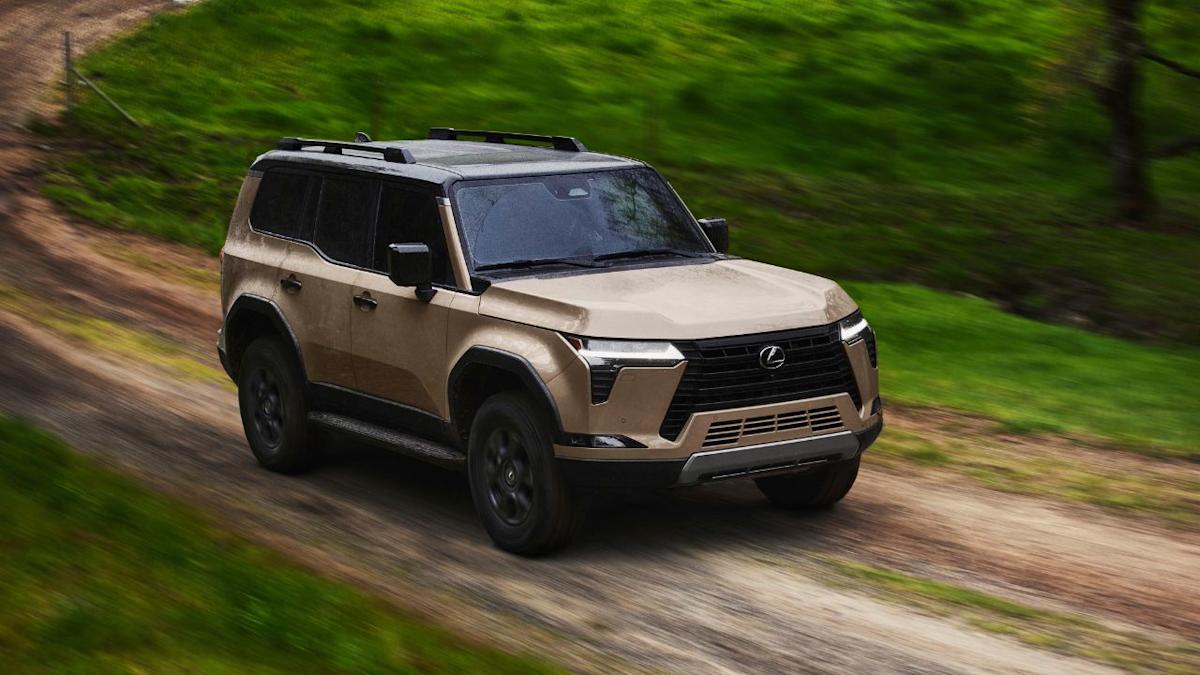
The Lexus GX is a body-on-frame SUV with real off-road capability and Lexus build quality. The GX 550 uses a 349-horsepower twin-turbo 3.4L V6, and the 2026 GX starts at $66,935.
This is old-school SUV engineering executed with modern luxury appointments and the kind of build quality that makes it feel like it was assembled by watchmakers. Yes, it’s not as efficient as the unibody luxury crossovers, and the handling is about what you’d expect from something that could legitimately tow your bad decisions out of a ditch, but reliability surveys consistently rank it near the top of the luxury SUV category.
The GX has a cult following among people who actually use their SUVs for more than grocery runs, precisely because it combines genuine capability with the knowledge that it won’t leave you stranded. Starting around $66,935, it’s admittedly pricier than some competitors, but when you factor in resale value and long-term ownership costs, it’s actually a smart financial decision.
Before you say it’s “outdated,” remember that proven engineering is features, not age, and the GX’s longevity proves it.
Porsche 911

Image Credit: Porsche.
Suggesting a Porsche is reliable might sound like automotive heresy, but the 911 has genuinely earned its reputation as the sports car you can actually daily drive without keeping your mechanic on speed dial.
Porsche consistently ranks at or near the top of luxury brand reliability surveys, which shocks people who assume all European sports cars are mechanical nightmares, but the 911’s flat-six engine and rear-engine layout have been refined over literally six decades of continuous production. These cars are engineered to be driven hard and often, with owners regularly racking up 100,000+ miles while still hitting the track on weekends, something that would absolutely destroy lesser sports cars.
The maintenance isn’t cheap when you do need it, this is still a Porsche, but the frequency of repairs is genuinely low for a high-performance vehicle, and the engineering quality means things tend to work properly for years on end. Starting at $132,300 (911 Carrera), you’re paying serious money, but you’re getting a legitimately special car that won’t spend half its life awaiting parts.
The doubters will claim “no sports car is reliable,” but 911 owners covering 200,000 miles would beg to differ.
Acura MDX

Image Credit: Acura.
The Acura MDX is Honda’s answer to the question “what if we made a genuinely nice three-row SUV that doesn’t require a dedicated savings account for repairs,” and they’ve absolutely nailed it across multiple generations.
This is the practical choice that doesn’t feel like a compromise, offering legitimate luxury features, Honda’s renowned reliability engineering, and enough space for the whole family without the premium European repair costs. The MDX combines strong safety ratings, genuinely comfortable seating for seven, and tech that actually functions intuitively (a rarity in modern luxury vehicles), all while maintaining the kind of dependability that Honda built its reputation on.
Sure, the badge doesn’t carry the same cachet as a German rival, but when you’re enjoying your third consecutive year without a check engine light, suddenly badge prestige seems less important. Starting at $51,800 (2026 MDX), it’s positioned competitively in the luxury three-row segment while offering demonstrably lower ownership costs over time.
The skeptics might say it’s “just a fancy Pilot,” and honestly, when the Pilot is this reliable, that’s actually high praise.
BMW X3

Image Credit: BMW
The BMW X3 might surprise skeptics who’ve written off all German luxury vehicles as ticking time bombs, but this compact SUV has quietly built a reputation for being one of the more dependable offerings from Bavaria.
BMW’s engineering when they get it right, and they got it right with the X3, delivers that engaging driving experience the brand is famous for while using proven powertrains and solid construction that holds up over time. The X3 offers genuinely premium interior quality, excellent infotainment (once you get past the learning curve), and driving dynamics that make you remember why people pay extra for the Ultimate Driving Machine, all in a practical crossover package.
Reliability surveys show it performing better than many German rivals, and when issues do arise, they tend to be minor rather than catastrophic, which is about the best compliment you can give a European luxury vehicle. Starting at $52,075 (2026 X3), you’re paying a premium over Japanese competitors, but you’re getting that distinctive BMW character that some drivers simply won’t compromise on.
Repairs can still be expensive, but the X3 is often viewed as one of BMW’s more dependable recent models.
Genesis G80

Image Credit:Genesis.
The Genesis G80 is what happens when a manufacturer studies what makes luxury sedans great, identifies all the ways they typically fail their owners, and builds something that addresses both sides of that equation.
This mid-size luxury sedan offers legitimately premium materials, advanced tech features that actually enhance the driving experience rather than frustrate you, and Korean engineering that’s proven to be remarkably dependable in the luxury space. The G80 punches well above its weight class, offering features and refinement that compete with established German rivals while maintaining reliability scores that those rivals can’t touch, backed by Genesis’s industry-leading warranty coverage.
The styling is distinctive without being polarizing, the interior is genuinely luxurious without feeling overwrought, and the driving dynamics are composed and confident even if they don’t prioritize sportiness. Starting around $58,450, you’re getting remarkable value in the luxury sedan segment, especially when you factor in the dramatically lower long-term ownership costs.
Critics might question the “lesser brand prestige,” but G80 owners are too busy enjoying trouble-free luxury to worry about what strangers think of their badge.
Acura RDX

Image Credit: Acura.
The Acura RDX brings Honda’s engineering philosophy to the compact luxury crossover segment, which in practical terms means you get genuinely premium features without the anxiety that comes with owning complicated European machinery.
This is the sensible luxury choice that doesn’t feel like settling, offering turbocharged performance, Honda’s standard Super Handling All-Wheel Drive (SH-AWD) system, and interior tech that was actually designed by people who understand human interaction. The RDX delivers the luxury crossover experience that most buyers actually want, comfortable, capable, refined, and unlikely to strand you, without the pretense or the repair bills that often accompany premium badges. Sure, it’s not going to turn as many heads as a German alternative, but when you’re cruising past the service department yet again without needing to stop, that trade-off seems pretty reasonable. St
Starting around $45,100, it’s positioned competitively in a crowded segment while offering better long-term value than most alternatives. You may hear some say “Acuras aren’t really luxury cars,” but that argument falls apart when you compare ownership experiences over five years.
Lexus NX

Image Credit: Lexus.
The Lexus NX is Toyota’s entry into the compact luxury crossover segment, and unsurprisingly, they’ve brought their obsession with reliability along for the ride.
This is the smaller, more affordable entry point to the Lexus lineup that still delivers on the brand’s core promise: genuine luxury without the recurring drama, wrapped in distinctive styling that’s polarizing in photos but works surprisingly well in person. The NX offers genuinely premium interior materials, Toyota’s excellent hybrid technology (if you opt for that powertrain), and the kind of build quality that suggests it’ll still feel tight and solid long after competitors have developed rattles and quirks.
It’s not the most spacious in its class, and the driving dynamics prioritize comfort over engagement, but reliability surveys consistently rank it among the best in the compact luxury crossover segment. Starting at $46,120 (2026 NX), it’s the most affordable way into the Lexus ecosystem while still getting the dependability the brand is known for.
It may come off as a bit conservative at first, but remember that conservative engineering choices are exactly why Lexus owners aren’t on a first-name basis with their service advisors. Lexus is clearly doing something right.
Porsche Macan

Image Credit: Porsche.
The Porsche Macan manages to be genuinely fun to drive while also being remarkably reliable for a European luxury crossover, which sounds impossible but is backed up by actual owner satisfaction data.
This is the crossover that made enthusiasts accept the format, delivering proper Porsche handling dynamics and build quality in a practical package that you can use every day without the mechanical drama that plagues many German luxury vehicles. The Macan’s interior quality is exceptional, the turbocharged engines deliver proper performance, and the engineering is executed with the kind of precision that Porsche applies to all their vehicles, not just the halo sports cars.
Yes, maintenance costs are higher than Japanese luxury alternatives when service is needed, but the frequency of actual problems is notably low for the segment, and the driving experience is so much better than typical luxury crossovers that enthusiasts consider it worth any premium. Starting at $65,400 (base MSRP), you’re paying Porsche prices but getting a vehicle that genuinely delivers on both the performance and reliability fronts.
There’s a reason the Macan was compared to the usual SUV suspects throughout 2025.
Genesis GV70

Image Credit: Genesis.
The Genesis GV70 is the compact luxury SUV that feels like it was specifically designed to make the German competition look bad, it’s better looking, better equipped, and demonstrably more reliable than most rivals in this hyper-competitive segment.
Genesis has brought serious ambition to the luxury market, and the GV70 showcases that ambition through genuinely striking design, excellent driving dynamics, and Korean engineering that’s proven surprisingly dependable in luxury applications. This is a vehicle that doesn’t apologize for being the new player, instead confidently offering more standard features, more power (especially in the spicy twin-turbo versions), and better warranty coverage than the established players.
The interior is legitimately luxurious with excellent materials and thoughtful design, while the driving experience is engaging enough to keep enthusiasts happy without sacrificing daily comfort. Starting at $48,985 (2026 GV70), the GV70 represents exceptional value in a segment where German alternatives often crack $60,000 once properly equipped.
The traditionalists might sniff at the “unproven brand,” but Genesis has been proving itself for years now, and the reliability data backs up their confidence.
Conclusion

Image Credit: Damian B Oh – Own work, CC BY-SA 4.0/Wiki Commons.
The luxury car market has evolved beyond the old paradigm where you simply accepted high repair costs as the price of admission for premium vehicles. These twelve vehicles prove that you can have sophisticated engineering, beautiful design, and premium features without resigning yourself to a relationship with your service department that’s more committed than most marriages.
What’s particularly interesting is how the reliability conversation has shifted: it’s no longer just about Japanese brands dominating while European marques struggle, but rather about specific manufacturers across different regions taking build quality and long-term durability seriously. Whether you’re drawn to Lexus’s time-tested approach, Genesis’s ambitious newcomer energy, or Porsche’s proof that sports cars don’t have to be maintenance nightmares, there are genuine options for buyers who refuse to choose between luxury and dependability.
The next time someone suggests that reliable luxury cars don’t exist, you can point to this list and rest easy knowing your dream car won’t turn into a financial nightmare. Because at the end of the day, the most luxurious thing of all might just be peace of mind. Or a reliable Lexus.