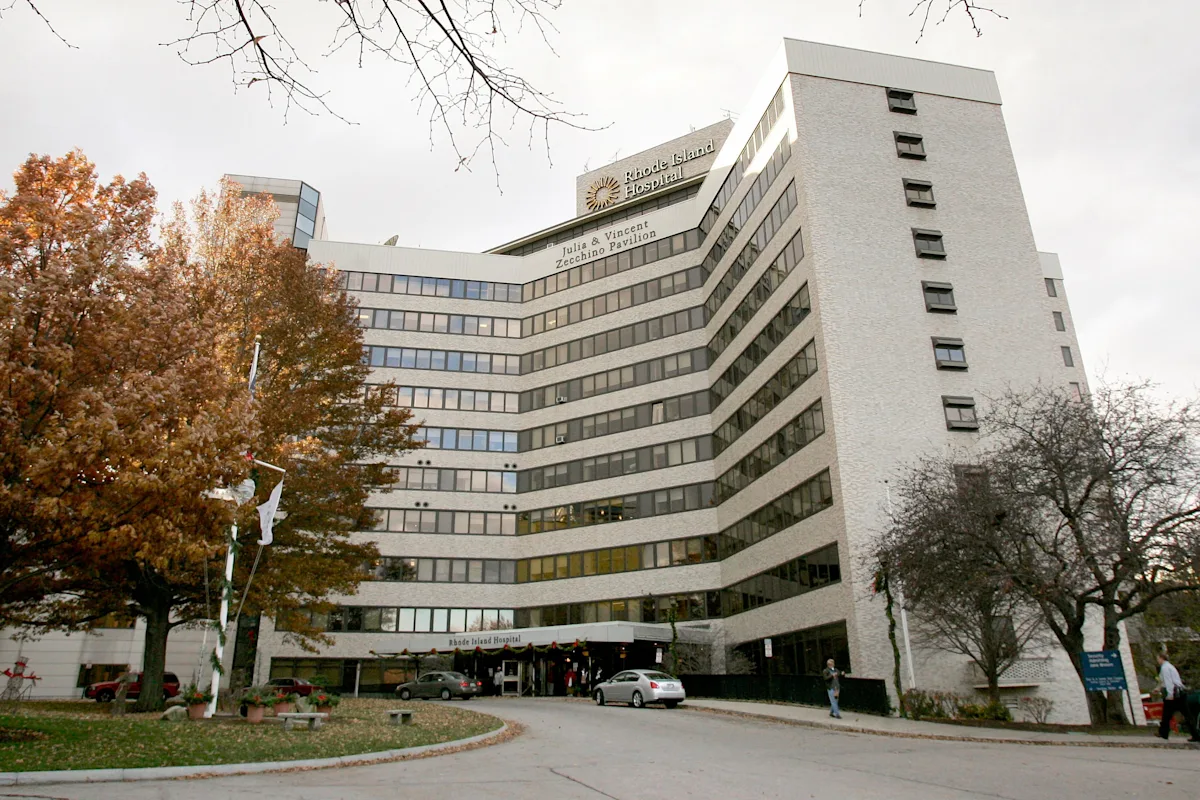
PROVIDENCE, R.I. (AP) — A federal judge has blocked the Trump administration’s sweeping request for confidential information about transgender patients at Rhode Island’s largest hospital, which provides gender-affirming care to minors.
U.S. District Judge Mary McElroy’s ruling on Wednesday was the latest setback for the Justice Department, as at least seven other federal courts have agreed to quash or limit widespread civil subpoenas issued to more than 20 doctors and hospitals last summer.
McElroy’s decision echoed similar concerns raised by judges about the broadening of subpoenas, saying the Justice Department has “enormous prosecutorial power and discretion” but can no longer be trusted to enforce its powers fairly and honestly.
“The Department of Justice has proven unworthy of that trust at every point in this case,” McElroy wrote.
An email seeking comment was sent to the Justice Department on Thursday.
According to the subpoena, the Justice Department is asking the Rhode Island hospital to turn over the date of birth, Social Security number and address of every patient who received transgender care in the past five years. It also includes instructions for providing all documentation detailing adverse side effects for minor patients receiving gender-related care, assessments that form the basis for prescribing puberty blockers or hormone therapy, and patient admission forms and guardian authorizations.
The Justice Department has repeatedly argued that the information sought in the subpoena is necessary to investigate possible fraud or illegal off-label promotion of drugs. During a recent hearing in Rhode Island, the Justice Department said the investigation was ongoing in the Northern District of Texas, where the chief judge ordered the Rhode Island hospital to comply with a subpoena before McElroy’s decision invalidated the subpoena.
Assistant U.S. Attorney Brantley Meyers told McElroy during the hearing that the Justice Department is investigating possible “misbranding” of U.S. Food and Drug Administration-approved drugs, such as puberty blockers for young people. While off-label prescribing is legal, Meyers said the Justice Department is concerned about the “financial incentives” drug companies are providing Rhode Island doctors to prescribe these drugs.
The subpoenas are critical to obtaining the names of the children and their families so the Justice Department can interview them.
McElroy dismissed that argument.
“The administration has publicly characterized gender-affirming care for minors as abuse, directed the Department of Justice to stop the practice, and celebrated hospitals cutting such programs as a result of this subpoena campaign,” McElroy wrote.
Rhode Island’s decision is the latest development in the fight over health records for transgender youth. Earlier this week, 11 families filed a class-action lawsuit seeking to prevent the Justice Department from obtaining the documents. The lawsuit, filed in federal court in Maryland, is supported by families of transgender children receiving care in hospitals across the United States.
Separately, a New York hospital announced it had received a grand jury subpoena from federal prosecutors in Texas seeking information about children who received gender-affirming care and the medical providers who administered that care.
NYU Langone is the first hospital system to publicly acknowledge receiving subpoenas for such records as part of a federal criminal investigation. But the agency said in a statement Tuesday that it was one of several agencies that received a subpoena from the Northern District of Texas on May 7. The agency said it was deciding how to respond.
Gender-affirming care includes a range of medical and mental health services to support a person’s gender identity, including when that gender identity differs from the sex assigned at birth. It may include counseling, drugs to stop puberty, hormone therapy to produce physical changes, or surgery to alter the breasts and genitals, although these are rare in minors.
Most major medical groups say it’s important for those with gender dysphoria to get treatment and agree that gender exists on a spectrum.
At least 27 states have passed laws restricting or banning care for minors, while several others have passed laws or policies protecting transgender people’s access to health care.