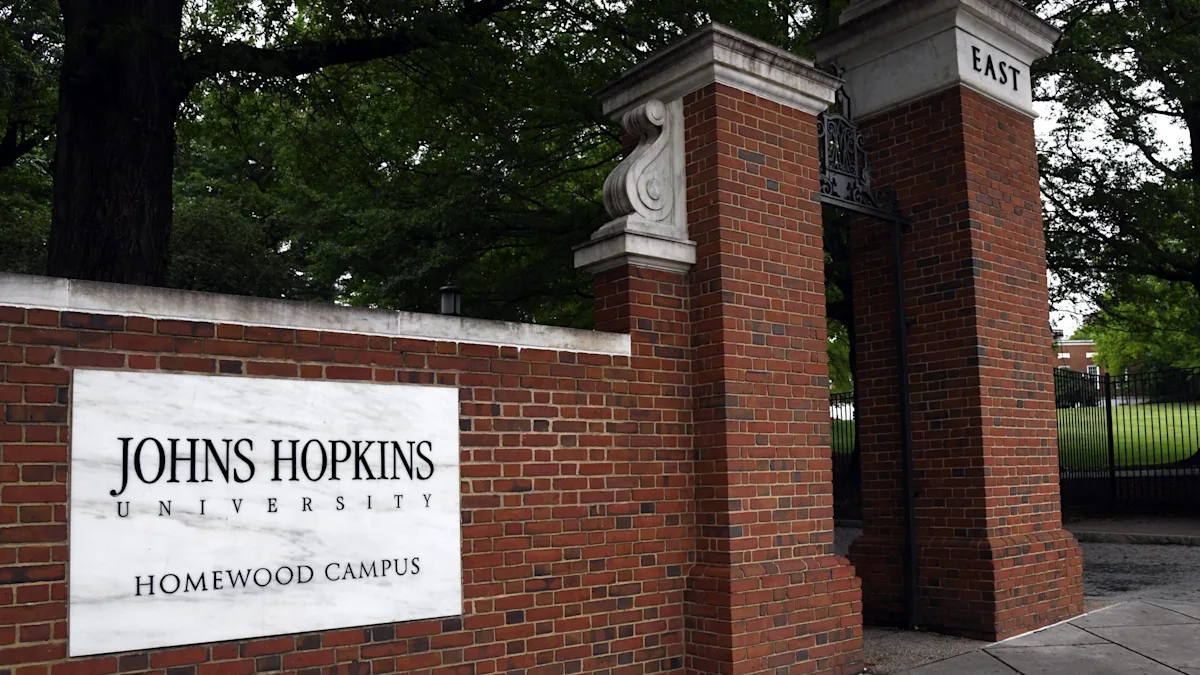
Two years after the Supreme Court effectively ended race-conscious college admissions nationwide, the racial makeup of Johns Hopkins University’s freshman class has changed significantly, according to newly released admissions data.
Since 2023, the number of Asian first-year undergraduates, as measured by federal reporting standards, has risen nearly 20 percentage points, from 25.6% to 45.1%. At the same time, the number of black first-year students fell by half, from 9.8% to 4%, and the number of Hispanic students dropped from 20.8% two years ago to 10.1% this year. White freshman enrollment has remained relatively flat, at 21% in 2025 and 19.3% in 2023. The share of students who self-reported as white dropped significantly from 39.1% to 30.9%.
The data provide a clear picture of how elite colleges may change following a 2023 ruling banning schools from considering race in admissions. While universities across the country have warned that the decision could reduce racial diversity, data from Johns Hopkins shows a particularly stark change.
“Since the U.S. Supreme Court [Students for Fair Admissions] Harvard spokesman J.B. Bird said in an email to The Baltimore Sun: “In Harvard’s case, we are constantly responding to the changing legal and regulatory environment. We will continue to work to keep our doors as open as possible to students from diverse backgrounds and perspectives.”
The research university has had some success in diversifying by income level regardless of race. The number of Pell Grant recipients in the freshman class of 2025 hit a record high at 24.1%, up slightly from 23.8% last year and 21.6% the year before. The first-generation college enrollment rate is unchanged from last year at 20.3%, but up from 19.4% in 2023. The number of Pell Grant recipients and first-generation college students has increased steadily since 2010.
Amelia, a second-year graduate student who declined to give her last name, said the university’s new tuition pledge program may also increase diversity in the coming years.
The program, which will begin next year with January enrollment, will provide free education to students whose family income is less than $200,000 and provide living expenses to those whose family income is less than $100,000.
Brian Cook, director of higher education policy at the nonpartisan Urban Institute think tank, said the Supreme Court ruling has already changed higher education in more ways than student demographics can reveal. Cook said Johns Hopkins is not unique, although the court’s decision has a greater impact on elite private colleges and universities that have been trying to recruit a more diverse student body. Schools like community colleges that accept all applications and public schools that rely primarily on test scores for admissions will not be affected, he said.
Many institutions have had to make significant changes to their policies,” Cook said. “In many cases, this has changed the demographics of campuses. “
It’s difficult to determine the whole story, he said, and enrollment data only shows part of what’s happening.
“We don’t know anything about the demographics of the applicant pool and how that lines up with admissions,” Cook explained. “We don’t know what’s happening across all schools generally.”
The Urban Institute contacted universities to request applicant data to improve their understanding and released their findings in July 2025.
“Early analysis from 18 institutions shows that Black students will make up a larger share of the applicant pool between 2023 and 2024 than in any of the past five years, but their share of the admitted student body will remain the same or even decline,” the report states. “In addition, more applicants are choosing not to disclose their race or ethnicity.”
At elite colleges that admit less than half of their applicants, black student enrollment fell from 6.6% in 2023 to 5.9% in 2024, while black enrollment at less selective schools remained flat.
Edward Blum, president of Students for Fair Admissions, said most Americans support fair admissions. The group filed a lawsuit against Harvard and eventually won a Supreme Court ruling.
“Credible polling from across the political spectrum shows that Americans agree that a student’s race or ethnicity should not be considered a factor in any college’s admission or rejection of that student,” Bloom said.
Arden, a student at Hopkins, asked that only his first name be used.
“I think it’s important to have a diverse student body,” said Aden, a third-year chemistry student, “although I think it’s unfair to Asian and white students if we select students because of their race. People with lower grades may be selected because of their race.”
Arden lives in Florida, where his parents immigrated from the Caribbean. He said he has not experienced racism on campus but understands that new black and Hispanic students may feel more isolated this year.
Maria Laskaris is a college counselor at TopTier Admissions, helping students prepare for and attend the schools that best fit their needs, starting in high school age. She agreed that the Supreme Court’s ruling primarily affects highly selective private institutions, but said the changes would not necessarily alter the way she advises her minority student clients.
“I make sure any student I advise understands the circumstances of their application to college and the various policies of the colleges they are interested in,” she said. “The key is how you differentiate yourself. What can you bring to the table that makes you stand out from other applicants?”
Tricia Bishop contributed to this report.
Have a news tip? Contact Karl Hille at 443-900-7891 or khille@baltsun.com.

