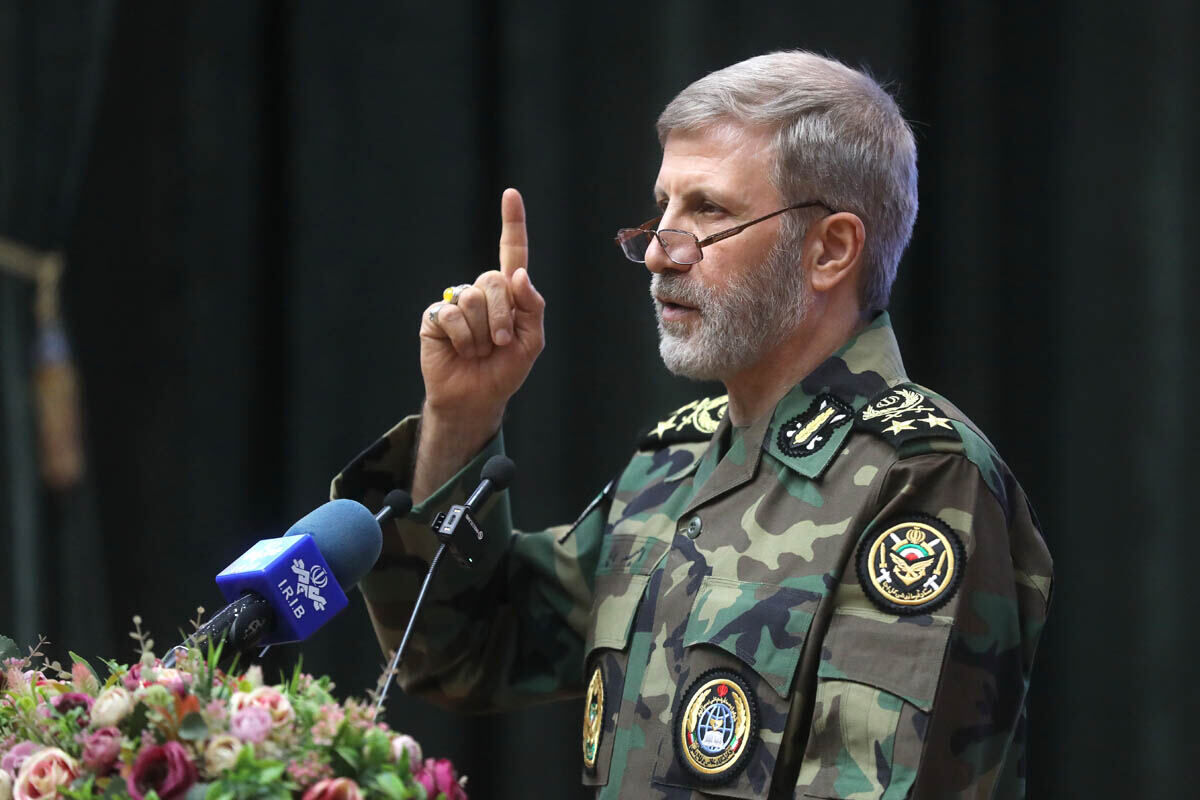
DUBAI, United Arab Emirates (AP) — Iran’s army chief threatened Wednesday to take preemptive military action in response to “speeches” targeting the Islamic Republic, a possible reference to President Donald Trump’s warning that the United States “will come to the rescue” if Tehran “violently kills peaceful protesters.”
Maj. Gen. Amir Khatami’s comments come as Iran attempts to deal with twin threats posed by Israel and the United States, as well as protests sparked by economic woes that have grown into a direct challenge to its theocracy.
In an effort to quell anger, the Iranian government on Wednesday began paying the equivalent of $7 a month to subsidize the rising prices of table staples such as rice, meat and pasta. Shopkeepers warned that the price of basic commodities like cooking oil could triple under pressure from the collapse of Iran’s rial currency and the end of preferential subsidies to importers and manufacturers on the dollar-rial exchange rate, which could further fuel popular anger.
“The protests in Iran that have lasted for more than a week reflect not only deteriorating economic conditions but also long-standing anger over government repression and regime policies that have led to Iran’s global isolation,” the New York-based Soufan Center think tank said.
Army Chief’s Threat
Khatami delivered a speech to military school students. He took over as commander-in-chief of the Iranian army (“Artesh” in Persian) after Israel killed a large number of Iran’s top military commanders during a 12-day war in June. He is the first regular military officer in decades to hold a permanent position of control in Iran’s paramilitary Revolutionary Guards.
“The Islamic Republic considers such heightened rhetoric against the Iranian state a threat and will not continue it without a response,” Khatami said, according to the state-run Islamic Republic News Agency.
He added, “I can say with confidence that the combat readiness of the Iranian armed forces today is much higher than before the war. If the enemy makes a mistake, they will face a more decisive response and we will cut off the hands of any aggressor.”
Iranian officials, including Supreme Leader Ayatollah Ali Khamenei, have been echoing Trump’s comments, which have taken on added significance after a weekend U.S. military strike captured Tehran’s longtime ally, Venezuelan President Nicolas Maduro. But there are currently no public signs that Iran is preparing to launch an attack in the region.
New subsidies begin to be distributed
Iranian state television reported that a new subsidy equivalent to US$7 began to be deposited into the bank accounts of household heads across the country. According to reports, more than 71 million people will benefit, which is 10 million Iranian Rials. The rial currently trades at over 1.4 million rials per US dollar and continues to lose value.
The subsidy is more than double the 4.5 million riyals previously received. But Iranian media reported sharp increases in prices of basic commodities including cooking oil, poultry and cheese, putting additional pressure on households already burdened by international sanctions against the country and inflation.
Iran’s Vice President for Administrative Affairs Mohammad Jafar Gampana told reporters on Wednesday that the country was in “a full-scale economic war.” He called for “economic surgery” to eliminate rentier policies and corruption in the country.
Protests began on December 28
Iran has faced multiple rounds of nationwide protests in recent years. Its currency, the rial, fell sharply in December as sanctions tightened and Iran struggled after June’s war with Israel. Protests began shortly afterwards on December 28. The protests entered their 11th day on Wednesday and don’t appear to be stopping.
The US-based Human Rights Activists news agency provided the latest death toll from the demonstrations, which was 36. Thirty protesters, four children and two members of Iranian security forces were allegedly killed. Demonstrations took place in more than 280 locations in 27 of Iran’s 31 provinces.
The group relies on a network of militants inside Iran for its reporting, which has been accurate during past unrest.