


Kitsap Rescue Mission was forced to close its 26-bed homeless shelter on Sixth Street in Bremerton in 2019 while county leaders and homeless advocates searched for long-term replacement housing. The aging building sat vacant until Peninsula Community Health Services began renovations that would make the building a rest center that would provide medical services to the homeless, and KRM moved several times.
Now approaching its first anniversary, a renovated facility in Port Orchard has become an important part of a long-term strategy to provide shelter to homeless residents and help move people toward stability under the stewardship of Kitsap Rescue Mission.
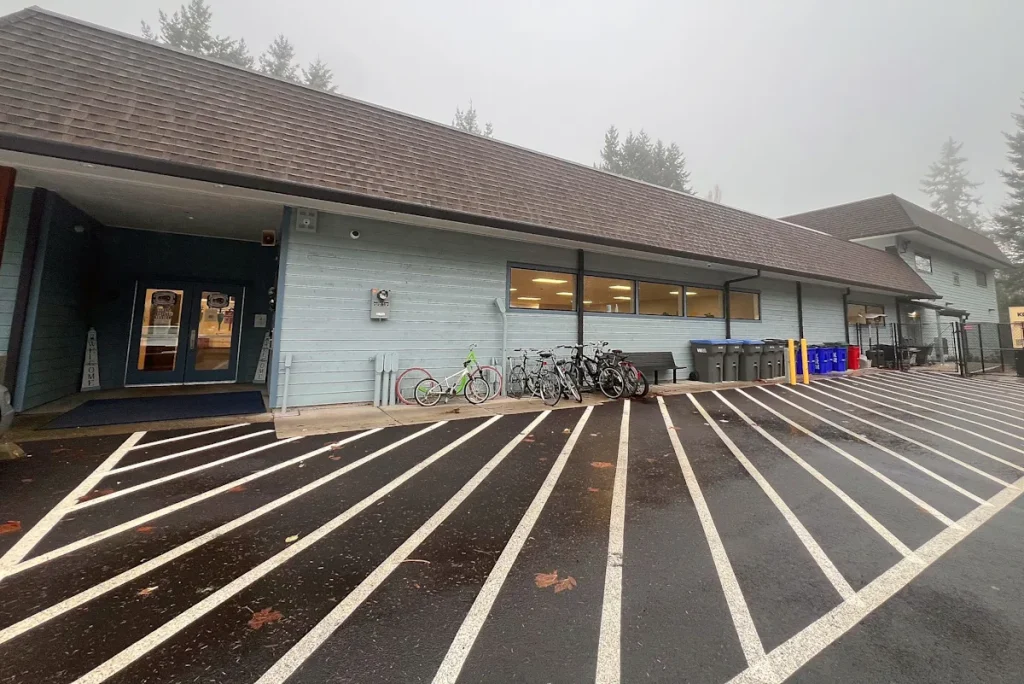
In January 2025, Kitsap Rescue Mission opened the Pacific Tower in Port Orchard as Kitsap’s only continuous-stay shelter, housing 75 people at a time. KRM Executive Director Robin Lund said in an interview at the building that the shelter is successfully helping homeless families find permanent housing, but work continues to provide more similar resources to homeless people across the county.
“I think Kitsap’s resources are dwindling right now,” Lund said. “The Salvation Army has kept their shelters open out of good intentions, but they never intended to establish an emergency shelter.”
Lund said that so far this year, the Pacific Towers shelter and the services it provides have helped 204 people, 67 of whom have moved into permanent housing and 40 of whom found jobs when they left the shelter. Although neighbors on Mile Hill Drive initially expressed concerns about the building, a former fitness center, Lund said some neighbors have become their biggest volunteers.
“We have a lot of volunteers from the community that come in. We have a lot of banks, a lot of churches that come in to help support us,” Lund said. “They actually built a beautiful organic garden in our backyard so we can have fresh vegetables in the spring and summer. We have over 100 active volunteers from the community and this has really become a community initiative, which is exactly what we wanted.”
Carol Rocha, case manager and shelter coordinator, said tenants are referred to the shelter through the county’s Coordinated Entry program, which is administered by Kitsap Community Resources. Those interested can find an online admissions application at KCR.org/housing, but Rocha said there is no specific timeline for placement, noting that people are coming in every day.


Kitsap Rescue Mission left a building in Bremerton in 2019, moved its services to multiple locations in recent years and currently operates the Pacific Building on Mile Hill Drive as the county’s only continuous-stay homeless shelter. Pacific Tower opens in January 2025.
Care models that move people out of homelessness
David and Stephanie McDaniel first moved to Kitsap County in 2005, where David enjoyed steady employment as a landscaper for more than a decade. But he said it put a financial strain on the family when his wages reached about $22 an hour. Then both lost their jobs in 2019 and their apartments soon after.
The McDaniels’ accommodations continued to change, first staying in a hotel and then, in 2024, spending the night at the Salvation Army’s shelter on Sixth Street. Stephanie McDaniel has found a job since moving into Pacific House in February and receiving on-site services from Kitsap Rescue Mission (KRM), said David McDaniel, who has been working with a case manager to secure stable housing for the family, including their deaf rescue dog Bruiser, who is also being cared for at the rescue center. facility. Perhaps most importantly, it provides some stability in their lives.
“You know, it’s not really about giving you a roof over your head, but it’s about giving you an opportunity to better yourself,” David told Kitsap Sun at Pacific Towers. “Even though it’s not permanent housing, it makes me feel comfortable and gives me enough time to really focus on finding a place and not have to worry about where I’m going to sleep next, where I’m going to find food next.”
KRM Project Director Helen Kuchera said Pacific Tower’s full-time shelter model means tenants can stay in the facility full-time and have access to KRM’s 21 employees, who have more than 200 years of combined experience in public service. Kucera devised a badge system that each tenant had to sign in and out and track who was in the shelter at any given time and how many meals they had eaten.
The 40,000-square-foot facility also includes a medical clinic operated by Peninsula Community Health Services, as well as veterinary services, kennels and individual rooms for men, women, couples and families with children. KRM’s kitchen serves three meals a day and has served a total of 18,662 meals so far this year, according to Kuchera.
Outside shelter facilities are also affected
Lund said that as the shelter provides full-time in-person services, KRM’s 911 call count dropped from 46 in 2021 to five this year, and the number of clients visiting the emergency room dropped from more than 60 to 19 during the same time period.
“These emergency response systems were all being overutilized because people were not being sheltered,” Lund said. “Now that they’re with us, they’re able to recover, and we have those services on site. So for those emergency response systems that were really being overutilized, it’s a significant cost reduction.”
According to the Kitsap County 5-year homeless housing plan released for public review in November, the average cost per person per day of housing intervention services in Kitsap County will increase from $56 in 2023 to $81 in 2024, primarily due to investments in emergency shelters and their services. But the cost of tax dollars to Kitsap residents for other interventions is much higher, with the Kitsap County Jail costing $204 per person per day and the local hospital costing about $4,076 per day.
KRM uses a mix of funds from private donors, the state Consolidated Housing Grant (CHG) and the county’s Mental Health, Chemical Dependence and Treatment Court (MHCDTC) Program Fund (0.1% sales tax) to pay for the facility’s operating costs, which Lund estimated at about $90,000 per month. Lund said the reliance on grant funding and the rising economic costs prompted KRM to pursue a three-year sustainability plan with the goal of improving partnerships, such as with Peninsula Community Health Services, to better leverage KRM’s funding.
“I’m very proud of the way the Kitsap County organization has come together,” Lund said. “I just had a meeting with all my suppliers to talk about how we can work more closely together. So we all rely on each other. It takes a village, we are the epitome of the same idea, but it also takes a village within the larger community.”
Lund said KRM’s funding has allowed them to hire full-time substance abuse and mental health counselors, medical professionals, case managers, chefs and more staff who have been trained in trauma care over the past year. She said the model helps traumatized homeless people build a sense of security before they can obtain permanent housing, which is the overall goal of the KRM program.
“It takes time and education for people to know they’re safe,” Lund said. “You know, it takes a safe environment where people trust enough to start making those changes. All of the guests here have experienced severe trauma.”
Port Orchard Mayor Rob Putaansuu praised KRM’s work at the Pacific Tower in a recent interview, noting that while neighbors were initially concerned about trouble from the facility’s customers, he has heard of no problems since the facility opened.
“The people there are doing a great job,” Puta Ansu said. “The few facilities that have opened here over the past few years are definitely a step in the right direction. But you know, more is needed.”
Continued need for emergency shelters countywide
An update to Kitsap County’s Homeless Housing Plan, currently under funding review by county commissioners, states that 1,390 new units of emergency and transitional housing are needed countywide by 2044 to accommodate people who are homeless or facing housing instability.
“I’m optimistic that more (shelters) will be built in other locations throughout Kitsap County,” Putaansu said. “This is the only one on the south end, but I would certainly like to see similar facilities built in central and northern Kitsap as well.”
The Salvation Army operates a winter shelter in Bremerton, which has been expanded to year-round since the city of Bremerton funded expanded services at a city cost of about $200,000 a month. Shelters provide overnight accommodation, meals and services, as well as day rooms for individuals to stay during the day. Despite filling a huge gap in available beds, the Salvation Army building was never designed as a shelter from the beginning, meaning people had to leave each morning and evening so the nonprofit could take down or set up shelters in common rooms.
There have been several attempts in recent years to create a more permanent emergency shelter facility in Bremerton that people could walk in to find a place to stay, in order to relieve the burden on the Salvation Army. The latest effort has seen the Bremerton Housing Authority purchase a roughly 5-acre parcel of land on Sheridan Road near the Warren Avenue Bridge, a site that has been discussed as a shelter with 80 group beds and 60 pallet shelters. City leaders have not yet funded a request for an additional $1 million in operating costs, which was included in a September presentation to the City Council.
According to the county’s annual point-in-time count, there were 245 homeless people in Kitsap at the end of 2023, an increase of 62 from 2022, while as of January this year, 297 people were homeless and living in non-residential locations such as vehicles, encampments, abandoned buildings and boats.
More than 40 percent of unsheltered people surveyed reported characteristics such as health conditions, physical disabilities, and substance abuse, while more than half reported mental illness. Without intervention, these factors can be especially deadly, as in the summer of 2023 when nine homeless people died in Bremerton, according to the National Weather Service, while hypothermia can fall below 50°F in the winter.
The Kitsap Rescue Mission also experienced a need for shelter beds in Kitsap after moving out of the Sixth Street building. KRM temporarily set up a shelter with the Salvation Army in 2019, then set up a shelter at the Kitsap Pavilion at the fairgrounds in 2020 when the pandemic halted other public rentals at the facility, then moved people to rooms at the Quality Inn in 2021. At the Quality Inn, located on Kitsap Way near the West Bremerton interchange on Highway 3, KRM rented rooms to serve 110 people. With the move to Pacific Tower, that limit dropped to 75 people.
“So I think there are fewer beds in Kitsap and we need more help,” Lund said. “We need more help.”
This article originally appeared in the Kitsap Sun: Port Orchard Kitsap rescue mission succeeds in services, housing